
Mohammed Elshimey

Asphalt Pavement Solutions by Albenya for Road Maintenance
Our company offers integrated asphalt paving solutions along with a comprehensive range of asphalt services designed to protect your investment and maintain its quality and appearance and when paving and maintenance are carried out correctly asphalt can last for many years, thanks to our extensive experience we offer a variety of services including asphalt pavement, road paving, parking lot design and planning asphalt crack repair restoration and maintenance work and concrete restoration.
Understanding Asphalt Pavement in Cold Mix Applications
Cold asphalt pavement is primarily composed of selected aggregates, bitumen emulsion and other additives, and unlike hot asphalt, cold asphalt does not require heating, making it more energy efficient and environmentally friendly, also the bitumen emulsion acts as a binder, ensuring the mix’s cohesion during application, and the use of recycled materials such as reclaimed asphalt further contributes to environmental sustainability.
A key characteristic of cold asphalt technology is its high flexibility and adaptability to various climatic conditions. It can also be applied efficiently even in cold weather, where traditional roads sometimes fail, and the production process also contributes to reducing greenhouse gas emissions, aligning with modern environmental trends.
What Are Asphalt Pavements Made with Cold Asphalt?
Asphalt pavement concrete is produced by combining local aggregates or recycled asphalt with an asphalt emulsion in a mobile mixing plant and this method ensures homogeneous mixing and sustainable practices. The material is then transported and laid using conventional paving equipment, simplifying operations and reducing overall costs.
Cold Asphalt Pavement: Definition and Practical Use
Cold asphalt pavement is a flexible and economical road paving solution that does not require heating before application, and unlike hot asphalt, which requires high temperatures during preparation and application cold asphalt is mixed and applied at room temperature and this makes it suitable for projects requiring speed of execution or facing access or budget constraints.
Cold asphalt is particularly used for pothole repairs in urban and rural areas paving low traffic roads and applications in cold weather where hot mixes are difficult to use also it is also used for emergency repairs that require the rapid reopening of roads, due to its ease of use and long shelf life many municipalities and contractors rely on it for quick repairs.
Difference Between Traditional Asphalt Pavement and Cold Asphalt
| Aspect | Hot Asphalt | Cold Asphalt |
| Raw Materials | Uses petroleum-derived or coal tar-based binders with various aggregates require high heating for bonding Uses liquid asphalt emulsions or binders, mixed at room temperature without heating | Uses liquid asphalt emulsions or binders; mixed at room temperature without heating Asphalt pavement is highly durable and resistant to soil freezing and environmental stresses, resulting in a longer service life. It is also an ideal choice for projects with limited budgets due to lower material and logistics costs, which can be used as a base course or surface course, offering great flexibility for various road types in addition to being an environmentally friendly option. |
| Production Process | Requires heating aggregates and binder to high temperatures and Traditional asphalt produces higher emissions and heat. | Produced without heating simpler and less energy-intensive process, Cold asphalt, on the other hand, has lower emissions and a limited environmental impact |
| Application Methods | Laid quickly in warm weather requires immediate compaction, Traditional asphalt is suitable for main roads with heavy loads. | Can be laid in all seasons using simpler tools, which requires a longer curing time. Cold asphalt is suitable for quick repairs, secondary roads, and parking areas. |
How Cold Mix Asphalt Is Used in Pavement Construction
Why is cold asphalt essential for road repair Because it’s applicable in all weather conditions and can be used in hot cold or rainy weather without affecting its performance, and it is also an ideal solution for emergency repairs especially during winter and can be applied quickly using simple tools, also the road is often reopened immediately after application making it suitable for areas with heavy traffic.
Meaning of Paving with Cold Asphalt Materials
Cold asphalt paving is produced at ambient temperatures using suitable aggregates and an asphalt emulsion and is often mixed on site using mobile mixers, which reduces energy consumption and emissions and allows for the use of recycled asphalt, resulting in economic and environmental savings.
Advantages of Using Cold Asphalt in Pavement Works
Cold asphalt differs from hot asphalt in its production method and application temperature, making it a suitable option for cold regions or during winter. Among the most prominent advantages of using cold asphalt in paving works are:
- Cold asphalt is characterized by its versatility, environmental sustainability, high durability, and wide range of applications.
- Cold asphalt represents a significant development in road engineering, combining efficiency, sustainability, and cost effectiveness, making it a key element in the future of infrastructure.
Cold Asphalt Pavement for Maintenance and Repair Projects
Due to its durability and lower cost compared to concrete, cold asphalt is an ideal choice for roads and parking areas. With constant exposure to the elements, regular maintenance is necessary, and cold asphalt offers a quick and effective solution:
- With cold asphalt, potholes are repaired using pre-prepared asphalt without the need for heating, reducing costs and speeding up the process.
- Using cold asphalt minimizes environmental impact, helps reduce traffic congestion, and allows for faster road reopening.
Performance of Asphalt Pavement Using Cold Mix Technology
Using recycled asphalt in the construction and maintenance of flexible roads with asphalt emulsion is an effective and environmentally sustainable option, and this method contributes to energy savings due to the absence of heat loss during the mixing and laying process compared to conventional hot asphalt. Recycled asphalt RAP also represents a sustainable alternative to natural aggregates in road construction.
When Cold Asphalt Pavement Is the Right Choice
Cold asphalt paving is the ideal choice as it is a sustainable option, saving energy and reducing reliance on virgin aggregates, and studies have shown that high percentages of cold asphalt can be used while maintaining the required mechanical properties.
Cold asphalt is used for pothole repairs, emergency repairs, seasonal maintenance, private driveways, and temporary utility installations, thus providing a quick and economical solution.
Albenya Company Expertise in Asphalt Pavement Solutions
Albenya Company has extensive experience in providing the best asphalt paving solutions, and we strive for geographic expansion and diversification to maintain our leadership in cold asphalt production and road maintenance:
- We provide high-quality products that help address potholes that are difficult to repair using traditional methods.
- We aim to achieve customer satisfaction by adhering to the highest standards of quality and occupational safety.
- We provide a safe working environment and leverage our expertise to serve our customers, partners, and the communities in which we operate.
Contact us
In conclusion, Albenya Company provides high-quality cold asphalt pavement made from a balanced mixture of asphalt aggregates, polymers, and additives, offering a flexible, durable solution for quickly and efficiently repairing potholes and cracks. Contact us now, whether you need concrete barriers or other specialized technical services, as we are a leading company in asphalt paving.
FAQS
How does cold asphalt work?
It consists of a special blend of aggregates, polymers and binders forming a strong bond with the existing pavement to prevent deterioration.
Can it be used to create speed bumps or curbs?
No, it is primarily designed for repairing potholes and utility openings.
What factors affect its lifespan?
These include weather conditions, traffic, and usage patterns. Although it is a temporary solution, it offers many practical advantages
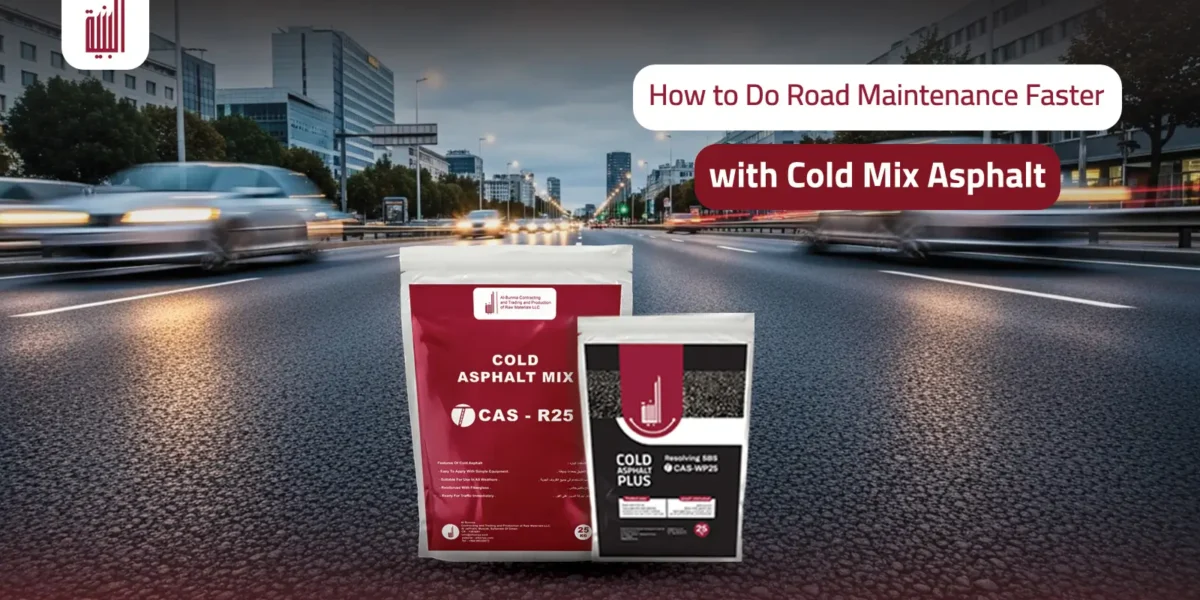
How to Do Roadway Maintenance Faster
Roadway maintenance is essential for keeping roads safe, durable, and functional. Any delay in repair may result to accidents, damage of the vehicles, and increased long-term expenses. Cold mix asphalt enables the maintenance crew to carry out repairs effectively and in a short time, even when not having the hot mix asphalt plants or other necessary equipment. This will make sure that roads are repaired quickly to minimize the inconveniences and improve safety for people.
Role of Cold Mix Asphalt in Roadway Maintenance
The cold mix asphalt is a very versatile, flexible, and ready-to-use asphalt that is used in repairing potholes, cracks, and surface irregularities. It enables the maintenance teams to repair the defects as fast as possible and reestablish the road operation without the use of specialized heating apparatus. The ease of its use means that repairs may be completed without much time lost, thus the total downtime is minimized and no additional damage occurs. Moreover, cold mix asphalt is applicable in various weather conditions which means that it is applicable in emergency and routine maintenance work. The achievement of good performance and durability of the patch is also supported by proper compaction and preparation to make it a good option in ensuring that roadways can be maintained safely and at a reasonable cost.
Why Cold Asphalt Is Ideal for Routine Road Maintenance
Cold asphalt can be used when performing daily repairs. It is simple to manipulate, it does not need to be heated, and it can be stored over a long time. Its benefits include:
- Boy-friendliness to maintenance personnel.
- No heating appliances needed.
- Upstream prevention of minor problems.
- Lessens the threat of significant structural issues.
Cost-Effective Roadway Maintenance Using Cold Mix Asphalt
Cold mix asphalt reduces total maintenance costs to a considerable extent. Removal of the special heating equipment required and lessening of labor time to do repairs, repairs take less time and therefore less traffic can be interrupted. Further, the cold mix versatility permits crews to swiftly react to road damage, enabling municipalities and contractors to plan their budgets in a more profitable manner and also deliver high-quality and durable roadway repairs. Its storage capacity and readiness also help to save costs and make it more effective.
Cold Asphalt Solutions for Emergency Road Repairs
Cold asphalt mix is particularly useful in emergency repair of roads. Its fast usage enables maintenance personnel to work fairly fast in filling potholes, cracks and other damages and minimize hazards and ensure the road does not deteriorate. The material is efficient in terms of setting in different weather conditions and this allows the repair work to proceed even in colder or wet weather conditions. This will provide less disturbance to the traffic and provide instant safety enhancement of the roads.
Improving Roadway Safety with Cold Mix Asphalt Maintenance
Rapid and immediate repair using cold mix asphalt will substantially help in improving road safety. Potholes and uneven surfaces are minimized before causing accidents to the vehicles, bicycles and pedestrians. The frequent checkups and repairs done using cold mix asphalt also increase the pavement life, in addition to keeping the roads in smooth driving conditions and also in safe conditions as long as the roads are used under any traffic condition.
Cold Mix Asphalt Applications in Preventive Road Maintenance
Cold mix asphalt can be used for preventive maintenance. It is able to seal small cracks and defects before they become enlarged to lengthen pavement life as well as to minimize the necessity of significant jobs.
| Benefit | Description |
| Early crack repair | Fills small cracks before they worsen |
| Extended pavement life | Slows deterioration and reduces long-term maintenance costs |
| Cost savings | Prevents expensive major repairs by addressing issues early |
| Quick application | Can be applied rapidly without hot mix equipment |
Maintenance Strategies Using Cold Asphalt Materials
Effective roadway maintenance requires a comprehensive and proactive approach. The maintenances teams ought to introduce the use of scheduled inspection, regular monitoring of the road conditions, and timely response to the arising damages. Focused pothole repair with cold mix asphalt enables the crews to fix small problems as soon as they appear, and regular repair of small cracks helps them to avoid emerging large problems. Focusing on high-risk areas is likely to solve the distribution of resources in an efficient manner that enhances road safety and performance. The others involve capturing the maintenance works, training crew on cold mix application methods, and incorporation of the preventive maintenance schedule in ensuring smooth and long-lasting surfaces. Such a multi-stepped action does not only ensure that the roads are in good condition, there is also less cost incurred on long-term repair and less traffic inconvenience.
Cold Asphalt Performance in High-Traffic Maintenance Areas
Cold mix asphalt is able to sustain moderate or high traffic when applied and compacted. In the case of busy roads, the monitoring and additional compaction might be been repeated to sustain the performance and avoid early degradation.
Sustainable Roadway Maintenance with Cold Mix Asphalt
The cold mix asphalt also results in sustainability by consuming less energy than the hot mix methods. It minimizes emissions, requires less machinery, and allows for the recycling of materials, contributing to environmentally responsible roadway maintenance.
Albenya Company’s Approach to Roadway Maintenance Using Cold Asphalt
Albenya Company would assess every roadway to suggest appropriate cold mix asphalt solutions. They provide fast, cost-efficient, and durable repairs by taking traffic conditions, environmental factors, and maintenance purposes into consideration.
For professional guidance and efficient roadway maintenance solutions, contact Albenya Company today to learn how cold mix asphalt can help improve your roads quickly and safely.
FAQS
Is cold-mix asphalt suitable for use in wet conditions?
Yes, the surface must be wiped off excess water to allow sufficient adhesion.
Can cold mix be used in high-traffic roads?
Proper compaction and monitoring can be used to effectively use it.
What is the speed of traffic using a road that was repaired using cold mix asphalt?
It might take some time before traffic resumes on the repaired section once it has been compacted but eventually, with the patch hardening, the entire strength is achieved.
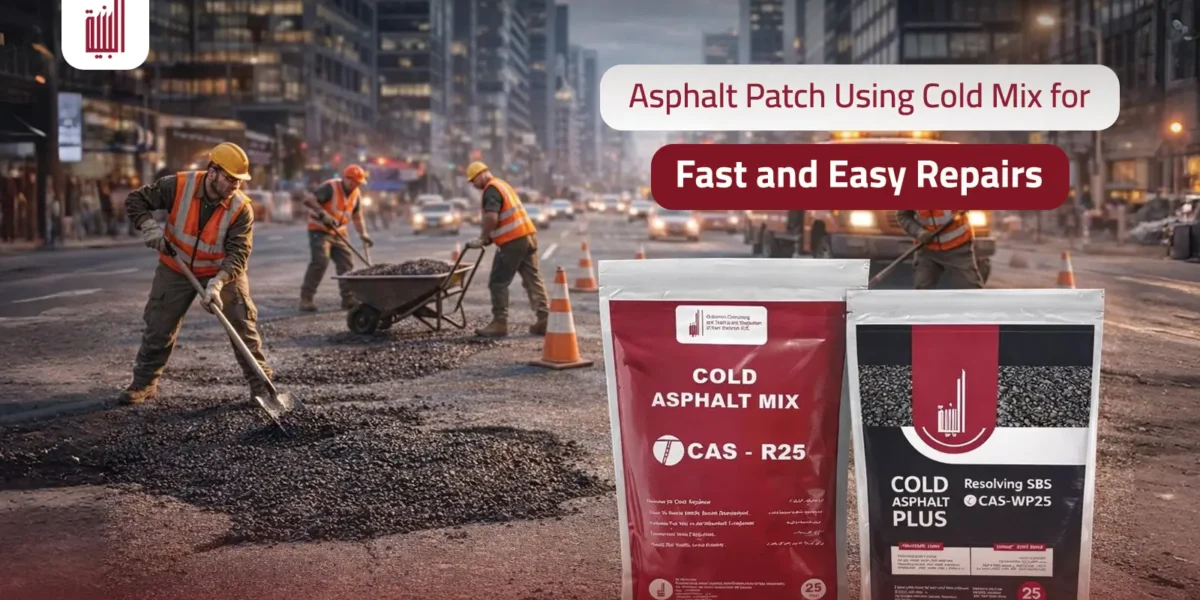
Asphalt Patch Using Cold Mix for Fast and Easy Repairs
Asphalt patching using cold mix is a fast and practical solution for repairing potholes, cracks, and surface defects in pavements. The procedure is very popular where hot mix asphalt does not exist, or whenever urgent repairs need to be made. Cold mix asphalt can be used immediately with minimal equipment and is operational in a considerable number of weather conditions. It has a high level of flexibility and is easy to use, which is the reason it is a favorite compromise between emergency repairs and regular maintenance.
Does an asphalt patch work?
Yes, an asphalt patch can effectively restore surface integrity, improve safety, and extend pavement life temporarily. Its performance is a factor of good preparation, quality of materials, and compaction. Cold mix asphalt patches are ideal for temporary fixes in high-traffic or emergency situations.
What is the best material to patch asphalt?
Patching asphalt needs the best materials, which would consist of pre-mixed cold patch asphalt containing a temperature-stable binder, clean and well-graded aggregates, and adhesion and durability-enhancing additives. Proper cold mix that is made will have a longer-lasting repair and better performance.
Cold Patch Asphalt Benefits
Cold patch asphalt has many advantages, which make it an advantageous option for road repairs and emergency repairs. It is fast and easy to apply, and it does not require any heating; thus, it helps considerably to decrease the road time. It requires minimal equipment and is therefore applicable in remote areas as well as sites with restricted access. It also works under a wide range of temperatures, which enables repair to be done under different weather conditions. Cold patch asphalt can be used as a solution to both temporary and semi-permanent repair of pavements due to its speed, flexibility, and ease of use.
What are the different types of asphalt patching?
Before exploring the specific methods, it’s important to understand that asphalt patching can vary depending on the repair requirements, traffic load, and environmental conditions. The appropriate type is one that is durable and cost-effective.
- Cold patch asphalt: Temporary or semi-permanent repairs.
- Hot mix asphalt: Permanent solutions which repair, need heating and special equipment.
- Throw-and-roll technique: The patch is made of a cold mix and compacted by a vehicle.
- Semi-permanent: Intensive preparation and packed over permanent repairs.
How to make an asphalt patch?
Creating an asphalt patch requires careful preparation and application to ensure it bonds well and lasts as long as possible. The steps to follow are:
1. Clean the area affected by the damage and remove the loosely deposited material and water.
- Pour the cold mix asphalt into the defect.
- Use a hand tamper or the tires of vehicles to compact.
- Use layers of a thin layer when the patch is deep, and press each layer.
- You can let the traffic patch itself out slowly.
How long will an asphalt patch last?
The life of an asphalt patch is influenced by several factors, including traffic volume, quality of installation, and environmental conditions. Cold mix patches that are installed in the low flow areas will last more than one year, with some even lasting longer with the right type of maintenance. The engine life is also normally reduced in busy locations by vehicles wearing and putting stress on the engine. Ensuring proper compaction, cleaning the surface thoroughly before application, and using high-quality materials all contribute to extending the durability and effectiveness of the asphalt patch. Early wear can also be detected by regular inspection and service can be extended.
How to Get Cold Patch Asphalt to Harden?
Cold patch asphalt is developed in such a way that it hardens not by heat, but by mechanical compaction. The pavement surface should be clean and dry, without debris or water that may be intrusive to bonding, to give the best outcomes. It should be packed properly with hand tampers or vehicle tires, and performance can be improved by placing the material in thin layers in deeper patches. With time, the traffic also contributes to the further consolidation of the patch, enhancing its density and general strength. The above procedures will result in a more permanent repair and a patch that is more resistant to loosening, water infiltration, and wear.
Problems caused by the cold patching of asphalt
The cold patching can be somewhat difficult to use in maintenance and application. The performance and life of the patch could be impacted by issues like poor compaction, inefficient surface preparation or environmental conditions. Knowing about such probable issues, contractors and maintenance teams will be able to take some proactive measures to achieve improved adhesion, durability, and effectiveness. The knowledge of these problems enables the careful planning, use of suitable materials, and the proper technique of application, which, when combined with each other, minimize the threats of premature failure and enhance the quality of the work done.
| Problem | Description |
| Premature loosening | The patch may separate from the surrounding asphalt if not compacted correctly |
| Reduced durability | Heavy traffic can quickly wear down poorly applied patches |
| Water infiltration | Low-quality patches may allow water to seep in, causing further damage |
| Shorter service life | Extreme temperatures can accelerate patch deterioration |
| Temporary appearance | Improper application can make the patch visible and aesthetically unpleasing |
Albenya Company Expertise in Asphalt Patch Solutions
Albenya Company would assess every repair site in order to come up with the most appropriate cold mix asphalt solution. They pay attention to the traffic, environmental performance, and repair goals to provide the best performance. Their team provides technical guidance for effective and long-lasting asphalt patch repairs.
For expert guidance and professional asphalt patch solutions, contact Albenya Company today. Our specialists are ready to assist you with site evaluation, material selection, and implementation of the most effective cold mix asphalt repairs to ensure safety, durability, and cost-efficiency.
FAQs
Can an asphalt patch be used in wet conditions?
Yes, but surface water should be removed to ensure proper adhesion and durability.
Does a cold-patch asphalt repair last?
Cold patch repairs tend to be temporary or semi-permanent, particularly in high-traffic locations.
When can traffic use a cold-patch asphalt repair?
Traffic can be progressively used on the repair location when it is properly compacted; it will be fully hardened with traffic consolidation.

Cold Patch Asphalt | Fast, Easy Road Repair Solution
Cold patch asphalt is widely used as a fast and practical solution for repairing potholes and surface defects without the need for specialized equipment or high-temperature application. It is made to be deployed promptly in the case of maintenance that is time-constrained, inaccessible, or is conducted during unfavorable weather conditions that can restrict the use of conventional hot mix asphalt. Understanding how cold patch asphalt works, how long it lasts, and when it should be used helps contractors and property managers make informed repair decisions.
How long will cold patch asphalt last?
The lifespan of cold patch asphalt depends on traffic levels, installation quality, and environmental conditions. In low-traffic areas and temporary repair situations, cold patch asphalt can last from several months to a few years. It is generally adopted as a temporary remedy in busy areas until permanent repair is done. Compaction and surface preparation help greatly in enhancing performance and in durability.
Best cold patch asphalt
Selecting the best cold patch asphalt requires evaluating several performance and quality factors that directly affect durability and ease of application. Cold patch products do not all act in a similar way, and an appreciation of these distinctions will minimize early failure and rework.
| Evaluation Factor | What to Look For | Why It Matters |
| Workability | Remains flexible and easy to place during storage | Ensures fast application without excessive effort |
| Adhesion | Strong bonding to existing pavement | Prevents early loosening and material loss |
| Moisture resistance | Ability to perform in damp conditions | Reduces failure caused by water infiltration |
| Aggregate quality | Well-graded, clean aggregates | Improves stability and surface performance |
| Binder formulation | Engineered, temperature-stable binder | Enhances durability under traffic loading |
What is the minimum temperature for cold patch asphalt?
Cold patch asphalt can be applied at lower temperatures compared to hot mix asphalt, making it suitable for maintenance work during colder seasons. Most often, it may be put in a state near or slightly lower than the freezing point, in which repair may be carried on in the absence of hot mix asphalt. But the performance is much higher in the cases where the pavement is dry and ambient temperatures exceed 0 o C because the conditions support improved compaction and adhesion. The low flexibility of the material and low-compaction rates under extremely cold conditions can make it impossible to bond with the existing pavement. This may lead to premature loosening, water intrusion, and reduced service life of the repair unless careful consideration is given to temperature restrictions.
How to get cold patch asphalt to harden?
Cold patch asphalt hardens primarily through compaction and traffic loading rather than heat. In order to enhance hardening, the surface to be repaired ought to be wiped off debris and standing water prior to placement. To be able to activate the binder, it is good to apply thin layers and stamp firmly with hand tampers or vehicle tires. The material is further solidified with time on exposure to traffic.
Buy Cold Asphalt Patch Online
Cold patch asphalt products can be ordered at specialty construction supply companies and on the Internet. Purchasing over the internet enables one to have access to the specifications, how-to-use, and technical support of a product prior to purchase. The choice of suppliers with clear product data and compliance information can be used to make sure that materials are reliable and their performance predictable.
What is Cold Patch Asphalt and How Does It Work?
Cold patch asphalt is a pre-mixed asphalt repair material that can be used directly from the container without heating. It operates on the principle of connecting with the surrounding pavement via adhesive binders, which are flexible to store and position. When compacted,d the material becomes more stable as traffic sets up on it, creating a stable patch on the surface.
Key Benefits of Using Cold Patch Asphalt for Repairs
Cold asphalt provides clear operational advantages that make it a preferred choice for rapid pavement maintenance and short-term repair works.
- It can be repaired immediately without having to wait until asphalt plants or heating equipment are available.
- Minimizes the time lost on the road, aiding the recovery of the road traffic in a fast and safe manner.
- Minimal tools and no heavy machinery are required, making it less expensive to operate.
- Storable and can be used immediately out of the container.
- Perfect emergency repair, faraway areas, and routine maintenance.
Common Applications of Cold Patch Asphalt
Cold patch asphalt is commonly used for pothole repairs, edge deterioration, utility cuts, and surface defects on roads, parking areas, and service lanes. It can be applied to both the asphalt and concrete pavements where surface integrity needs to be restored quickly.
When to Use Cold Patch Asphalt for Pavement Repairs
Cold patch asphalt is best used when rapid repairs are needed, weather conditions restrict hot mix application, or access to paving equipment is limited. It proves especially useful as a temporary repair technique that allows remaining safe and functional until permanent rehabilitation can be organized.
Albenya Company Approach to Cold Patch Asphalt Solutions
Albenya Company approaches cold patch asphalt solutions by evaluating site conditions, traffic demands, and repair objectives. This testing makes sure that the material is applied where it would work best, and this will assist in the maintenance strategies, allowing the material to perform at its best.
For professional advice on using cold patch asphalt for your projects, material selection guidance, or technical support for repairs, contact Albenya Company today. Our experts provide tailored solutions to help you achieve long-lasting and efficient pavement maintenance.
FAQS
How long does cold patch asphalt take to set?
Cold patch asphalt sets immediately after compaction and continues to harden over time under traffic.
Is cold patch asphalt a permanent solution?
Cold patch asphalt is generally considered a temporary or semi-permanent repair solution.
Can cold patch asphalt be used in wet conditions?
It can be used in damp conditions, but surface water should be removed to improve bonding and durability.
Disadvantages of Cold Mix Asphalt
Understanding the disadvantages of cold mix asphalt is essential for making informed decisions in road maintenance and repair projects. Even though cold mix asphalt has been praised for being convenient, easily accessible, and easy to apply, it is never meant to substitute permanent paving solutions. Its weaknesses are more evident when it is exposed to heavy traffic, structural requirements, or extreme environmental factors. Through a closer look at these disasters, engineers, contractors, and property owners will be able to better select materials based on the project requirements and the projected service life and performance objectives in the long term.
What are the benefits of cold mix asphalt?
There are some cons before looking at the cons, it is necessary to note that there are many pros that make cold mix asphalt one that is used extensively. It is usable at ambient temperatures that do not require heating facilities, which considerably saves energy and also makes its operation less complicated. Cold mix asphalt is transportable and can be stored easily, hence response to emergency repairs like the potholes and surface defects is quick. It is an easy installation and has limited equipment needs, which necessitate its use in short-term maintenance jobs and in areas that are remote or have limited access.
Is cold mix asphalt better than hot mix asphalt?
Cold mix asphalt and the hot mix asphalt have varying applications in road construction and maintenance. The differences are relevant in understanding why cold mix asphalt cannot substitute hot mix asphalt in structure because of its feasible benefits in short-term repairing.
| Comparison Factor | Cold Mix Asphalt | Hot Mix Asphalt |
| Structural strength | Lower strength, not designed for heavy loads | High strength suitable for structural pavements |
| Durability | Shorter service life | Long-term durability |
| Application temperature | Applied at ambient temperature | Requires high-temperature production |
| Typical use | Temporary and maintenance repairs | New construction and permanent paving |
| Cost efficiency | Lower initial cost for small repairs | Higher initial cost but better long-term value |
Can you use cold mix asphalt for a driveway?
Cold mix asphalt can seem a good alternative in the field of driveway construction, although its application must be carefully considered due to the amount of traffic and the prospects of long-term usage. Although it may deal with shallow surface problems, it is not designed to work as a long-term driveway solution.
- Applicable primarily to temporary applications in repairing cracks or potholes in low-traffic residential driveways.
- It cannot carry a lot at a time and is susceptible to deformation when subjected to repetitive weights of vehicles.
- Temperature-sensitive, and may result in premature cracking or loosening of surfaces.
- The moisture intrusion can loosen the bond between aggregates and binder in the long-term.
- Needs more frequent inspection and maintenance than the hot mix asphalt driveways.
Situations Where Cold Mix Asphalt Is Less Effective
One disadvantage of cold mix asphalt is not applicable in situations where there is a high volume of traffic, frequent braking, or high axle. It can also fail to perform in areas with extreme temperatures, extended rainfall, or in areas that have poor drainage patterns. Penetration of moisture and lack of proper curing may weaken the aggregate-binder bond in such environments. All these limitations render cold mix inappropriate as a structural pavement layer or sections demanding durability over a long period of time.
Structural and Strength Limitations of Cold Mix Asphalt
One of the most significant disadvantages of cold mix asphalt is its lower structural strength when compared to hot mix asphalt. It is weak in terms of deformation and rutting in repeated traffic loads. The material is not meant to face heavy structural stresses, which limit its application to surface-level repairs and not full-depth pavement construction. This drawback needs to be taken into account during the projects, in which the performance regarding loading is vital.
Understanding the Trade-Offs of Using Cold Mix Asphalt
Balancing between convenience and performance is used in using cold mix asphalt. Although it will have a quicker installation and reduce the initial cost, this can be counterbalanced by the higher rate of maintenance and shorter life cycle of the service. The decision-makers need to consider the short-term savings as compared to the long-term repair requirements. Cold mix asphalt is also, in most instances, useful as a temporary measure until the permanent repairs are planned.
How Albenya Company Evaluates the Challenges of Cold Mix Asphalt
Albenya Company analyzes the issues of cold mix asphalt by critically considering the levels of traffic, exposure to the environment, and performance expectations. The limitations of the material can be known so that the material may be used in the right application, whereby safety and functionality would not be jeopardized. This method of evaluation makes sure that cold mix asphalt is used strategically so that it complements the maintenance with no unnecessary exaggeration of the abilities.
If you are evaluating cold mix asphalt and want to avoid performance issues, Albenya Company provides technical guidance based on real project conditions. Our team helps you determine whether cold mix asphalt is suitable for your maintenance needs or if alternative solutions would deliver better long-term results. Contact Albenya Company to discuss material selection, application limitations, and cost-effective repair strategies tailored to your project requirements.
FAQs
What is the primary drawback of cold mix asphalt?
The first one is that it is not as strong and durable in the case of heavy traffic conditions as compared to hot mix asphalt.
Will cold mix asphalt have the same service life as hot-mix asphalt?
No cold mix asphalt in most cases, has a shorter service life and may need more frequent repairs.
Should cold mix asphalt be used permanently?
In most cases, cold mix asphalt should not be used in long-lasting or structural surfaces (high traffic).
Why do you not want to use cold mix asphalt?
Cold mix asphalt should not be used in places where there are heavy loads, where the traffic is constant or when the environment is very harsh and the performance has to be long-lasting.
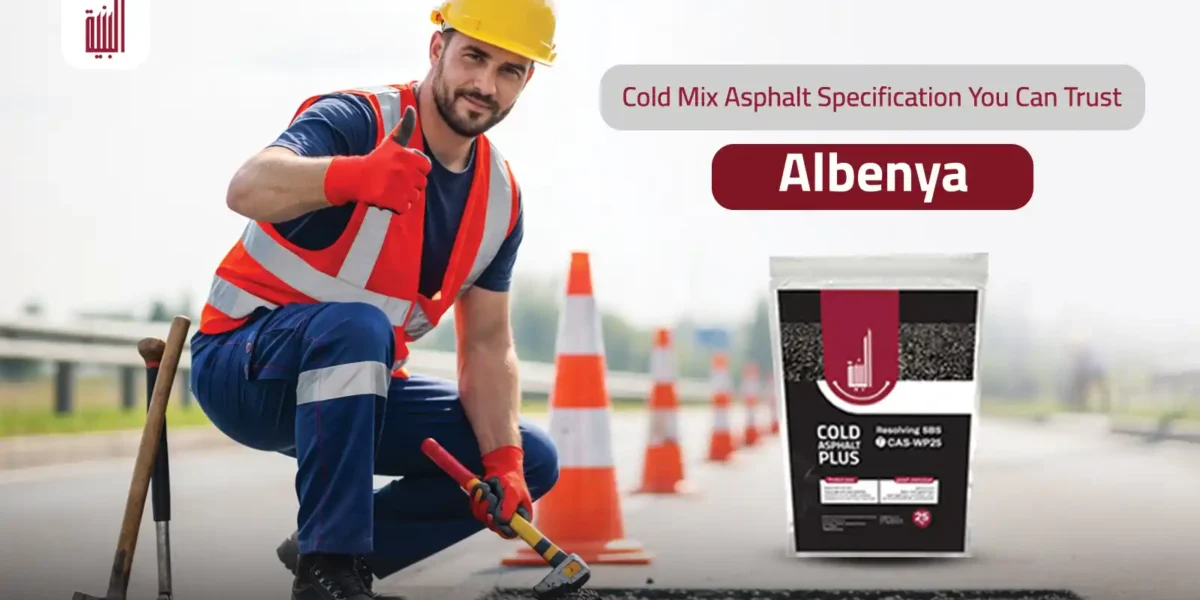
Cold Mix Asphalt Specification You Can Trust
Cold mix asphalt specification ensures the material used in road maintenance and repair meets engineering and performance standards. Correct specification contributes to the preservation of roads, increased safety, and lessening of the maintenance expenses in the long term. It also reduces the amount of waste material, can compact it properly, and gives the engineers an opportunity to choose the appropriate mix under the various environmental conditions and traffic loads
Overview of Cold Mix Asphalt Specification
Cold mix asphalt specification outlines the physical, chemical, and performance requirements for the material. It entails specifications on the source of materials, choice of binders, grading of aggregates, as well as mixing protocols. These standards will guarantee uniformity, workability, and sustainability of cold mix asphalt applications in different maintenance and repair works.
Key Technical Requirements for Cold Asphalt Materials
The cold asphalt materials should have technical requirements:
- Adequate viscosity of binder that can be used at ambient temperature to enable easy manipulation.
- Proper aggregate grading of even loads and structural stability.
- Correct mixing of mixtures to avoid segregation and guarantee strength.
- Good working ability to be easily placed and compacted even in restricted spaces.
- Water resistance, freeze-thaw, and environmental resistance.
- Adaptability to the pavement surfaces that are available to guarantee adhesion.
Approved Material Standards for Cold Asphalt Mixes
Cold asphalt mixes have approved standards of acceptable materials and formulations. Key references include:
- ASTM D6931 of emulsified asphalt viscosity.
- ASTM D977 of emulsified asphalt content.
- Community or national road maintenance regulations.
- European standards such as EN 13808 for bituminous emulsions.
- The standards guarantee consistency in material quality and performance of various road maintenance applications.
Aggregate Gradation and Binder Selection Guidelines
An appropriate choice of the aggregate size and the type of binder is essential:
- Aggregates should possess a given size range to be structurally sound and interlock.
- Binder type must be suitable for the project temperature, the project forecasted traffic loads, and the environmental conditions.
- Monitoring of the gradation curves should be done to ensure that the optimal density is used and the void is reduced.
- Compaction and bonding to the binder depend on aggregate shape and surface texture.
Performance Criteria for Cold Asphalt Applications
Performance standards will generally include:
- Compression and density are used to attain reduced load-bearing capacity.
- Both short and medium-term applications: resistance to rutting, cracking, and raveling.
- Strength and resistance to changes in traffic and environmental factors.
- Sticking to the surface of pavements, and sticking on the mixture.
- Maintainability to ensure the repair in the future without affecting the existing structures.
Quality Control and Inspection Requirements
Quality Control: The mix is to conform to specifications:
- Testing and sampling of materials before usage.
- Binder-content, viscosity, and aggregate-gradation laboratory tests.
- Placement and compaction practices would be inspected on-site.
- Environmental conditions monitoring when in application.
- Accountability and compliance with all quality control measures are documented.
Specifications for Road Maintenance and Repair Projects
Cold mix asphalt specifications for maintenance projects include:
- The maximum size of aggregate that can be used to maintain good compaction.
- High minimum content of binder to achieve adhesion and longevity.
- There has to be some degree of compaction and a smooth, safe road.
- Instructions of patching, pothole repair, and edge treatment to ensure uniformity.
- Seasonal or weather specifications.
Comparison Between Cold Asphalt and Hot Mix Standards
Cold asphalt mix is different in a number of ways to the hot mix, and it is important that the distinctions are known to project planning and material selection. The differences between them are primarily as follows:
| Feature | Cold Mix Asphalt | Hot Mix Asphalt |
| Application Temperature | Ambient, no heating required | High temperature requires heating plants |
| Binder Type | Emulsions or cutbacks suitable for ambient conditions | Traditional hot bitumen or modified binders |
| Performance Expectation | Temporary or semi-permanent repairs | Permanent structural paving |
| Energy & Deployment | Lower energy consumption, faster deployment | Higher energy use, slower deployment |
Compliance Procedures and Methods of Testing.
Compliance with cold mix asphalt specifications is critical to ensure the quality and durability of maintenance and repair projects. The laboratory testing is carried out to verify the binder content, viscosity, and aggregate properties that ensure that the mix is within design specifications.
This is done by field tests to test the density, compaction, and smoothness of the surface to ensure that the asphalt meets the expectations in real-life situations. A regular check upon placement ensures that the working methods and application procedures are in line with the specifications.
All the procedures can be verified and documented and reported processes ensure traceability. These documents are necessary in accountability and to facilitate in sustaining enhancements in road repair procedures. The correct compliance practices will provide a durable and dependable asphalt coating with the attainment of safety and performance standards.
Albenya Company Standards for Cold Mix Asphalt Specification
Albenya focuses on compliance with cold mix asphalt requirements on quality and performance. The specifications are made in accordance to best practice in the industry, with emphasis on material consistency, correct handling, appropriate application techniques, and environment to provide stable and long-lasting output. To have professional advice on your projects and have a review of the specifications and also to be provided with practical advice on how your projects could be done in maintenance or repair applications.
Contact Albenya today and talk directly to our specialists who can help you come up with a unique solution and be with you throughout the planning and execution.
FAQs
What is the main purpose of the cold mix asphalt specification?
To have the material work efficiently in terms of road condition maintenance and repair and at the same time retain durability, safety, and long performance.
What are the commonly used standards of cold mix asphalt?
ASTM D6931, ASTM D977, EN 13808 and local municipal or national roadway standards.
What is the relevance of aggregate gradation in cold mix asphalt?
Gradation is done properly to provide structural integrity, compaction, bonding with the binder, and durable pavement performance.
How are specifications verification checked?
By conducting laboratory analysis, field surveys, compliance with the procedures and adherence to the placement and compaction, and excellent documentation of all quality control measures.
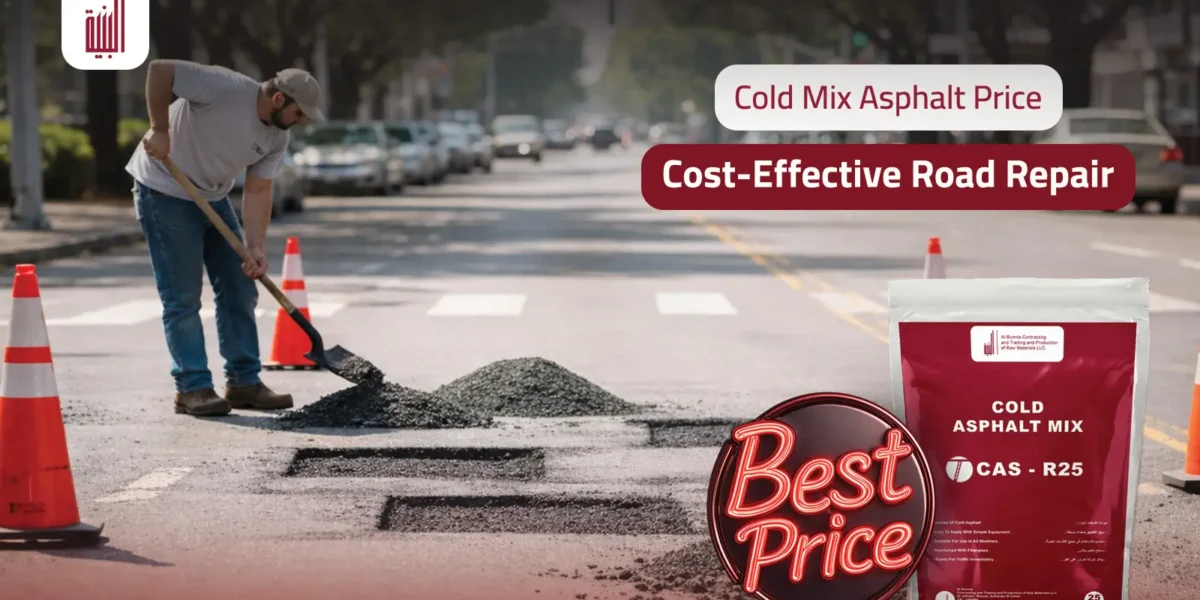
Cold Mix Asphalt Price | Cost-Effective Road Repair
Understanding the cold mix asphalt price is essential for planners, contractors, and road authorities seeking cost-effective maintenance solutions. The ease of use of cold mix asphalt is well known to be cheap as compared to the conventional paving materials, particularly during repair and maintenance works. It has a low cost of production and implementation, and this gives it an appealing choice when it comes to managing budgets of a road infrastructure without having to compromise on important performance.
Why Cold Mix Asphalt Offers Better Value for Money
The cold-mix asphalt is extensively considered a high-value solution since it maximizes the material and operational expenses in maintenance projects. It has been designed in such a way that it helps it to keep the budget under control without compromising on its practicality or speed of execution.
- Eliminates heating expenses necessary for production and use.
- Minimizes the use of specialized equipment and labor force.
- Reduces energy consumption relative to the hot mix asphalt.
- Reduces transportation and logistics costs.
- Storable for a long time without loss of materials.
- Faster repairs allow the reduction of the disruption of traffic and indirect costs.
- Best fitted in road repair works that require cost efficiency and are short and medium term.
What Determines the Cost of Cold Mix Asphalt?
Several key elements determine the final cold mix asphalt price, and understanding these factors helps decision-makers estimate costs accurately and plan budgets more effectively.
- Content of materials, such as aggregate grading and asphalt content.
- Aggregate quality, which is a direct influence on performance and durability.
- Binder/asphalt emulsion type in the mix.
- Standards of production and quality control.
- Distances between the production facility and the project site that would be covered by transport.
- Storage needs and method of packaging.
- Scopes of the projects are the bigger ones that tend to have economies of scale.
- The market conditions in the local market, supply, and demand.
Cold Mix Asphalt Price vs Hot Mix Asphalt: Cost Comparison
When comparing cold mix asphalt price to hot mix asphalt, cost differences become clear when evaluating production, application, and operational requirements. This comparison is useful to the project owners in that it assists them in selecting the most appropriate solution according to the budget and scope of the project.
| Cost Factor | Cold Mix Asphalt | Hot Mix Asphalt |
| Production process | Produced at ambient temperatures | Requires high-temperature heating plants |
| Energy consumption | Low energy usage | High fuel and energy consumption |
| Transportation | No temperature control needed | Temperature-controlled transport required |
| Equipment requirements | Basic tools and light equipment | Specialized paving and compaction equipment |
| Upfront material cost | Generally lower | Generally higher |
| Best use case | Maintenance and repair projects | New construction and full-depth paving |
Is Cold Mix Asphalt a Cost-Effective Solution?
As far as the lifecycle is concerned, cold mix asphalt is deemed economical in terms of maintenance and emergency repair. Although it will not be comparable with the long-term structural performance of hot mix asphalt, the low initial cost, as well as the rapid application, will minimize downtime and indirect costs, including the disruption of traffic and labor hours.
How cold mix asphalt price Impacts Project Budgets
Cold mix asphalt price has a direct impact on project budgeting, particularly for municipalities managing multiple repair sites. Reduced material and usage expenses enable the maintenance teams to overcome more defects in the same budget. This flexibility facilitates preventive maintenance measures and increased allocation of funds.
Affordable Cold Mix Asphalt for Road Maintenance Projects
Cost-effective cold mix asphalt remedies allow the maintenance of roads on a regular basis without having to spend beyond the budget. Its portability and high-speed deployment minimizes wastes and enhance cost management. Cold mix asphalt can still be a cost-effective solution to regular patching, pothole repairs, and preventive maintenance.
Cost Benefits of Using Cold Mix Asphalt for Repairs
Cold mix asphalt repair has a number of cost advantages, such as less labor needed, less investment in equipment, and less use of energy. These savings render it particularly fitting for isolated sites, emergency projects, and those projects that are financially constrained.
Cold Mix Asphalt Price for Small vs Large Projects
Cold mix asphalt price can vary depending on project size. Small projects have lower setup and mobilization expenses, whereas large programs of maintenance have the advantage of bulk buying and using materials efficiently. This scalability enables cold mix asphalt to accommodate a broad budget in terms of the project.
Cold Mix Asphalt Pricing That Fits Your Budget
They will have flexible cold mix asphalt pricing models that will assist clients in choosing the solutions that consider their financial and operational requirements. Cold mix asphalt can be customized in order to providean optimum balance between cost and performance, whether in short-term repair jobs or in long-term maintenance programs.
Albenya Company Insights on Cold Mix Asphalt Pricing
Albenya Company offers clear pricing and professional advice to help clients know about the costs of cold mix asphalt. Albenya offers cost-effective maintenance planning by concentrating on the quality of materials, efficient use, and long-term value of its products and services.
Contact Albenya Company today and speak with our specialists to get started. Our team will provide a detailed cost analysis, suggest the best cold mix asphalt solutions for your project, assist with scheduling and delivery, and offer ongoing support to ensure your maintenance work is completed efficiently and within budget.
FAQs
What affects cold mix asphalt price the most?
The primary factors that affect the pricing of cold mix asphalt are material quality, type of binder, transportation, and scale of the project.
Are cold mix asphalt lower in cost than hot-mix asphalt?
Cold mix asphalt is cheaper in most of the maintenance and repair uses because of the reduced cost of production and application.
Does cold mix asphalt aid in lowering the total costs of the project?
Yes, with lower material costs, less labor requirement, and speed of application, it can make the total project costs much lower.
Does the pricing of cold mix asphalt change according to the size of the project?
Yes, we can have different prices, small projects having low set-up costs, and large projects having volume efficiencies.
Cold Mix Asphalt Design Smart Solutions for Maintenance
Cold mix asphalt design is a crucial element in modern road construction and maintenance, designed to produce high-quality asphalt mixes without the need for heating, and this technology is suitable for application in diverse environmental conditions. Our company assists you in using various types of cold asphalt. Cold asphalt is preferred in many projects as it provides good cohesion and durability suitable for different surfaces.
Key Limitations and Challenges of Cold Mix Asphalt
Cold mix asphalt design has been one of the most widely used materials for paving roads, walkways, and parking areas for decades due to its relative durability, low cost, and ease of application. However, despite its widespread use,e some challenges may arise over time, such as:
- Cracks, potholes, and uneven surfaces can negatively impact road safety and appearance.
- One of the challenges of cold asphalt is the phenomenon of urban heat islands.
- Asphalt absorbs and retains significant amounts of heat for extended periods, contributing to the formation of urban heat islands and leading to higher temperatures in urban areas.
- Poor drainage is another challenge.e Asphalt does not have a high degree of porosity compared to other materials like permeable concrete or gravel, el which can lead to water accumulation on the surface.
- Despite its durability, cold asphalt has a lower load-bearing capacity than some other materials, such as concrete
Cold Mix Asphalt Design: Production and Preparation Methods
Cold asphalt is produced by mixing aggregate with bitumen emulsion or diluted bitumen at room temperature. The mixture is then spread and applied under the same conditions without the need for heating, with the following exceptions:
- When using bitumen emulsion, the aggregate can be moistened before mixing to improve homogeneity, and in contrast,t using diluted bitumen requires the aggregate to be dry at room temperature or lightly heated before mixing to ensure good adhesion.
- In most cold asphalt mixes, only the bitumen is heated when necessary, and then it is mixed with the other components without heating the aggregate, which reduces energy consumption and minimizes emissions.
- MC 3000 and SC 3000 diluted bitumen are among the most commonly used standard types in cold asphalt production due to their suitability for mixing and application at normal temperatures.
Materials and Components Used in Cold Mix Asphalt Design
| Description | Aspect |
| The asphalt used in cold asphalt paving is not fundamentally different from the mixes used in other surface paving techniques | Nature of Cold Asphalt |
| It has a high level of durability, mainly due to the selection of suitable aggregates in terms of size and gradation | Durability |
| Aggregates form the basic structure of the wearing course, enabling it to efficiently withstand various loads | Role of Aggregates |
| Like any asphalt mix, cold asphalt consists of coarse and fine aggregates, fillers, and a binder | Mix Components |
| The binder is either diluted bitumen or a bitumen emulsion | Type of Binder |
| Water is used when a bitumen emulsion is applied, while a solvent is used when diluted bitumen is used | Additional Components |
| The presence of water or solvent is what distinguishes cold asphalt mixes from hot asphalt mixes | Difference from Hot Mix Asphalt |
Durability and Long-Term Performance of Cold Mix Asphalt
Over the past decade road paving technologies have seen significant advancements with the emergence of warm mix techniques and these techniques have reduced mixing temperatures from the traditional high temperatures of 140 160 C for hot asphalt to lower temperatures typically between 100 130 C However the ultimate goal remains producing a high quality asphalt mix at room temperature without ever heating the aggregate Cold asphalt based on bitumen emulsions is one of the most obvious solutions for achieving this objective.
Why Cold Mix Asphalt Is Ideal for Road Repair Projects
With the continuous expansion of high-quality road construction, safety and comfort requirements for driving on road surfaces have increased:
- Asphalt, as a flexible surface, is a commonly used road paving material due to its suitable mechanical strength, good water resistance, high durability, and other distinctive engineering properties.
- Developing an effective cold asphalt mix using emulsion technology requires consideration of several key factors, most notably.
- The mix must have suitable workability, allowing it to be laid and compacted using conventional equipment such as pavers and rollers without the need for specialized machinery.
- After compaction, the asphalt mix must achieve sufficient mechanical strength quickly to allow the road to be opened to traffic immediately.
Common Uses of Cold Mix Asphalt Design in Pavement Maintenance
Cold asphalt mix design is a versatile material in road construction and maintenance, and it can be used efficiently in many practical applications:
- Cold asphalt is a practical and quick solution for Pothole Repair. Cold asphalt is also effectively used to repair wheel rim wear.
- Cold asphalt is used to fill road trenches and re-level pavements, helping contractors complete their work quickly and without the need for heavy equipment or complex heating processes.
- Cold mix asphalt design is an effective solution for quickly covering railway lines, whether on main or secondary roads,s as it allows the road to be reopened to traffic immediately after the covering work is completed.
Best Situations to Apply Cold Mix Asphalt
Cold Mix Asphalt is considered an ideal option for repairing small and medium-sized roads due to its ease of use, low cost,t and versatility:
- When applying cold mix asphalt design begin by removing any debris, crumb, or dirt from the hole or crack,k and use a stiff brush or broom to thoroughly clean the area, as this promotes the adhesion of the cold asphalt.
- Determine the depth and add gravel if needed. If the hole is deeper than two inches, fill the bottom with gravel or crushed stone.
- Compacting the asphalt is a crucial step to ensure the repair’s stability and longevity after compaction.
Quality Control and Testing Methods Followed by Albenya Company
Al Benya aims to become a leading cold asphalt producer, ensuring customer satisfaction and executing development projects in the Sultanate of Oman and around the world while maintaining the highest quality standards in all our work.
We firmly believe that the secret to any company’s success lies in its unwavering commitment to quality and occupational safety standards, providing a safe and healthy work environment for all our employees and leveraging our expertise to serve our customers in the best possible way.
FAQS
Can cold asphalt be used in wet conditions?
Yes, Cold Mix Asphalt is designed to perform effectively in all weather conditions, making it the ideal solution for urgent repairs.
Does cold asphalt last a long time?
When applied and compacted correctly, UltraPatch provides durable, long-lasting repairs.
What tools are required?
A hand trowel or a paddle is recommended to ensure proper asphalt compaction and optimal results.
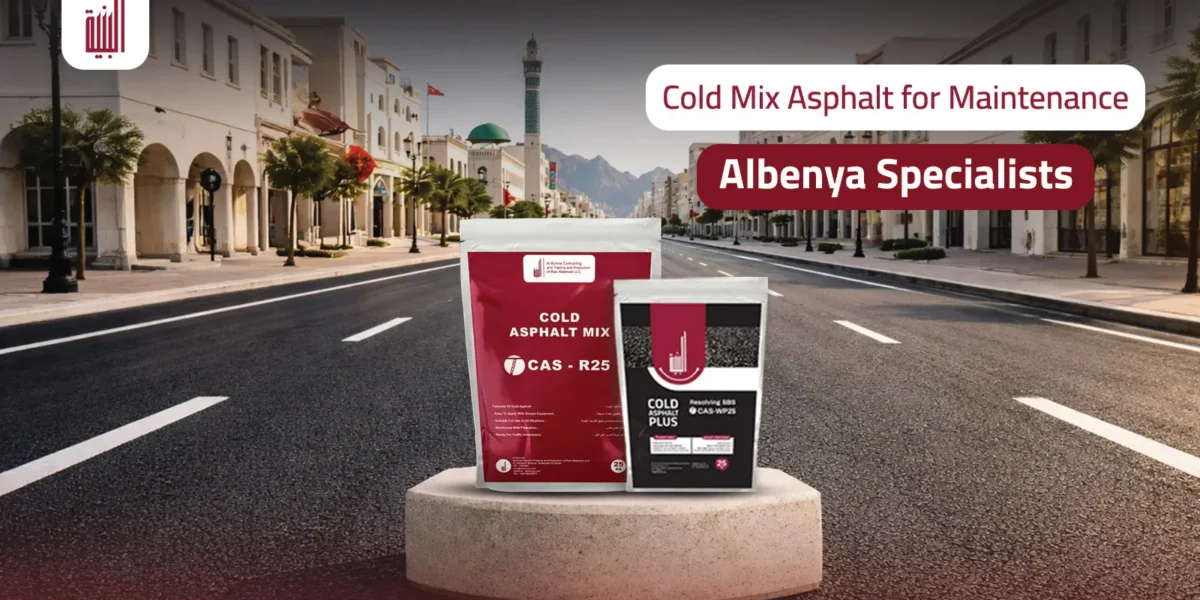
Cold Mix Asphalt for Maintenance
Cold mix asphalt plays a critical role in modern roadway maintenance, especially for rapid repairs and preventive maintenance programs. Unlike traditional hot mix asphalt, cold mix asphalt can be applied without heating, making it a practical and cost-effective solution for maintenance works in urban and remote areas. For municipalities and contractors, cold mix asphalt offers flexibility, safety, and speed in addressing surface defects such as potholes, cracks, and localized pavement failures.
What is a cold mix asphalt?
Cold mix asphalt is a bituminous paving material produced by mixing aggregates with asphalt emulsion or cutback asphalt at ambient temperatures. This composition permits the material to be workable without the use of special heating equipment. Cold mix asphalt is commonly used for temporary and semi-permanent repairs, particularly where immediate intervention is required or where hot mix asphalt is not readily available.
What are the disadvantages of cold mix asphalt?
Despite its practical benefits in maintenance works, cold mix asphalt has some technical limitations that should be considered during project planning. When the engineers and decision-makers are aware of these disadvantages, they can choose the appropriate solution and it depends on the traffic loads, environmental conditions, and the expectations of the performance.
| Disadvantage | Description | Impact on Maintenance |
| Lower structural strength | Cold mix asphalt provides less load-bearing capacity compared to hot mix asphalt | Not suitable for full-depth or structural pavement repairs |
| Reduced durability under heavy traffic | Performs less effectively in high-load and high-speed traffic areas | May require more frequent reapplication or monitoring |
| Weather-sensitive curing | Curing time is influenced by moisture and low temperatures | Performance may be reduced in wet or extremely cold conditions |
How do you make cold-mix asphalt?
Cold mix asphalt production focuses on simplicity, efficiency, and consistency to meet maintenance requirements without the need for heating. The design of the manufacturing process is to make the material workable and, at the same time, provide consistent on-site performance.
- To attain the desired interlocking and stability of the surface, graded aggregates are picked.
- Asphalt emulsion or cutback binders are combined at ambient temperatures.
- Mixing is controlled in order to achieve uniform aggregates coating.
- The production process does not need any heating equipment.
- Durability, adhesion and performance are enhanced by quality control measures.
Cold Asphalt Solutions for Emergency Road Repairs
Cold mix asphalt is widely used for emergency road repairs due to its ease of application and rapid deployment. It also enables the maintenance teams to reestablish the road performance within a short period without causing the road to be closed for a long duration. This is why cold asphalt is the best option to use when faced with an emergency pothole filling, utility cuts, and surface patches that require quick work in time-constrained projects.
Improving Roadway Safety with Cold Mix Asphalt Maintenance
Timely maintenance using cold mix asphalt helps reduce hazards such as uneven surfaces, loose aggregates, and water infiltration. This is because defects will be mitigated early enough, hence driving safety will be improved, the risks of accidents will be minimized, and the existing pavements will have longer service life. Cold mix asphalt enables safer repairs with minimal equipment and reduced exposure for workers
Cold Mix Asphalt Applications in Preventive Road Maintenance
Preventive maintenance programs often rely on cold-mix asphalt for localized treatments before damage escalates. It is used in applications such as crack sealing, edge repair, and shallow patching. When integrated into routine inspection cycles, cold mix asphalt supports proactive asset management and reduces long-term rehabilitation costs.
Maintenance Strategies Using Cold Asphalt Materials
Proper surface preparation, proper positioning, and proper compaction are the main factors concerned in effective maintenance strategies with the use of cold asphalt materials. It is necessary to choose an appropriate cold mix formulation depending on the quantity of traffic and environmental factors. Regular maintenance and re-application also enhance the performance of the pavements.
Cold Asphalt Performance in High-Traffic Maintenance Areas
In high-traffic areas, cold asphalt mix can deliver reliable short- to medium-term performance when properly designed and applied. Although it might not be able to displace hot mix asphalt in the case of permanent structural repair, developed cold mixes can support traffic up to the point that the road could be utilized until the time of major rehabilitation.
Sustainable Roadway Maintenance with Cold Mix Asphalt
Cold mix asphalt supports sustainable maintenance practices by reducing energy consumption and emissions associated with heating. Being stored and reused reduces the amount of waste in materials and reduces the temperature of applications, helping to reduce working conditions that are not safe. These factors make cold-mix asphalt an environmentally responsible option for roadway maintenance.
Albenya Company’s Approach to Roadway Maintenance Using Cold Asphalt
Albenya Company adopts a strategic approach to roadway maintenance by utilizing high-quality cold mix asphalt solutions tailored to project requirements. By using a critical choice of materials, professional application, and maintenance evaluation, Albenya guarantees good maintenance results which will lengthen pavement life and maximize maintenance budgets.
For professional assessment and tailored cold asphalt solutions for high-traffic roads, contact Albenya Company today. Our specialists are ready to support your maintenance projects with reliable materials and proven application expertise.
FAQs
What is cold mix asphalt mainly used for?
Cold mix asphalt is primarily used for maintenance activities such as pothole repairs, surface patching, and preventive maintenance works.
Is cold mix asphalt suitable for permanent repairs?
It is typically applied to make temporary or semi-temporary fixes, but there are complex formulations that are able to offer a long lasting life.
Can cold mix asphalt be applied in all weather conditions?
Cold mix asphalt can be applied in a wide range of conditions, but performance may vary in heavy rain or extreme cold.
Does cold mix asphalt require special equipment?
No, it can be installed with elementary equipment and that is why it is best in quick maintenance.
