
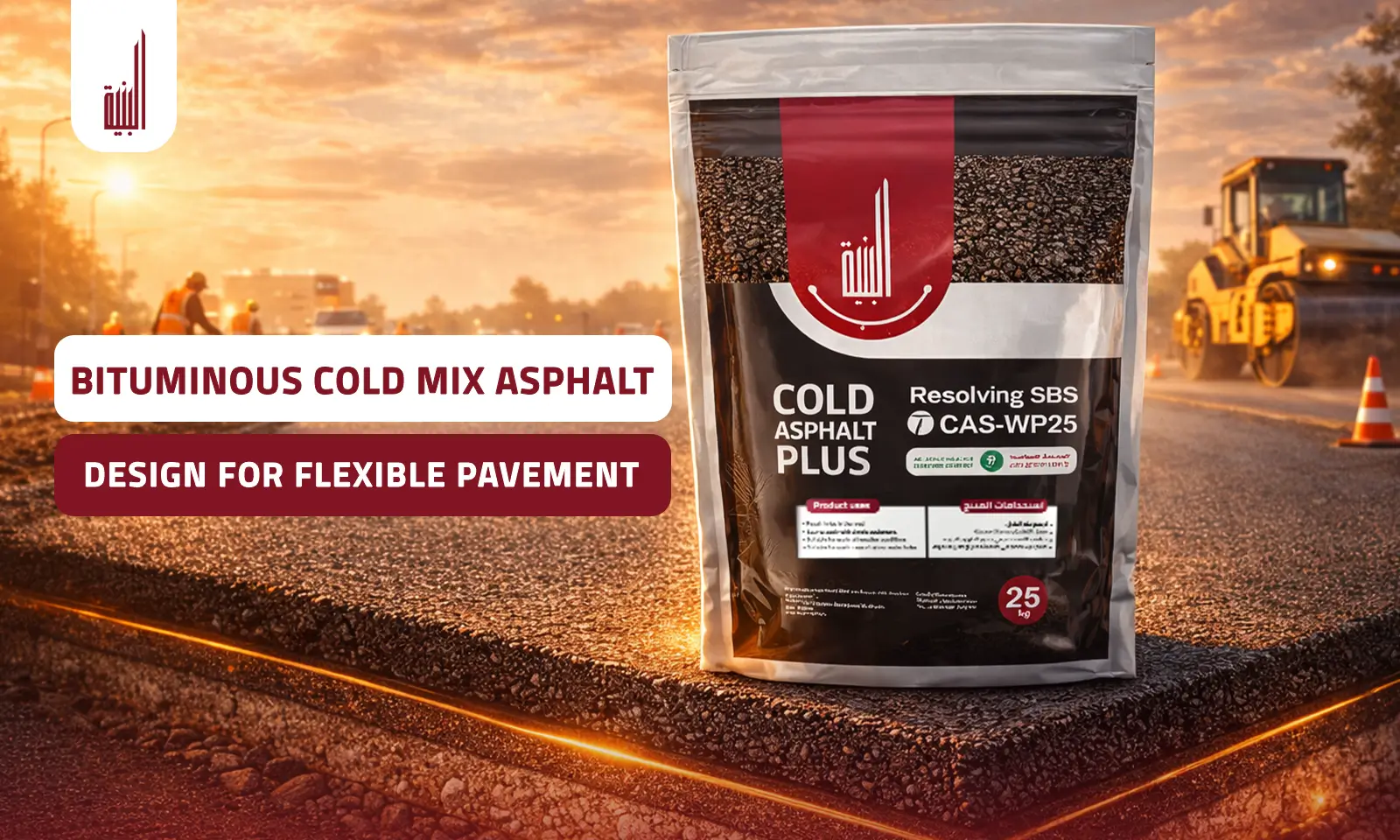
Alternative technologies are currently being used for sustainable road paving, such as recycled asphalt paving using bitumen emulsions. These technologies effectively contribute to improved economic and environmental performance. The aggregate and asphalt are mixed according to the application, and the composition and storage capacity of the cold emulsion mix are considered and cold mix asphalt design requires determining the grade and proportions of the emulsion used, as well as workability, stability, strength, and moisture sensitivity. Mixes are designed according to the intended purpose and climatic conditions.
Key Factors Affecting Cold Mix Asphalt Design
The performance of compacted asphalt mixtures is affected by the type and gradation of aggregates, type of filler and mixture, use of fibers, type of emulsifier, water content, compaction properties, curing temperature, and so on, and studies have shown the advantages of cold-mix asphalt over conventional asphalt in terms of energy consumption and greenhouse gas emissions during production and paving.
Material Selection Criteria in Cold Mix Asphalt Design
Initial characterization of the cold slurry included binder core gradation, black rock gradation, and selected aggregate gradation. Only the recycled 50 mm (3/4 inch) run was used, and the recycled blade 4 (4.75 mm) was further divided on the blade to form two sets of recycled blades: a thick blade (residual in blade No. 4) and a fine blade No. 4 (4.4). The average binder content in recycled flooring across the five sources ranged from 5.2% to 7.8%. In one study, a highly cationic asphaltene emulsion (CSS-1h) was used for all substrates.
Aggregate Gradation Requirements for Cold Mix Asphalt
The type of aggregate used in open-grade mixes shall meet specific requirements regarding shape, size, gradation, clarity, and surface properties:
- Aggregate size shall not exceed 25.0 mm for the base course and 12.5 mm for the top course. The percentage of particles passing through the 4.75 mm filter should be between 0% and 10%, and the percentage of particles passing through the 75 micron filter should not exceed 2%.
- To ensure adequate use of asphalt emulsion to hold aggregates in place and reduce particle attachment, the uniform particle size should be reduced.
- The percentage of crushed surface in the aggregate should be 65% two-sided and 90% one-sided. The asphalt emulsion and the coarse aggregate must be compatible to achieve effective bonding
Binder Type and Content in Cold Mix Asphalt Design
For screening analysis of fine aggregates and coarse aggregates using the AASHTO T 27 standard. Generally, recycled asphalt particles are considered “black rock” or aggregate in cold recycling mix designs. AASHTO Standard T 164-93, “Quantitative Removal of Bitumen from Asphalt Pavements,” was used to determine the asphalt binder content in recycled asphalt. Therefore, bitumen emulsion is the main material used in cold asphalt.
Mix Proportioning Methods for Cold Mix Asphalt
| Topic | Details |
| Selection of Recycling Agent | Types of recycled aggregate include emulsified recycled aggregate, less hard asphalt cement (such as asphalt cement grades AC-2.5 and AC-5), and softened asphalt. The choice of recycled material depends on its interaction with the aged asphalt, which is affected by time and temperature. At room temperature, the effect of recycled materials on asphalt softening is a time- and temperature-dependent physicochemical process. |
| Asphalt Cement | Different viscosities of asphalt cements at room temperature should be considered to facilitate the workability of recycled mixtures. Cements of higher viscosity may be used if the proportion of material in the recycled mixture passing through a 75-micrometer sieve (No. 200) is small. Emulsified asphalt is the best way to determine its suitability as a recycling material. |
Performance Requirements in Cold Mix Asphalt Design
The performance of cold mix asphalt (CMA) is affected by aggregate type and gradation, type of fillers and admixtures, fibers used, type of emulsifier, slurry content, curing properties, curing temperature, and other factors.
Although laboratory work is a valuable tool for evaluating the properties of cold aged asphalt, this trend of activity needs to be monitored and supported by pilot test departments to ensure the successful field application of cold-aged asphalt. Field tests of cold mixtures using 25 mm thick semi-asphalt concrete (SDBC) and 20 mm thick mixed fabric (PMC) were conducted in snow-covered, heavy rainfall and desert areas of India. The results were compared with control sections of the same asphalt mixture.
Laboratory Testing for Cold Mix Asphalt Design Validation
Asphalt in situ recycling (CIR) is a promising technique for asphalt road rehabilitation. However, CIR-based asphalt pavements often contain large amounts of air voids due to moisture content during construction, and pavement moisture content is an important factor in determining moisture life. Therefore, the purpose of this study was to evaluate the in vitro performance of CIR asphalt mixtures under freeze-thaw conditions (where the mixtures were classified as “dry” before freeze-thawing, and the mixtures were cooled at −18°C for 16 h and then transferred to water vane and distilled from 6°C-thawed) to predict the performance of the in situ scaffold using experimental mechanical scaffold design (PMED).
Common Challenges in Cold Mix Asphalt Design
Cold asphalt mix design offers numerous advantages for road paving, but it also presents some challenges. In some countries, its use can pose significant administrative, logistical, and technical hurdles:
- The use of modern technologies, such as cold asphalt, can present several administrative and logistical challenges for countries.
- Cold asphalt requires specialized equipment and technical expertise. Training and capacity building are essential to equip personnel with the knowledge and skills necessary to use these technologies.
- In some countries, the supply chain for cold asphalt materials may not be sufficiently developed, leading to delays in procuring the necessary materials and increased costs.
- In addition to the administrative and logistical challenges, the use of cold asphalt can present several technical challenges.
- Cold asphalt requires a specific mix design, which may vary depending on the application and weather conditions.
Albenya Company Approach to Cold Mix Asphalt Design
Albenya Company takes a practical, performance-driven approach to the development of cold mix asphalt design with a focus on durability, cost-effectiveness and ease of use in a variety of environments:
- The design process begins with an assessment of all project requirements, including traffic loads, weather conditions, and existing pavement structures.
- Based on these factors, select the right aggregates with the right particle size distribution to ensure the mechanical coupling and structural stability of the mixture.
- Choosing the best binding agent is a key element in Albenya Company’s approach, which allows for the production of high-quality cold asphalt.
FAQS
What are the components of cold asphalt?
Aggregation: The main components of cold mix asphalt design are crushed stone, sand, and gravel. The filler material is selected based on factors such as particle size distribution and shape.
Is cold asphalt effective for sinkholes?
Absolutely. The polymers in cold asphalt absorb moisture, so our products can be used in various weather conditions.
Is it necessary to prepare the hole before filling it?
Yes, it is important to remove any loose soil or rock, as this helps the cold asphalt adhere to the solid surface. If the hole is shallow, it is advisable to add gravel to improve the bonding of the cold asphalt.
Leave A Comment