
Cold Asphalt
Cold Asphalt Curing Time
Cold asphalt is a material commonly used for localized pavement maintenance, pothole repair, road patching and other situations where a convenient repair material is required without the use of the heat requirements of hot-mix asphalt. A frequently asked issue after installation is how long after the repair should the area be left untouched to allow for normal traffic. Many factors influence the cold asphalt curing time, such as the formulation of the product, climate conditions, thickness of the layer, compaction, traffic, moisture, and weather conditions. Cold asphalt products can be produced with different curing mechanisms and binders, unlike hot asphalt, which is very dependent on temperature during product placement and cooling. It is important for contractors to understand these factors to help plan the repair and when the repaired surface is ready for use.
What Is Cold Asphalt Curing Time?
cold asphalt curing time is the time of asphalt materials that are laid down as a cold repair and need to gain a certain level of stability and strength.
The process for making cold asphalt products is unique from traditional hot-mix asphalt. Many use asphalt emulsion, cutback binders, or other similar materials that can be placed at ambient temperatures. During the curing process, moisture or volatiles can evaporate from the mixture, leading to increased stability in the binder and aggregate structure.
Curing is not the same as surface drying. A repair can look solid on top but may not be solid on the bottom, as the final stability of the material is still being created in the bottom.
The curing time will be different for various products and applications. The technical instructions provided by the manufacturer shall always be adhered to by the Contractor for placement, compaction, traffic opening, and maintenance.
How Long Is the Typical Cold Asphalt Curing Time?
The cold asphalt curing time is from several hours to several days depending on the product and weather conditions. Some localized repairs can be opened to traffic after proper compaction, relatively soon after compaction, and the material may increase in strength after compaction.
The curing time is dependent upon several factors:
| Factor | Effect on curing |
| Temperature | Warmer conditions can accelerate evaporation and binder development |
| Humidity | High humidity may slow moisture loss |
| Rain | Can interfere with curing and surface stability |
| Repair thickness | Thicker applications may require more time |
| Compaction | Proper compaction improves initial stability |
| Traffic | Controlled traffic can assist seating in some applications |
| Product formulation | Different binders have different curing characteristics. |
This means that the curing time is not the same for all cold asphalt products. The manufacturer shall establish a recommended exposure period and/or additional curing and those recommendations shall take precedence over general estimates.
Reliable Asphalt Maintenance Services From Albenya
Albenya provides asphalt-related products and road maintenance solutions for different pavement applications in Saudi Arabia. It offers a suite of cold asphalt solutions to meet practical repair and maintenance needs while taking into consideration how materials are handled and applied.
The right product is merely one-half of a successful repair. Performance of the repaired area can be affected by the surface preparation, placement, compaction, and post-installation conditions.
Contractors and maintenance crews can use the properties of the product chosen to determine the way the cold asphalt should be stored, installed, compacted, and opened to traffic. In search of a suitable cold asphalt solution? For product and application information, contact us.
How Traffic and Compaction Influence Asphalt Curing
The curing time for the asphalt after repair has a direct correlation with how it is compacted and managed after it is installed. Compaction will help to minimize air voids, increase contact between the aggregates and promote initial stability of the repair. If it is not compacted enough, it can be loose and subject to displacement when a load is applied to the vehicle. There can also be excessive or inappropriate traffic following the installation that can interfere with the repair before it has a chance to become stable.
Traffic must, therefore, be taken into account when planning a project. Controlled traffic can help the material settle, whereas heavy traffic may cause deformation if the repair has not reached the proper condition; this varies depending on the product. There are basically three points to consider in proper compaction:
Setting up a clean and stable repair area.
- Setting out the material in appropriate lifts when necessary.
- Ensuring an even distribution of the material.
- Using available equipment to compact the repair.
- Inspecting the work-finished surface for movement and loss of material.
The particular compaction method should be based on the technical requirements of the product and the conditions of the repair site.
How to Tell When Cold Asphalt Is Fully Cured
The cold asphalt curing time needs to be evaluated based on more than the appearance of the surface. A repair may feel hard or dry as the material is curing. A few practical measures that can be used to assess the stability of the repair are: surface firmness, stability in anticipated traffic, retention of aggregates and absence of excessive deformation. However, it is not possible to ascertain the exact curing state of all products by visual inspection. The best source for determining curing and traffic opening requirements is the manufacturer’s technical specification. On larger projects, the contractors may also employ inspection procedures or testing requirements as directed by the project engineer or as per the applicable technical standards.
What Can Delay the Curing of Cold Asphalt?
There are several site conditions that can cause an excess curing time for the cold asphalt. These conditions can be understood to ensure that the contractor will not put the repair in a situation where it is demanded before it is ready, before it reaches a stage of stability.
Common causes include:
- Low temperatures, which delay binder development or evaporation.
- High relative humidity, which decreases the loss of moisture.
- Water or rain that goes into the newly sealed area.
- Excessive repair thickness.
- Faulty drainage around the repair area.
- Insufficient compaction.
- Unstable or contaminated subsoil.
- Heavy usage prior to proper initial stability.
Product performance may also vary depending on storage conditions. Cold asphalt should be stored as directed by the manufacturer so as to avoid changes in the material properties prior to application. If the repair is beginning to look like it’s taking longer than normal to cure, make sure to evaluate the repair instead of thinking that simply using more traffic will cure it.
FAQS
How long does cold asphalt take to cure?
The cold asphalt curing time varies according to the product, weather, application thickness, compaction, moisture, and traffic conditions. Some repairs can handle controlled traffic relatively quickly, while full curing may continue for several days.
Can cold asphalt be used in wet conditions?
Suitability for wet conditions depends on the specific product formulation and manufacturer’s instructions. Water can affect adhesion, compaction, and curing, so the repair area should generally be prepared according to the product’s stated application requirements.
Does traffic help cold asphalt cure?
Controlled traffic may help some cold asphalt repairs settle after proper compaction, depending on the product. However, heavy or uncontrolled traffic can damage a repair before it develops sufficient stability, so traffic-opening instructions should be followed.
Why is my cold asphalt repair still soft?
A soft repair may result from insufficient compaction, excessive moisture, low temperatures, an unsuitable application thickness, or product-specific curing characteristics. The repair should be assessed against the manufacturer’s installation and curing requirements.
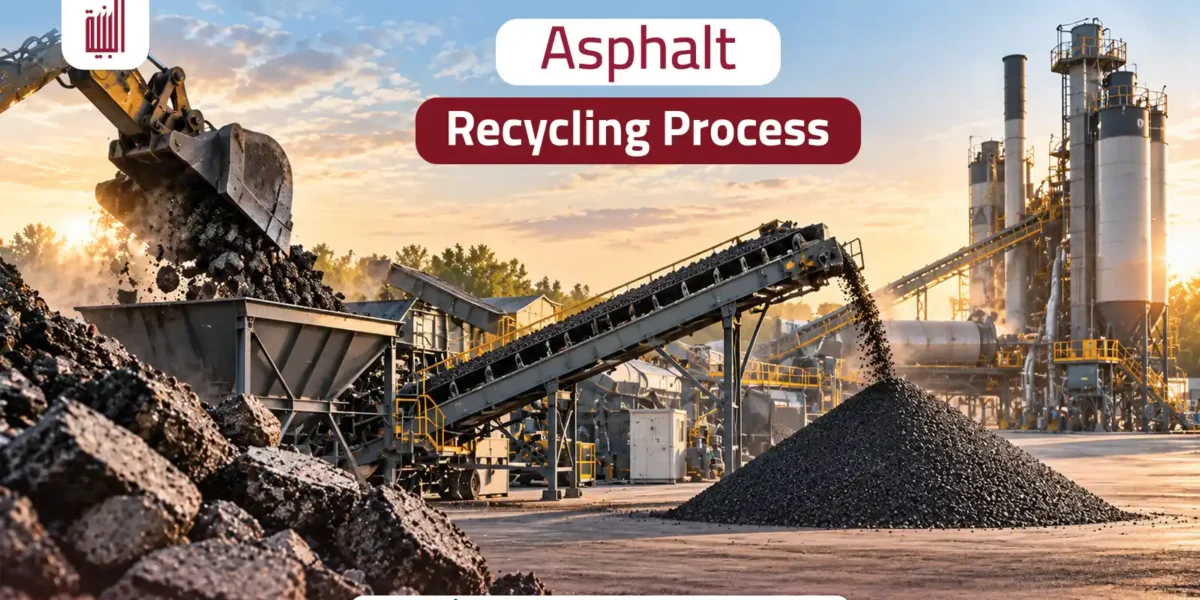
Asphalt Recycling Process
Old asphalt material is plentiful and can be collected and reused in road maintenance and/or rehabilitation projects. Recycling of this material can help to decrease the need for additional aggregates and asphalt binder and can offer a viable method for pavement renewal. asphalt recycling process refers to the removal, processing and use of existing pavement material in new or existing pavement applications. The specific process used will be determined by the condition of the pavement, project specifications, equipment available and the kind of recycling method used. Knowing the general phases and available techniques can assist contractors and road authorities with the planning of pavement projects more effectively.
What Is the Asphalt Recycling Process?
asphalt recycling process to recover existing asphalt pavement materials so part of it may be used for the reconstruction or maintenance of roads. These conditions can be achieved by recycling removed asphalt to create reclaimed asphalt pavement (RAP) as a material that is more useful than asphalt waste.
Lots of valuable aggregates and residual asphalt binder may be contained in reclaimed material. Once processed and quality checked, it can be used in new asphalt or recycled using recycling methods on site.
Different pavement rehabilitation needs can be treated in the same way, depending on the pavement condition, material properties, traffic needs, and project specifications.
How Does the Asphalt Recycling Process Work?
The first step in asphalt recycling process is to remove or treat existing pavement. The material is then shipped to the recycling plant or recycled at the location, depending on the recycling process chosen.
The existing pavement should be evaluated prior to recycling to establish the pavement composition and condition. Materials can be milled from the surface or removed during deeper pavement rehabilitation.
Reclaimed asphalt is generally prepared for reuse by reducing the particle size or by adjusting the material quality. It can then be mixed with any new aggregates, asphalt binder, recycling additives, or approved materials as per the chosen mixture design. The rock product to be recycled shall be technically satisfactory for the purposes to which it is intended.
Main Stages of Asphalt Recycling
The asphalt recycling process may include several steps, but the number of steps will depend on the technology used for recycling.
- Pavement Assessment: Existing pavement is assessed to gain an understanding of the condition, composition and rehabilitation needs of the pavement.
- Existing asphalt is milled/removed from the pavement.
- Material processing: Reclaimed asphalt is screened, crushed, or otherwise processed to make it the right consistency.
- Material Testing: The reclaimed material is tested for aggregate properties, binder properties, as well as other aggregate parameters.
- Recycled material mixing: When necessary, the recycled material is mixed with the new material or additives.
- Placement: Recycled mixture is being placed with appropriate paving equipment.
- Compaction: Rollers is used to compact the material to provide the desired pavement density.
- Quality control: Final pavement is inspected and tested as per project requirements.
Effective quality control during all of these is critical because characteristics of reclaimed pavement may be different depending on the type of original pavement and previous maintenance.
Hot Mix and Cold Recycling Methods Explained
There are various methods that can be employed in the asphalt recycling process for a particular project. There are two general classifications: hot recycling and cold recycling, and a variety of specific technologies will fall under each of these classifications.
Generally, hot recycling requires heating reclaimed asphalt material so that it can be mixed into the new asphalt mixture. This may occur at the asphalt mixing plant where the RAP is mixed with new aggregates and binder as needed. Cold recycling is a recycling process that requires minimal or no heating. Reclaimed pavement may be processed and mixed with various materials such as asphalt emulsion, foamed asphalt, cement, or other stabilizing agents, depending on the technique.
| Recycling method | General approach | Typical consideration |
| Hot mix recycling | RAP is incorporated into a heated asphalt mixture | Requires temperature and mixture control |
| Cold in-place recycling | Existing pavement is processed and treated on site | Reduces the need to transport removed material |
| Full-depth reclamation | Pavement and underlying material are processed together | Used for deeper pavement rehabilitation |
| Plant recycling | RAP is processed and incorporated at an asphalt plant | Allows controlled mixture production |
The appropriate technique should be selected based on pavement condition, structural requirements, available equipment, and project specifications.
Environmental Benefits of the Asphalt Recycling Process
Asphalt Recycling can benefit the environment by reducing the need to dispose of materials. Packing with existing pavement can also help to reduce the need for virgin aggregates and can also help to decrease the amount of new asphalt binder needed in some applications.
The possible benefits for the environment are:
- Less use of virgin aggregate resources.
- Reduced amounts of removed pavement taken for disposal.
- Decreased demand for moving new raw materials in projects.
- Use of recycled asphalt binder and aggregate.
- More efficient use of materials from pavement rehabilitation.
Depending on the recycling approach, transportation needs, energy consumption, the amount of material being recycled or project conditions, the actual environmental impact will vary. The process of recycling is best when done as part of an appropriate pavement management program and doesn’t fit into a single cookie cutter solution.
When Is Recycling Old Asphalt a Practical Choice?
The asphalt recycling process may be an effective solution if materials can be recovered from existing pavement and the project conditions are favorable for recycling. It has a special significance for rehabilitation schemes involving the large removal or processing of existing asphalt. There are a number of factors to consider when choosing a method of recycling:
- Existing pavement condition
- The material used and its quality.
- Required pavement performance
- Traffic loading
- Available recycling equipment
- Transportation distances
- Project specifications
- Local material availability
Not all pavements can be recycled. The rehabilitation strategy may be affected by severe contamination, inappropriate material properties, large-scale structural damage, or particular project-specific requirements. A technical evaluation is used to identify if reclaimed materials will comply with the standards for the pavement being proposed.
Sustainable Road Solutions With Albenya
Albenya supports road and pavement projects with asphalt-related products and solutions designed for different maintenance and construction requirements. Sustainable pavement management can involve selecting appropriate materials, reducing unnecessary waste, and using resources efficiently throughout the project lifecycle.
For contractors and project managers, understanding available asphalt materials is an important part of planning road maintenance and rehabilitation work. The right solution depends on pavement condition, application requirements, project scale, and technical specifications.
Looking for practical asphalt solutions in Saudi Arabia? Contact us to discuss your project needs.
FAQS
What is the asphalt recycling process used for?
The asphalt recycling process is used to recover and reuse existing pavement materials in road construction and rehabilitation. Depending on the selected method, reclaimed asphalt can be incorporated into new mixtures or processed directly within the existing pavement
Is recycled asphalt suitable for roads?
Recycled asphalt can be suitable for various pavement applications when the reclaimed material is properly processed, tested, and incorporated into a mixture that meets the required engineering and project specifications
What is the difference between hot and cold asphalt recycling?
Hot recycling uses heat to incorporate reclaimed asphalt into a new asphalt mixture, while cold recycling generally processes reclaimed pavement with limited or no heating. The suitable method depends on pavement conditions and project requirements
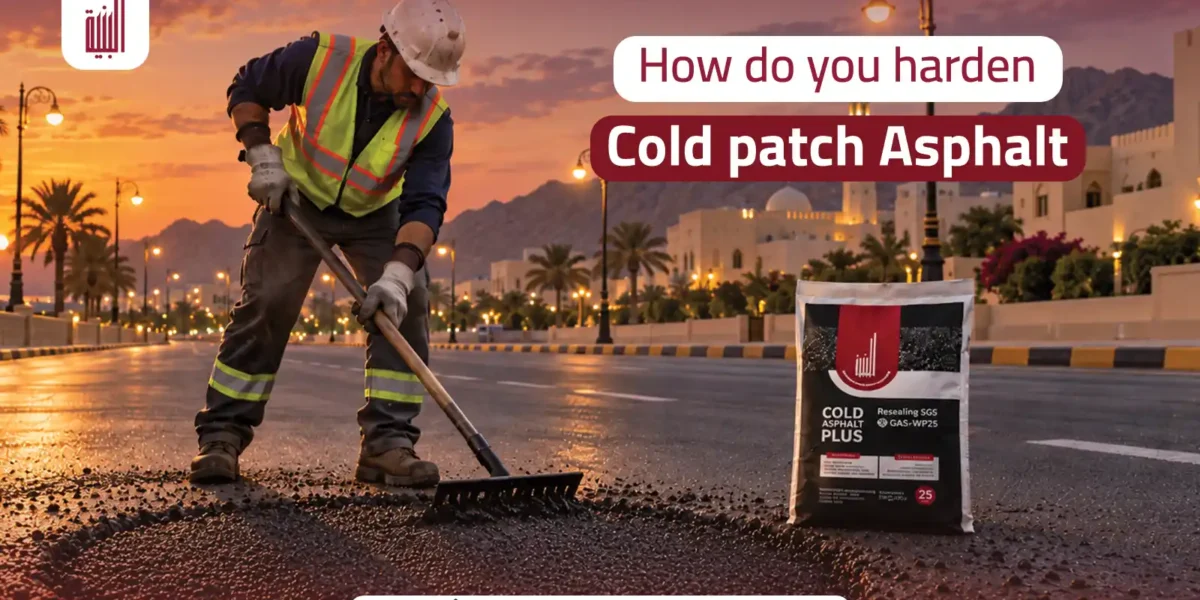
How Do You Harden Cold Patch Asphalt
Without the use of hot asphalt equipment, cold patch asphalt is a workable way to fix potholes, cracks, and damaged pavement.
How do you harden cold patch asphalt? To harden the material and guarantee a strong, long-lasting repair, proper application, solvent evaporation, and thorough compaction are crucial.
How Do You Harden Cold Patch Asphalt Effectively?
How do you harden cold patch asphalt? In order to properly harden cold patch asphalt, the repair area must first be thoroughly cleaned and dried. To guarantee adequate adhesion, remove standing water, mud, and loose debris:
- Apply the cold patch in layers no thicker than two inches, making sure to fully compact each layer before moving on to the next.
- To eliminate air spaces and create a strong aggregate interlock, use a vibratory plate compactor or heavy hand tamper.
- To lessen tackiness, apply a thin layer of Portland cement, limestone dust, or masonry sand to the surface after compaction.
- Lastly, as the solvents gradually evaporate and the material solidifies, let regular vehicle traffic apply more pressure and compaction.
What Makes Cold Patch Asphalt Harden?
Instead of using heat to harden cold patch asphalt, mechanical compaction is the main method. The cold mix needs to be firmly packed using a hand tamper, plate compactor, or car tires after the repair area has been cleaned and dried. The density and strength of the patch are increased by proper compaction, which also helps the aggregate particles lock together and minimize air gaps.
How do you harden cold patch asphalt? Applying the material in thin layers and compacting each layer independently yields better results for deeper repairs. More pressure helps solidify the material and increase its stability as cars progressively pass over the repaired area. A stronger and longer-lasting cold patch asphalt repair is the result of proper surface preparation, high-quality materials, sufficient compaction, and regular traffic.
How Do You Harden Cold Patch Asphalt After Application?
One of the most crucial steps in helping cold patch asphalt solidify and stabilize after application is appropriate compaction:
- Apply mechanical pressure and eliminate internal air gaps using a hand tamper, small roller, or other compaction tools to strengthen the bond between the aggregate and asphalt binder.
- Density and strength can be increased by making multiple deliberate passes.
- The hardening process is also influenced by temperature, since warmer weather typically speeds up curing.
- Select a winter-grade or fast-setting cold patch product made for the anticipated temperature range for quicker results.
- When it comes to application, compaction, temperature, and any authorized additives, always adhere to the manufacturer’s instructions.
Preparing the Surface Before Applying Cold Patch Asphalt
A robust and long-lasting cold patch asphalt repair requires careful surface preparation. Using a stiff broom, wire brush, shop vacuum, or blower, begin by clearing the damaged area of loose asphalt, gravel, dirt, dust, and other debris. It’s also important to get rid of any roots and vegetation that are growing inside the pothole or crack.
How do you harden cold patch asphalt. Before applying the patch, let the area completely dry if it has been cleaned or has standing water. The damaged edges can be squared or slightly undercut to give the cold patch material a solid surface for improved bonding. A stable, dry, and clean base promotes better adhesion and lessens early failure.
Get Professional Asphalt Repair Solutions From Albenya
How do you harden cold patch asphalt? Albenya offers useful asphalt repair services that effectively address potholes, cracks, and damaged pavement:
- Its cold asphalt products can be applied without the heating requirements of conventional hot asphalt, are lightweight, and require little equipment.
- The damaged area must be prepared; loose materials and standing water must be removed, cold asphalt must be applied, and it must be properly compacted to increase durability.
- Roads, parking lots, driveways, sidewalks, and other pavement applications can all be made with Albenya’s cold asphalt.
- It provides a practical choice for emergency maintenance and repairs in various weather conditions and helps minimize traffic disruption because it is made to retain its integrity after compaction.
The Role of Compaction in Cold Patch Asphalt Hardening
After application, compaction is essential for cold patch asphalt to solidify and stabilize. Cold-mix asphalt can stay soft unless it is properly compressed because it contains oils that keep it workable:
- Each layer can be efficiently compacted by applying the material in layers no thicker than two inches.
- Strong compaction can be achieved with a drum roller, but when necessary, a plate compactor or hand tamper can also be utilized.
- To improve binding and lower the chance of settling or displacement, the mix should be compacted right away after placement.
- A denser, more stable patch that can tolerate traffic and frequent pavement use is produced with proper compaction.
How Weather Conditions Affect Cold Patch Asphalt
| Weather Condition | Effect on Cold Patch Asphalt |
| Temperature | The ease with which the material spreads, bonds, and compacts can be affected by temperature. While temperatures above 50°F (10°C) often offer more practical conditions for application, cold temperatures can make asphalt stiffer and decrease adherence. |
| Wind | The ease with which the material spreads, bonds, and compacts can be affected by wind. |
| Rain | Rain can allow water to seep into gaps and improperly applied patches, increasing deterioration over time. |
| Snow | Snow can allow water to seep into gaps and improperly applied patches, increasing deterioration over time. |
| Humidity | High humidity can inhibit the hardening process. |
| Moisture | Moisture can damage the repair by creating a bonding barrier. |
| Optimal Results | Apply cold patch asphalt as soon as possible, compact it completely, and shield the repair from heavy precipitation for optimal results. |
Contact us
Searching for dependable and long-lasting asphalt repair options?
For expert cold patch asphalt services with long-lasting results, contact us. Give your roads the high-quality repair they need by getting in touch with Albunya right now.
FAQS
How is cold patch asphalt hardened?
Using a mechanical compactor or a hand tamper, cold patch asphalt can be completely compacted to harden it. This enhances adherence to the current asphalt surface and eliminates air spaces.
Does pressure aid in the hardening of cold patch asphalt?
Indeed. The asphalt mixture is compressed and made more stable by repeatedly driving a heavy vehicle, like a car or truck, over the patched area.
Can hardened cold patch asphalt be protected by sealcoating?
Indeed. Sealcoating can offer extra defense against moisture, UV radiation, and environmental elements once the patch has completely solidified
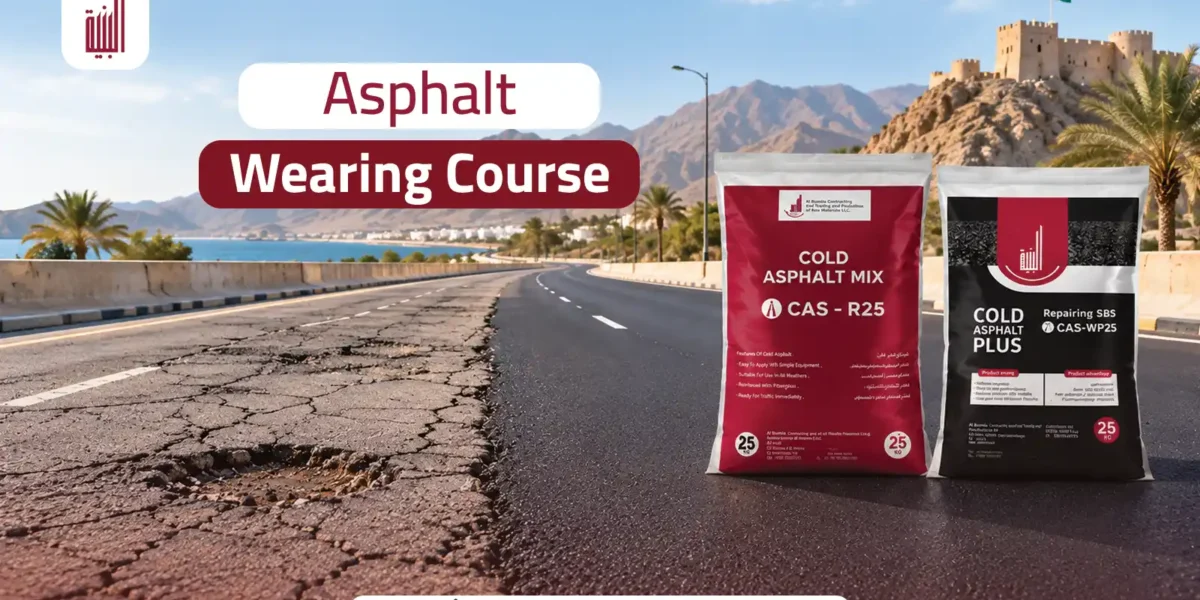
Asphalt Wearing Course
The asphalt pavement’s top layer is very significant in terms of roadway performance under traffic, weather conditions, and repeated loading. The asphalt wearing course is the topmost layer of asphalt that is intended to ensure a good riding surface and to help protect the underlying structure of the pavement. The material composition, thickness, compaction, and installation can all influence the performance of a pavement. Knowing the characteristics of this layer helps road contractors, project managers, and property owners decide on pavement construction and maintenance more wisely
What Is an Asphalt Wearing Course?
Asphalt wearing course is the most important asphalt that is installed on top of the pavement structure. It is the surface that comes in direct contact with your car tires, rain, temperature fluctuations, dust, and other environmental elements.
The wearing course serves both functional and protective purposes as compared to deeper pavement layers, which serve mainly structural purposes. It offers a fairly even driver surface, spreads traffic stresses, and decreases the seepage of water into the layers beneath.
It is usually manufactured from carefully selected aggregates, asphalt binder, and other approved materials based on the specifications of the project. The final product should offer adequate resistance to deformation during anticipated traffic, skid resistance, and adequate durability
How Does an Asphalt Wearing Course Protect the Pavement?
A properly designed asphalt wearing course creates a protective surface between traffic and the structural pavement layers underneath. This helps reduce direct exposure of the base and subbase to water, mechanical wear, and environmental conditions.
Its protective role can include:
- Providing resistance against repeated vehicle loading and surface abrasion.
- Helping reduce water infiltration through the pavement surface.
- Creating a smoother and more consistent riding surface.
- Improving traction when the mixture and texture are properly designed.
- Protecting lower pavement layers from direct weather exposure.
The effectiveness of this protection depends heavily on construction quality. Poor compaction, unsuitable materials, inadequate drainage, or improper surface preparation can reduce pavement performance even when the selected asphalt mixture is appropriate
Asphalt Wearing Course Thickness and Design Factors
It is not a universal rule that the same thickness of an asphalt wearing course is required in all roads. It is dependent on the engineering and site conditions such as traffic volume, vehicle type, climate, pavement structure, and condition of the layers beneath the pavement
| Design factor | Why it matters |
| Traffic loading | Heavy and frequent traffic can increase surface stresses. |
| Aggregate characteristics | Affect durability, texture, and resistance to deformation |
| Asphalt binder | Influences flexibility and resistance to temperature-related effects |
| Existing pavement | Determines whether resurfacing or deeper rehabilitation is required |
| Drainage | Helps control water exposure and pavement deterioration |
| Climate | Temperature and rainfall affect material performance. |
Therefore the thickness should be determined as a component of the pavement design and not be chosen on its own. The surface configuration for a road with heavy trucks might be different than that of a road with a residential access road or parking area.
How Is the Wearing Course Applied to Road Surfaces?
Existing pavement or prepared structural layer should be inspected and cleaned prior to installation of the surface layer. Prior to the paving operation, loose material, contamination, standing water and any major surface imperfections should be corrected.
The overall procedure is:
- Surface preparation: cleaning and defect checking of the underlying layer.
- Asphalt mix production: Asphalt mixture is made as per design.
- Placement: This is the amount of the mixture that is applied to the prepared surface at a desired thickness.
- Compaction: Compacted using rollers or other appropriate equipment to achieve the desired density.
- Inspection: Once the surface has been completed, the thickness, uniformity, levels and any imperfections are measured.
Temperature control and proper compaction are particularly important for hot-mix applications. Equipment, sequence and conditions of paving should be designed based on project requirements
Common Problems Affecting Asphalt Wearing Course Performance
A poorly designed, well-maintained asphalt wearing course can still become defective if pavement conditions, drainage, traffic or maintenance needs are not managed.
Common problems include:
- Rutting: Permanent depressions that occur on vehicle wheel paths.
- Aging, repeated loading, temperature changes or movement in lower layers may cause cracking.
- Raveling: Loss of aggregate particles from the surface.
- Potholes: Small areas of weakness that may occur if water gets in through cracks and accumulates in traffic-affected pavement.
- Surface deformation: Can happen if the mix or the structure below is unable to resist traffic forces.
- Water-related damage: Water infiltration can cause deterioration to occur and cause layers to weaken.
It is important to know the cause of a defect, as it is mere patching of the top of the surface may not solve the underlying structural or drainage problem.
When Should an Asphalt Wearing Course Be Repaired or Replaced?
The decision to repair or replace an asphalt wearing course depends on the severity, extent, and cause of the deterioration.
Minor surface defects may be addressed through localized maintenance, while widespread cracking, deformation, or loss of surface material may require resurfacing. If deterioration extends into the base or subbase, a deeper rehabilitation approach may be necessary.
Signs that professional assessment may be needed include:
- Extensive cracking across multiple areas.
- Repeated pothole formation after repairs.
- Significant rutting or uneven surfaces.
- Visible aggregate loss across large sections.
- Drainage problems contributing to pavement deterioration.
- Surface damage that continues despite routine maintenance.
Regular inspections can help identify deterioration before it becomes more extensive and costly to address.
Choose Albenya for Reliable Asphalt and Road Solutions
Albenya offers asphalt and road solutions that require practical materials and reliable applications. These products include cold asphalt solutions for maintenance/pavement repair, to meet various road and pavement needs.
When it comes to projects that involve surface maintenance, pothole repair or any kind of work that involves asphalt, finding the right material is just the first step. The site conditions, preparation, application requirements, and maintenance needs should also be taken into consideration.
Contact us
Looking for asphalt materials or road maintenance solutions in Saudi Arabia? Contact us to discuss your project, application requirements, and suitable asphalt solution.
FAQS
What is the purpose of an asphalt wearing course?
The main purpose is to provide the pavement with a durable, functional surface that withstands traffic and environmental exposure while helping protect the underlying pavement layers from water, abrasion, and repeated vehicle loading.
How thick should an asphalt wearing course be?
Thickness varies according to traffic loading, pavement structure, climate, material properties, and project specifications. The required thickness should be determined through pavement design rather than applying one standard thickness to every road.
Can a damaged wearing course be repaired?
Yes. Depending on the defect, repairs may involve patching, crack treatment, resurfacing, or other maintenance methods. The appropriate solution depends on whether the damage is limited to the surface or extends into deeper pavement layers.
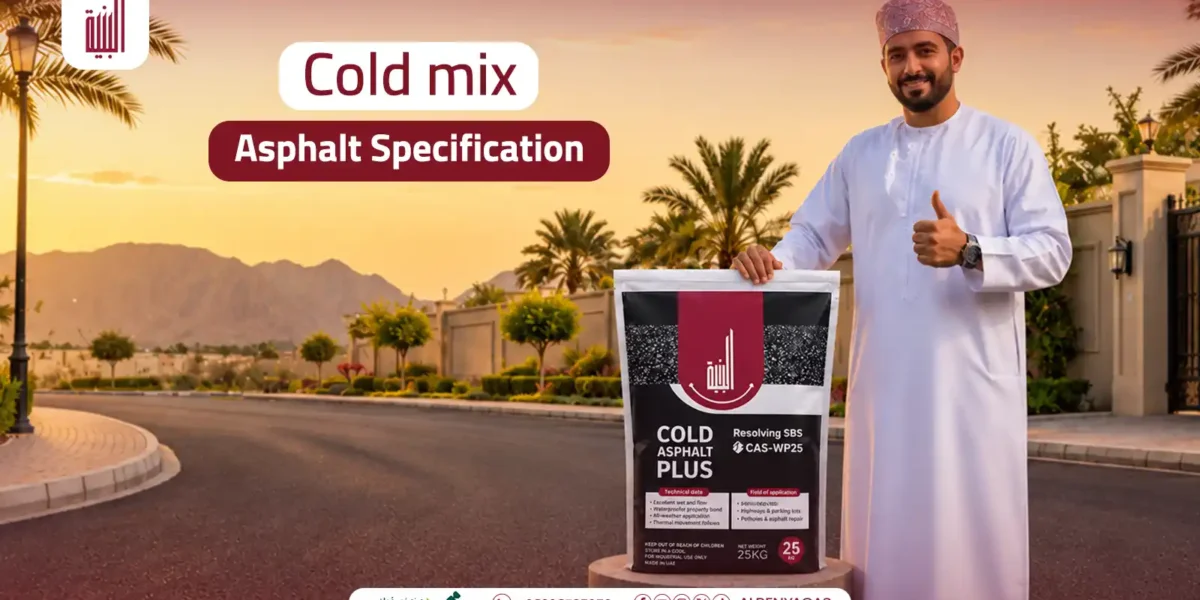
Cold Mix Asphalt Specification
The cold mix asphalt specification outlines the technical and application needs, which guide the production, storage, application, and assessment of cold asphalt. Contractors, road maintenance crews, cities and towns, and facility managers need to be aware of these needs to find viable solutions for potholes and patchy pavement issues. Cold mix asphalt can be used in maintenance and emergency requirements without being heated, and it is easy to operate. Proper material selection, storage, preparation, and application, however, are still vital to ensure consistent repair performance.
What Is a Cold Mix Asphalt Specification?
A cold mix asphalt specification is a technical specification that describes the expected characteristics and performance of a cold asphalt repair material. These may include aggregate, asphalt binder, workability, adhesion, moisture resistance, storage conditions, application procedures, and performance.
Specifications are a great way to inform the buyer and the contractor about what this product is suitable for. Some of the important characteristics may be:
- Aggregate size and grading
- Binder characteristics
- Workability
- The ability of a pavement to stick to the existing pavement.
- Moisture resistance
- Application requirements
- Storage conditions
- Compaction requirements
- Expected performance
Specific needs are dependent on the formulation of the product, conditions of the project, local standards, and purpose of use.
When it comes to road maintenance, adhering to the right cold mix asphalt specification can help to ensure that the material used is suitable for the application.
How Moisture Affects Cold Mix Asphalt Quality
Moisture is a key factor in assessing cold asphalt repair materials. If standing water or too much moisture are present in a damaged pavement, the interaction between the asphalt binder and aggregate can be affected by water.
Moisture control issues can lead to:
- Reduced adhesion
- Material displacement
- Weaker repair performance
- Premature deterioration
- Problems with getting to the correct compaction
Application Conditions for Cold Mix Asphalt Repairs
Use of cold asphalt is largely dependent on the correct application. If the damaged area is not properly prepared and/or the material is not installed correctly, even a high-quality product can be a substandard product.
Generally, crews should:
- Clear loose material and dirt from asphalt.
- Wash the damaged area.
- Drain standing water if necessary, according to directions.
- Inspect area around pavement for soft spots.
- Apply the cold asphalt at the suggested thickness.
- Compact the material to a suitable degree.
- Inspect the completed repair.
Storage and Handling Requirements for Cold Mix Asphalt
To ensure the quality and workability of cold asphalt prior to use, it is important that it is stored properly. The material may be affected by poor storage conditions, which may make application more difficult.
There are several factors to take into consideration when determining storage requirements, but in general, maintenance teams should consider:
- Properly maintaining the original packaging, where applicable.
- Keeping stored materials free of contamination.
- Operating according to the manufacturer’s recommended temperature.
- Avoiding exposure to unnecessary moisture.
- Using suitable handling procedures.
- Inspecting the package before use for damage.
How Specifications Affect the Durability of Asphalt Repairs
Numerous factors affect the quality and durability of a pavement repair, such as the material used, the surface preparation, traffic, drainage, and application method.
A clear cold mix asphalt specification will give you some information to consider when deciding if a product is suitable for a specific repair. For instance, a heavy-traffic material might have characteristics that differ from one that is said to be lighter-traffic.
Important considerations include:
| Factor | Why It Matters |
| Aggregate properties | Affect stability and load resistance |
| Binder performance | Influences adhesion and flexibility |
| Moisture resistance | Helps maintain repair performance |
| Workability | Makes application easier |
| Compaction | Improves material density and contact |
| Storage stability | Helps preserve product quality |
Choosing Reliable Cold Mix Asphalt Solutions from Albenya
There are many more factors to consider when selecting an asphalt product for cold application than just comparing packaging or price. Contractors and road maintenance personnel should take into account the technical properties of the product, its applications, the handling requirements, and the adaptability of the product to local requirements.
Albenya supplies cold asphalt products, pre-mixed and ready to use, for practical road and pavement maintenance. Products can be applied for acceptable local repair on a variety of roads, parking areas, industrial facilities, access roads and other asphalt surfaces.
In assessing a cold mix asphalt specification, Albenya solutions may be taken into account on the following points:
- Ready-to-use application
- There is no need to use heating equipment for this.
- Convenient handling
- Practical storage
- Repair applications for the local area that are suitable.
- Fast maintenance operations
- Reduced equipment requirements
Contact Albenya
For reliable cold asphalt solutions, Albenya provides practical products designed for road maintenance and localized pavement repairs. Contact us to learn more about available cold asphalt solutions, application requirements, and the appropriate product for your maintenance project.
FAQS
What information should a cold mix asphalt specification include?
A cold mix asphalt specification should provide relevant information about material composition, aggregate characteristics, binder performance, workability, moisture conditions, application requirements, storage, handling, and other performance-related properties. The exact information depends on the product and its intended application.
Can cold mix asphalt be applied in wet conditions?
Some cold asphalt formulations can tolerate damp or wet conditions, while others may require specific preparation before application. Always check the manufacturer’s technical documentation for moisture requirements and prepare the damaged area according to the recommended procedure.
Does cold mix asphalt require heating?
No. Ready-to-use cold asphalt is designed to be applied without heating equipment. This makes it particularly practical for localized repairs, emergency maintenance, and projects where transporting or operating heating equipment is inconvenient.
How does storage affect cold asphalt performance?
Incorrect storage can affect workability and material quality. Cold asphalt should be stored according to the manufacturer’s recommendations, with attention to packaging, temperature, moisture, contamination, and handling conditions.
Is cold mix asphalt suitable for heavy-traffic roads?
Cold asphalt can be used for suitable repairs on roads exposed to traffic, but product selection should consider expected loads, pavement condition, repair size, and application requirements. The manufacturer’s technical specifications should be reviewed before selecting a material for heavy-traffic applications.
Why is a cold mix asphalt specification important?
A clear specification helps contractors and maintenance teams understand the material’s properties, limitations, storage requirements, and recommended applications. This makes it easier to select an appropriate product and apply it correctly for the intended pavement repair
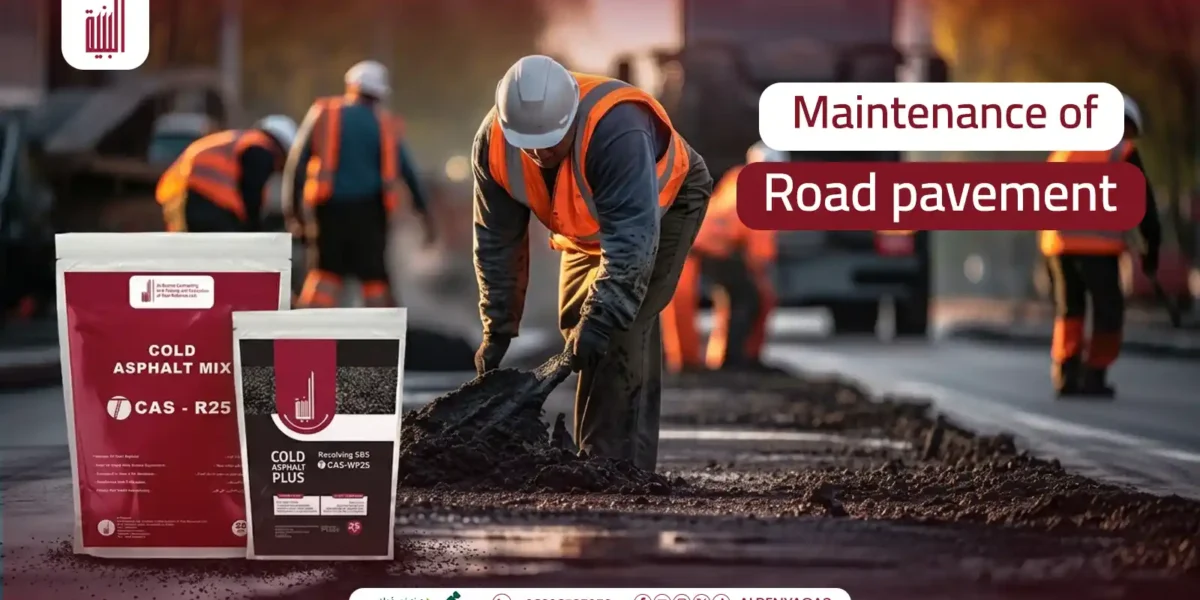
Maintenance of Road Pavement
Maintenance of road pavement is the key to ensuring the functionality, durability, and usability of asphalt surfaces for the public. Roads are continually subjected to vehicles, water, temperature cycles, and other environmental conditions that have an impact on pavement performance over time. Cracks, potholes, and surface defects can develop into more extensive damage if not inspected on a regular basis and timely repairs are made, resulting in costly rehabilitation
Why Is Regular Pavement Maintenance Important?
By keeping up with regular pavement maintenance, it’s easier to detect and fix damage before it presents as a major structural issue. Asphalt defects and imperfections, no matter how small, can let water into the pavement, undermining the surface layers.
The following can assist in an effective maintenance program:
- Reduce the development of potholes.
- Limit water penetration.
- Produce durable pavements.
- Minimize the future cost of repairs.
- Maintain smoother driving surfaces.
- Minimize unexpected maintenance requirements.
- Enhance conditions of paved surfaces.
The regular upkeep of the road pavement also enables the owners of the property, the municipalities and the facility managers to schedule the repair of the pavement rather than wait until it has suffered severe damage, which could necessitate the entire reconstruction of the pavement or a resurfacing.
Maintenance of Road Pavement for Potholes
Potholes are among the most common pavement defects and often require prompt attention. They can develop when water enters existing cracks or weak areas, and repeated vehicle loads break down the surrounding asphalt.
Effective maintenance of road pavement for potholes typically begins with assessing the size, depth, location, and surrounding pavement condition. Localized potholes can often be addressed without resurfacing the entire road, particularly when the underlying pavement structure remains in reasonable condition.
Ready-to-use cold asphalt provides a practical option for these localized repairs because it can be applied without heating equipment. This makes it useful for routine maintenance as well as situations where a rapid response is required.
How Small Asphalt Defects Develop into Major Problems
While a small crack or surface defect may appear unimportant in the beginning, it is not uncommon for asphalt deterioration to be a gradual process. Cracks allow water to penetrate and reach the pavement layers below ground. Repeated pressure is put on the weak area by traffic.
This action may lead to:
- Cracks that are wider and deeper.
- Loose pavement material.
- Surface deformation.
- Pothole formation.
- Increasing pavement failures.
- More extensive rehabilitation needs.
The Role of Cold Asphalt in Pavement Maintenance
Cold asphalt is a viable solution for site-specific repairs to road pavements, as it can make repairs easier and enable quicker response to road defects, including potholes. The advantage for municipalities, contractors, industrial plants, commercial properties, and parking lots is that ready-to-use cold asphalt does not have to be heated before application, unlike hot mix asphalt.
| Feature | Benefit for Road Maintenance |
| Ready-to-Use Application | Allows teams to apply the material directly when localized repairs are required. |
| No Heating Required | Eliminates the need for heating equipment before application. |
| Easy Transportation | Makes the material convenient to move between maintenance locations. |
| Convenient Storage | Can be stored and kept available for planned or emergency repairs. |
| Fast Localized Repairs | Helps maintenance teams address potholes and minor pavement defects quickly. |
| Reduced Equipment Requirements | Simplifies repair operations by reducing the need for specialized equipment. |
| Emergency Maintenance | Provides a practical option for responding to sudden localized pavement damage. |
Repairing Damaged Pavement Without Long Road Closures
Road closures may impact traffic, businesses, public transportation, and daily life. That’s why maintenance teams are always seeking ways to make repair work more efficient, such as investing in treatments that can be applied to certain areas.
Cold asphalt is ready-to-use and can help accelerate asphalt repair projects since it is not required to be heated prior to application. The maintenance crew can pre-prepare the damaged area, apply the repair material, compact it to the proper thickness, and work in the material as called for in the application instructions.
This can help to ease the constraints on road pavement maintenance, particularly if repairs are required on busy roads, access roads, parking areas, or industrial sites.
While reducing repair time won’t make preparation go away, it will help make it more efficient. Removing loose material and cleaning the damaged area are still vital steps in order to get a better repair.
Maintenance of Road Pavement Using Fast Repair Solutions
When pavement damage occurs out of the blue, fast repair solutions are especially helpful. If the pothole is on a busy road, it could be a priority to repair it, as further use of the road may lead to the pothole deteriorating over time.
Because ready-to-use cold asphalt is on-site, it is available for immediate use when localized damage is detected, rather than waiting for a traditional asphalt delivery.
The key elements of a successful maintenance strategy are:
- Regular pavement inspections.
- Early detection of cracks and potholes.
- Correct cleaning and preparation.
- Correct choice of repair material.
- Appropriate application and compaction.
- Post-repair inspections.
These practices, coupled with appropriate products, make road pavement maintenance more efficient and allow organizations to proactively manage repair needs.
Keep Your Pavement in Shape with Albenya Solutions
Albenya has products available that can help with real-world pavement maintenance and spot repairs with cold asphalt. The products can be used in locations that require a convenient repair product to be stored and utilized when pavement is damaged.
Albenya solutions can help with maintenance requirements across:
- Roads and streets
- Parking areas
- Industrial facilities
- Access roads
- Commercial properties
- Service areas
- Other asphalt surfaces
Contact Albenya
Looking for a practical solution for maintenance of road pavement? Albenya offers ready-to-use cold asphalt designed for efficient localized repairs without the need for heating equipment. Contact us to learn more about its asphalt repair solutions and find the right option for your road, parking area, or infrastructure maintenance needs.
FAQS
What is maintenance of road pavement?
Maintenance of road pavement includes regular inspections, cleaning, crack treatment, pothole repairs, localized patching, and other activities designed to preserve asphalt surfaces. The objective is to address deterioration early, maintain pavement performance, and reduce the need for extensive rehabilitation.
How often should asphalt pavement be inspected?
Inspection frequency depends on traffic volume, pavement age, weather exposure, and the importance of the road. High-traffic roads and industrial surfaces generally require more frequent inspections so that cracks, potholes, drainage problems, and other defects can be identified early.
Can cold asphalt be used for routine pavement maintenance?
Yes. Ready-to-use cold asphalt can be used for suitable localized repairs, including potholes and damaged pavement sections. It is particularly useful for maintenance teams that need a convenient material that does not require heating equipment before application.
Why should small pavement defects be repaired early?
Small defects can allow water to enter the pavement and contribute to further deterioration under repeated traffic loads. Early repairs can limit the spread of damage and may reduce the need for more extensive and expensive pavement rehabilitation.
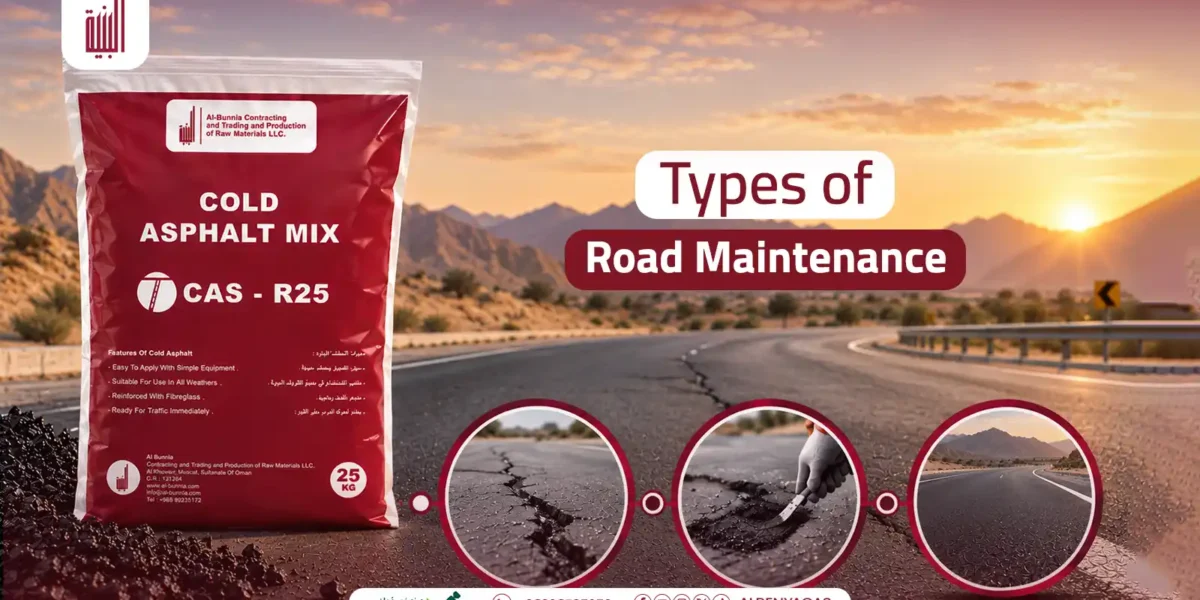
Types of Road Maintenance
Types of road maintenance play a vital role in sustaining the functionality and usability of streets, parking areas, and other paved surfaces, and it is essential to their daily operation. Road maintenance includes methods used to restore and refurbish roads. Roads come in a variety of shapes and shades and are in need of a variety of treatments. Each is a different approach and has its own use, from normal inspections to preventative treatment to emergency pothole repairs. Selecting the right maintenance approach may be enough to solve small pavement issues before they become larger-scale damages that will take a lot more time, materials, and resources to fix.
What Are the Main Types of Road Maintenance?
There are four principal types of road maintenance: routine maintenance, preventive maintenance, corrective repairs, and emergency road repairs. The different types address various conditions and maintenance needs of pavements.
| Type of Road Maintenance | Main Purpose | Typical Applications |
| Routine Maintenance | Maintain road condition through regular care | Cleaning, inspections, minor repairs |
| Preventive Maintenance | Slow pavement deterioration | Crack sealing, surface treatments |
| Corrective Maintenance | Repair existing pavement problems | Pothole and localized surface repairs |
| Emergency Maintenance | Address sudden or hazardous damage | Urgent pothole and pavement repairs |
The appropriate method for maintenance depends on the extent of damage, traffic volume, exposure to the elements and anticipated service demands of the roadway.
Routine Maintenance Tasks That Help Keep Roads in Good Condition
Normal road maintenance concerns regular inspections and basic tasks that are carried out to detect small issues before they are turned into larger ones. The work these activities help facilitate helps to ensure that roads remain open and prevents potential damage from becoming severe.
- Some regular maintenance activities are:
- Checking for cracks and potholes in pavement.
- Maintaining drainage systems and minimizing water damage.
- Clearing snow from roads.
- Making minor repairs to pavement.
- Keeping an eye on areas that are damaged frequently.
- Getting on top of small issues before they become big problems.
Preventive Maintenance and Its Role in Reducing Road Damage
Preventive Maintenance consists of activities that are conducted to prevent the pavement from deteriorating to an excessive degree. Rather than waiting until the major defects appear, it is possible for maintenance teams to take action, through treatments and minor repairs, to prolong the useful life of the road surface.
Some of the most common types of preventive maintenance are crack sealing, surface treatments, maintenance of drainage, and localized repairs. The way is done will depend on the condition of the pavement and the type of environmental exposure. Preventive maintenance can be valuable on roads that have some early signs of wear, but are not in need of any significant rehabilitation.
Emergency Road Repairs for Sudden Pavement Damage
Road repair is considered an emergency when there is sudden pavement damage that poses a serious safety or operational issue to road users and/or property operations. Some potholes, sections of damaged pavement, and other localized defects might require immediate attention, especially on busy roads, parking areas, and industrial sites.
In some emergencies, cold asphalt may be the logical choice to use, as it is ready to use and doesn’t need to be heated before laying. Maintenance staff can have appropriate materials on hand and use them when localized pavement damage is noted.
When Is Cold Asphalt Suitable for Road Maintenance?
In areas where repairs are needed and where storage is feasible, cold asphalt may be an appropriate choice for the maintenance team. It is widely used in pothole repairs, maintenance work on small pavement defects, parking areas, walkways, and more.
Cold asphalt can be used for various conditions of the pavement when the repair area is not too large, the traffic is light, and the application requirements are not too strict. More extensive repair methods may be required for larger structural pavement failures.
Why Can Early Road Repairs Prevent More Costly Damage?
It is important to repair roads early to avoid the formation of small pavement defects into large maintenance issues. Repeated traffic loads and/or small cracks and potholes can expand the area over time, and water may be able to infiltrate the pavement structure.
Early detection and remediation of developing damage can minimize the risk of building deterioration. This can also help with maintenance planning by tackling areas of issue which may otherwise need larger repair operations.
Road Maintenance Services by Albenya
Albenya offers real solutions in the realm of asphalt for a variety of pavement maintenance needs. The cold asphalt products are developed for localized repair applications where ease of handling, convenient storage and the quick application are important.
The solutions can be applied to roadway, parking, industrial facility and commercial property maintenance and other paved surfaces. The right choice of material and repair method will depend on the condition of the pavement and the repair required for each project.
Contact Albenya
In cases where pavement damage calls for a practical solution for maintenance, Albenya offers cold asphalt products for localized road maintenance. Contact us and talk with us about your road maintenance needs and determining the right asphalt product for your application.
FAQS
What are the main types of road maintenance?
The main types of road maintenance include routine, preventive, corrective, and emergency maintenance. Each approach addresses different pavement conditions, from regular inspections and minor repairs to urgent pothole repairs and other localized pavement damage.
How often should roads be inspected for maintenance?
Road inspections should be performed regularly, with frequency depending on traffic volume, weather exposure, pavement age, and road condition. Regular inspections help maintenance teams identify cracks, potholes, drainage problems, and other defects before they become more extensive.
Is cold asphalt suitable for pothole repairs?
Cold asphalt can be suitable for many localized pothole repairs, particularly when a ready-to-use material is needed without heating equipment. The appropriate repair method depends on pothole size, pavement condition, traffic exposure, and the specific requirements of the site.
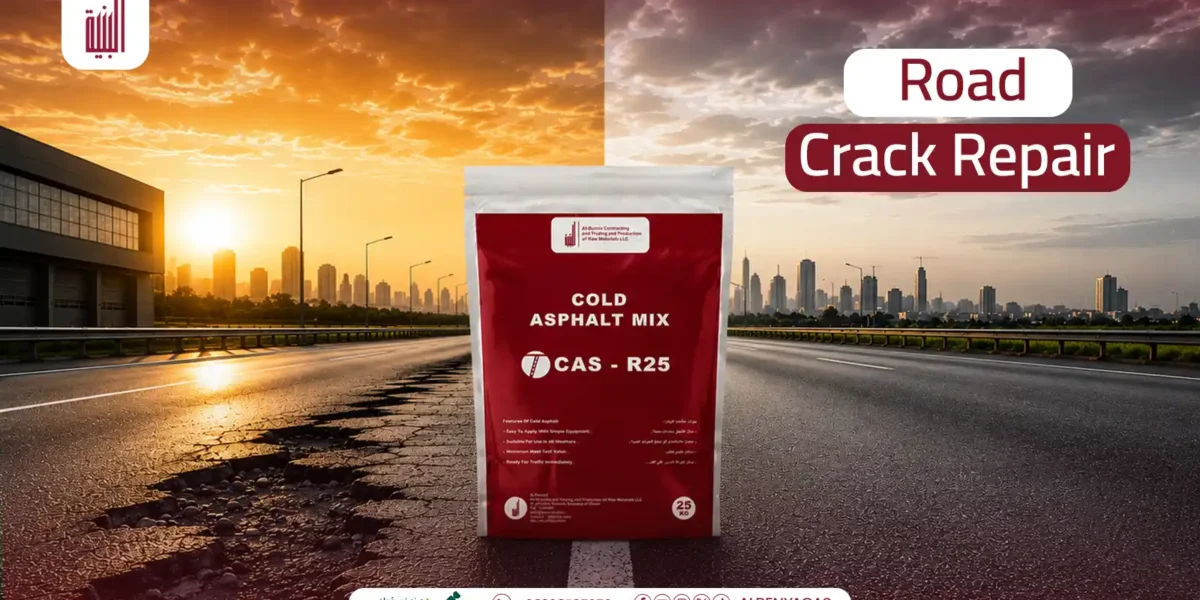
Road Crack Repair for Durable
Road crack repair and preventing minor surface damage from turning into a costly structural failure is one of the most important maintenance activities that preserve asphalt roads, and repairing roads as soon as they are cracked is one such maintenance practice. Crack repair, when performed in a timely fashion, serves to prevent water from penetrating the surface of the cracks, preserve the road, parking lot and industrial surface base, and extend the service life of the road. With the use of modern repair materials such as ready-to-use cold asphalt, maintenance teams can repair roads in a timely manner without causing traffic delays and reduce maintenance costs.
Why Do Cracks Appear on Asphalt Roads?
Constant traffic and the environment cause asphalt pavements to naturally deteriorate over time. Although these small surface cracks might seem unimportant at first, if left uncared for, they can lead to bigger pavement problems later on.
Asphalt cracking is caused by several factors such as:
- Heavy vehicle traffic
- Temperature fluctuations
- Moisture penetration
- Aging asphalt binder
- Poor drainage
- Ground movement
- Inadequate pavement thickness
- In colder areas, repeated freezing and thawing.
Water that enters these cracks will erode the pavement structure below the surface. As traffic continues to drive over the damaged area, cracks widen, and potholes and larger pavement failures can form. This is the reason it is crucial to hire professional road crack repair as early as possible.
When Does a Small Crack Require Immediate Repair?
Not all cracks need repair, and while delaying repair may be better, long-term costs can increase as damage grows.
Anyone is injured or is at risk of being injured should be repaired immediately if:
- Cracks begin expanding in width.
- The pavement is filling with water.
- Several cracks are arranged in an interconnected pattern.
- The top surface pieces begin to fall.
- Minor pothole formation occurs.
- High level of traffic.
- Cracks occur at corners (intersections or turning areas).
Early repairs of road cracks will keep moisture out of the road foundation and will minimize the chance for major structural damage that could eventually need to be repaired by resurfacing or rebuilding the road.
This also involves regular inspections of the pavement, which can help to spot any damage early and prevent it from becoming costly to fix.
Road Crack Repair Methods for Different Types of Damage
Different crack types require different repair approaches. Selecting the appropriate repair method improves durability while preventing recurring failures.
| Crack Type | Common Cause | Recommended Repair |
| Hairline Cracks | Asphalt aging | Crack sealing |
| Longitudinal Cracks | Pavement movement | Sealing or localized patching |
| Transverse Cracks | Temperature changes | Flexible crack filling |
| Edge Cracks | Weak pavement edges | Edge stabilization and patching |
| Alligator Cracking | Structural failure | Partial-depth repair or reconstruction |
The first step in the process of professional road crack repair is to determine if the issue is surface damage or structural damage. Surface defects tend to be treated locally; structural failures need more extensive work to be fixed.
An appropriate repair method results in better pavement performance and reduces recurrent maintenance needs.
Can Cold Asphalt Be Used for Road Crack Repair?
Yes. In some instances, especially if the pavement surface has cracks that are open or if it has small areas of broken asphalt, ready-mixed cold asphalt may be the perfect choice for repair.
Cold asphalt is particularly suited for:
- Surface patching
- Small pothole repairs
- Edge deterioration
- Localized pavement failures
- Emergency maintenance
- Short-term traffic rerouting in advance of major rehabilitation.
How to Prepare a Damaged Area Before Repair
The surface preparation is as crucial as the type of repair material used. No asphalt product, even the high-quality ones, can function properly when applied to a contaminated or unstable pavement.
Before starting repairs, maintenance crews should:
- Remove loose asphalt and debris.
- Wipe away dust and dirt from the damaged area.
- Eliminate standing water whenever possible.
- If needed, trim unsound edges of pavement.
- Ensure the repair area is reasonably clean.
- Apply the appropriate repair material.
- Roughly compact the repaired area with appropriate equipment.
Proper preparation enhances the bond between the repair material and the underlying pavement surface and therefore the durability of the repaired pavement.
Regardless of the road crack repair method employed (crack sealants or cold asphalt patching), proper preparation is an essential component to successful road repair.
Road Crack Repair with Practical Cold Asphalt Solutions
Modern road maintenance increasingly relies on ready-to-use cold asphalt because it simplifies repair operations while delivering dependable performance.
Cold asphalt offers practical benefits for everyday maintenance:
- Fast emergency repairs
- Reduced equipment requirements
- Lower labor costs
- Easy storage
- Immediate availability
- Minimal disruption to road users
- Suitable for municipal and industrial maintenance
Maintenance teams can quickly repair localized pavement damage without waiting for asphalt plants or hot-mix production schedules.
As a result, organizations can address pavement deterioration earlier, helping reduce long-term maintenance expenses while extending road service life.
Many contractors now include ready-to-use cold asphalt as part of their regular road crack repair strategy because of its flexibility and ease of application.
Albenya for Reliable Asphalt Repair Solutions
Proper pavement maintenance requires the use of quality repair materials that are reliable and will work in challenging environments. Albenya produces high-quality cold asphalt that is perfectly suited for quick maintenance of roads, parking lots, industrial facilities and infrastructure projects. The product will allow for quick repairs and reduce equipment needs and traffic disruption.
Key benefits include:
- Ready-to-use packaging
- No heating required
- Appropriate for all seasons of the year
- Strong adhesion
- Easy storage
- Fast installation
- A real-world approach to emergency repairs.
A combination of good repair methods and reliable materials can enhance pavement durability and decrease the need for future repairs.
Contact Albenya
Albenya has ready-to-use, cold asphalt to simplify repair and reduce downtime. No matter whether you are working with municipal roads, commercial properties, industrial sites, or parking areas, our team can help you select the best asphalt repair solution for your needs. Contact us today to find out more about our products and get knowledgeable advice for your next road maintenance project.
FAQ
What is the best time to perform road crack repair?
The best time is as soon as cracks are detected. Early repairs prevent water infiltration, reduce pavement deterioration, and help avoid more expensive rehabilitation work later. Delaying repairs often allows minor damage to develop into potholes or structural failures.
Can every crack be repaired with cold asphalt?
Cold asphalt is suitable for widened cracks, localized pavement failures, edge damage, and small potholes. Very narrow surface cracks may require specialized crack sealants, while severe structural damage may require reconstruction instead of localized repairs.
How long does road crack repair usually last?
Repair longevity depends on traffic conditions, pavement condition, preparation quality, and repair materials. Properly prepared repairs using high-quality products generally perform much better and require less frequent maintenance than temporary patching methods.
Why is early road crack repair more cost-effective?
Repairing small cracks early prevents water from weakening the pavement foundation. This reduces the risk of potholes, extensive cracking, and structural failures, helping road owners avoid significantly higher resurfacing and reconstruction costs in the future.
Road Paving Companies
Road paving companies are crucial in constructing, repairing, and rehabilitating roads that can last for years and remain safe, durable, and cost-effective. From a new road construction project to fixing potholes or problems on the surface, the experience of the road-paving companies can make all the difference for higher-quality work and reduced maintenance expenses. The modern repair techniques such as ready-to-use cold asphalt can also provide a quicker repair with minimal disruption to traffic and still achieve a high-quality repair.
What Services Do Road Paving Companies Provide?
Professional road paving companies offer much more than laying asphalt. Their services cover the entire lifecycle of road infrastructure, from construction to preventive maintenance and emergency repairs.
Typical services include:
- New road construction
- Parking lot paving
- Highway paving
- Pothole repairs
- Crack sealing
- Surface patching
- Asphalt resurfacing
- Preventive maintenance
- Industrial yard paving
- Airport pavement repairs
Many road paving companies are also able to do technical inspections to spot the problems in the pavement before they turn into costly structural failures. Early intervention is frequently a way to prolong the service life of the pavement and to lower repair bills.
| Service | Purpose | Typical Application |
| New Asphalt Paving | Build new roads | Residential and commercial projects |
| Pothole Repair | Restore damaged pavement | Roads, parking lots |
| Crack Sealing | Prevent water penetration | Aging asphalt surfaces |
| Surface Patching | Repair localized damage | High-traffic areas |
| Cold Asphalt Repair | Fast emergency maintenance | Roads requiring immediate reopening |
When Do Roads Need Repair Instead of Full Resurfacing?
Not all damaged roads need to be resurfaced. When choosing a contractor, the experienced one is the one who will evaluate the condition of the pavement before making the most practical choice.
- If the road is in good condition and repair is adequate, then:
- Damage is confined to certain areas
- The road surface is still in good condition.
- There are no extensive surface cracks
- Potholes are isolated
There is still some minor localized water damage.
But if the cause of widespread cracking, extensive deformation or foundation damage, then resurfacing may be the most viable long term investment.
Professional inspections are used to help identify if localized repairs can restore pavement performance at a lower cost as compared to a full reconstruction.
Choosing the Right Solution for Potholes and Surface Damage
One of the most frequent road maintenance problems is potholes. Unless corrected, they persist in growing because of traffic loading, moisture intrusion, and fluctuating weather.
- The best method to repair will depend on the following:
- Hole size
- Traffic volume
- Weather conditions
- Repair urgency
- Available equipment
Cold Asphalt Solutions for Quick and Effective Repairs
Many modern road paving firms are turning to the cold asphalt option, as it’s easy to maintain and provides consistent performance.
There are a number of practical benefits to using cold asphalt:
- Immediately ready for use
- No need for any heating equipment.
- Good all year round
- Faster application
- Reduced traffic disruption
- Easy to transport and store.
- Lower labor requirements
What to Consider When Choosing a Road Repair Partner
There’s more to choosing among the various road paving firms than just comparing costs. The longevity of completed repairs depends on a variety of factors such as experience, material quality, and technical expertise.
Important factors include:
Experience with Road Maintenance
A contractor with expertise in pavement maintenance can identify any issues and provide the best solution for repairing the pavement without using an unnecessary process.
Quality of Repair Materials
High-performance repair materials play an important role in the durability of pavement and frequency of maintenance.
Fast Product Availability
Repairs are usually needed on the projects. In case of an emergency, contractors with ready-to-use repair materials can act much quicker.
Technical Support
The right products are selected by a professional guide to ensure they are appropriate for the traffic, climate, and pavement type.
Proven Performance
Suppliers who provide reliable supply also have a consistent product quality throughout the municipal, commercial, and industrial applications.
Collaborating with reputable road paving companies can lower the maintenance expenses throughout the life of the pavement, and enhance road safety and traffic efficiency.
The Role of Ready-to-Use Cold Asphalt in Everyday Road Repairs
Cold asphalt is a convenient maintenance material available now. Unlike hot-mix, maintenance crews can repair damaged areas as needed without waiting for the asphalt plant to be able to produce hot mix.
It is versatile and can be used for:
- Municipal roads
- Highways
- Parking areas
- Industrial facilities
- Residential streets
- Utility trench reinstatement
- Emergency maintenance work
Reliable Road Repair Solutions from Albenya
Although road paving is one of the major aspects of the business, it takes the dependable supply of road maintenance materials that can withstand challenging conditions to make a successful road maintenance company.
Albenya produces high-quality, ready-to-use cold asphalt for effective road maintenance in municipal, commercial, and industrial applications. The product is designed to ease the process of pothole repair, to decrease the need for equipment, and to minimize the traffic disruption.
Key benefits include:
- Ready-to-use packaging
- No heating required
- Appropriate for year round use
- Strong adhesion
- Easy storage
- Fast installation
Reliable Road Maintenance Starts with the Right Materials
Successful road repairs depend not only on experienced road paving companies but also on high-quality repair materials. With Albenya’s ready-to-use cold asphalt, contractors and maintenance teams can complete fast, reliable, and durable repairs that help extend pavement life, reduce maintenance costs, and keep roads safe for everyday use.
FAQ
What do road paving companies typically specialize in?
Most road paving companies handle asphalt paving, pavement maintenance, pothole repairs, resurfacing, crack sealing, parking lot construction, and preventive maintenance. Some also provide pavement inspections, material recommendations, and specialized repair solutions using ready-to-use cold asphalt for faster maintenance.
Is cold asphalt suitable for permanent pothole repairs?
Yes. High-quality ready-to-use cold asphalt can provide durable repairs when applied correctly and under suitable pavement conditions. It is widely used for municipal maintenance, industrial facilities, parking lots, and emergency road repairs where immediate traffic reopening is required.
How can I tell whether my road needs resurfacing or localized repairs?
A professional pavement inspection evaluates the extent of cracking, structural integrity, drainage issues, and surface deterioration. If damage remains localized and the pavement foundation is sound, targeted repairs are often more economical than complete resurfacing.
Why is ready-to-use cold asphalt becoming more popular?
Ready-to-use cold asphalt eliminates heating requirements, speeds up repairs, reduces equipment needs, and allows maintenance crews to work throughout the year. These advantages make it an efficient solution for routine maintenance and emergency pavement repairs.
Best Cold Patch Asphalt Repair Solutions
The best cold patch asphalt repair solutions are key to safe roads, parking lots, and commercial pavements without the delays of traditional hot asphalt. If they are not repaired, potholes and other surface damage can escalate rapidly and result in increased repair expenses and safety risks. The modern ready-to-use cold asphalt presents an alternative that makes maintenance quicker and easier for crews and requires less equipment and disruption of traffic. This guide outlines the selection of the optimal cold patch asphalt repair material, its notable benefits, and why Albenya offers dependable cold asphalt solutions for road maintenance professionals.
What Is the Best Cold Patch Asphalt Repair Solution?
The ideal cold patch asphalt repair solution is durable, easy to apply, and long-lasting. Cold patch asphalt is made to be workable at ambient temperatures, while hot mix asphalt is not and cannot be used to repair pavement in any weather conditions.
Good quality cold patch asphalt, when properly compacted, bonds well with existing pavement, is moisture-proof, and is capable of absorbing repeated traffic without failure. It can be used for both maintenance and repair in a wide range of road conditions.
When municipalities, contractors, and facility managers choose the right product, they also mean fewer repeat repairs and reduced long-term maintenance costs.
| Feature | Premium Cold Patch Asphalt | Traditional Hot Asphalt |
| Heating Required | No | Yes |
| Ready for Immediate Use | Yes | No |
| Equipment Needed | Basic Tools | Heavy Equipment |
| Traffic Disruption | Minimal | Higher |
| Emergency Repairs | Excellent | Limited |
Why Cold Patch Asphalt Is Ideal for Pothole Repairs
The high popularity of the best cold patch asphalt repair products is due to their speed of repair of potholes without stopping traffic for lengthy periods.
Potholes are caused by water entering the pavement, undermining the structure, and numerous vehicles repeatedly driving over leading to the breakdown of the pavement surface. These damaged surfaces are filled with cold patch asphalt to restore a smooth driving surface and are efficient in doing so.
No heating is necessary, allowing maintenance crews to easily bring the material to the site of the repair, pour it in the pothole, compact it, and then close the road in a timely fashion. This is particularly beneficial for emergency maintenance, municipal roads, industrial facilities, airports, parking lot applications, and commercial properties.
How to Choose the Best Cold Patch Asphalt Repair Material
There are many things to consider when selecting the right cold patch asphalt repair material for a job.
Avoid products that contain:
- Good bonding with the existing asphalt.
- Moisture resistance.
- Good installation properties.
- Resistance to traffic.
- Simple to store for future repairs.
- Compaction without the use of special equipment.
Premium cold asphalt products should also retain the same quality over a long period of storage so that contractors can react rapidly to any pavement damage.
This is made even more reliable by the use of a trusted manufacturer.
Repairing Potholes Quickly with Ready-to-Use Cold Asphalt
Best cold patch asphalt repair projects are quicker and more efficient with ready-to-use cold asphalt.
The first step in the repair process is to clear away any loose debris, broken asphalt, and standing water from the damaged area. Clean the surface and cold asphalt (slight overfill), then level and compact the surface with a hand tamper, plate compactor, or roller.
It is important that the compaction is done properly, as it helps to increase the density, promote bonding, and prevent future settlement. and pour
Most of the repairs can be done with a small crew with simple tools and with a significant reduction in the amount of labor and project cost.
Benefits of Using Cold Patch Asphalt Instead of Traditional Repairs
The advantages of using the best cold patch asphalt repair solution over traditional hot asphalt maintenance
Cold asphalt eliminates the need for heating equipment, reducing fuel consumption and simplifying logistics. Repairing can start at this time, without waiting for the asphalt plants or other paving equipment.
Additional benefits include the following:
- Faster project completion.
- Lower operating costs.
- Reduced traffic disruption.
- Improved worker safety.
- Can be applied all year round.
- Long-term reliable pavement performance.
The benefits have led organizations that have to maintain roads around the clock to use cold patch asphalt.
Buy Cold Patch Asphalt and Road Repair Solutions from Albenya
Albenya provides high-quality products to assist contractors and infrastructure professionals in achieving efficient, effective, and reliable cold patch repairs on asphalt pavement.
Cold asphalt products manufactured by Albenya are suitable for use in highways, municipal roads, industrial buildings, airports, logistics centers, commercial buildings, parking areas, and, most importantly, for long service life, excellent workability, and durability.
Albenya’s high-quality materials and proven performance allow for cost-effective road maintenance while minimizing repair time and operations disruption.
Contact Albenya
Looking for the ideal cold patch asphalt repair material for your road maintenance job? Contact us today and talk with our pros about the quality cold asphalt products we have available that can provide you with quick, long-lasting, and professional-looking pavement repairs.
How Cold Asphalt Helps Reduce Repair Time and Traffic Disruptions
Cold asphalt drastically decreases maintenance time, as it is available for use as soon as delivered. No heating is required, no special paving equipment is needed, and no long preparation time.
When roads are repaired more quickly, fewer vehicles are on the road, public safety is enhanced, and maintenance personnel can conduct more projects during the same time period.
Cold asphalt is particularly suitable for urban environments, commercial properties, and industrial facilities where downtime is critical, such as busy roads.
Why Contractors and Municipalities Trust Cold Asphalt Solutions
Cold asphalt is the preferred choice of contractors and municipalities due to its convenience and guaranteed performance. A quality best cold patch asphalt repair product enables crews to repair the pavement quickly without compromising the quality of the repair.
Cold asphalt is one of the most convenient and sustainable options for maintaining the long-term health of asphalt infrastructure due to its simplicity of application, durability, minimal equipment needs, and low maintenance costs.
FAQS
What is the best cold patch asphalt repair solution?
A high-quality, ready-to-use cold asphalt product that provides excellent bonding, convenient application, resistance to moisture, and durability of pavement.
Can cold patch asphalt be used year-round?
Yes. Cold patch asphalt can be used in most conditions; thus, it is well suited for emergency and routine repairs.
Does cold patch asphalt require heavy equipment?
No. Simple hand tools and standard compaction equipment are used to make most repairs.