
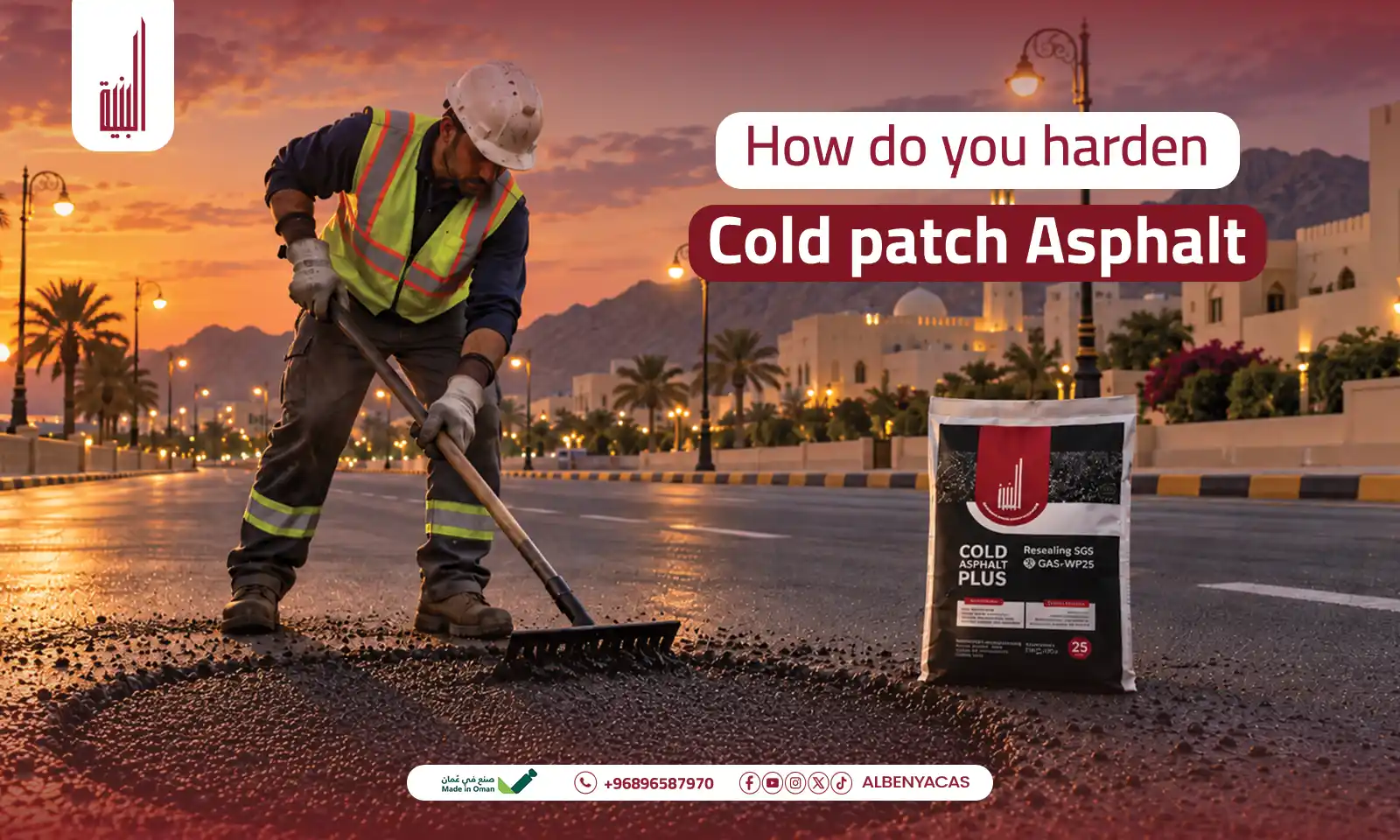
Without the use of hot asphalt equipment, cold patch asphalt is a workable way to fix potholes, cracks, and damaged pavement.
How do you harden cold patch asphalt? To harden the material and guarantee a strong, long-lasting repair, proper application, solvent evaporation, and thorough compaction are crucial.
How Do You Harden Cold Patch Asphalt Effectively?
How do you harden cold patch asphalt? In order to properly harden cold patch asphalt, the repair area must first be thoroughly cleaned and dried. To guarantee adequate adhesion, remove standing water, mud, and loose debris:
- Apply the cold patch in layers no thicker than two inches, making sure to fully compact each layer before moving on to the next.
- To eliminate air spaces and create a strong aggregate interlock, use a vibratory plate compactor or heavy hand tamper.
- To lessen tackiness, apply a thin layer of Portland cement, limestone dust, or masonry sand to the surface after compaction.
- Lastly, as the solvents gradually evaporate and the material solidifies, let regular vehicle traffic apply more pressure and compaction.
What Makes Cold Patch Asphalt Harden?
Instead of using heat to harden cold patch asphalt, mechanical compaction is the main method. The cold mix needs to be firmly packed using a hand tamper, plate compactor, or car tires after the repair area has been cleaned and dried. The density and strength of the patch are increased by proper compaction, which also helps the aggregate particles lock together and minimize air gaps.
How do you harden cold patch asphalt? Applying the material in thin layers and compacting each layer independently yields better results for deeper repairs. More pressure helps solidify the material and increase its stability as cars progressively pass over the repaired area. A stronger and longer-lasting cold patch asphalt repair is the result of proper surface preparation, high-quality materials, sufficient compaction, and regular traffic.
How Do You Harden Cold Patch Asphalt After Application?
One of the most crucial steps in helping cold patch asphalt solidify and stabilize after application is appropriate compaction:
- Apply mechanical pressure and eliminate internal air gaps using a hand tamper, small roller, or other compaction tools to strengthen the bond between the aggregate and asphalt binder.
- Density and strength can be increased by making multiple deliberate passes.
- The hardening process is also influenced by temperature, since warmer weather typically speeds up curing.
- Select a winter-grade or fast-setting cold patch product made for the anticipated temperature range for quicker results.
- When it comes to application, compaction, temperature, and any authorized additives, always adhere to the manufacturer’s instructions.
Preparing the Surface Before Applying Cold Patch Asphalt
A robust and long-lasting cold patch asphalt repair requires careful surface preparation. Using a stiff broom, wire brush, shop vacuum, or blower, begin by clearing the damaged area of loose asphalt, gravel, dirt, dust, and other debris. It’s also important to get rid of any roots and vegetation that are growing inside the pothole or crack.
How do you harden cold patch asphalt. Before applying the patch, let the area completely dry if it has been cleaned or has standing water. The damaged edges can be squared or slightly undercut to give the cold patch material a solid surface for improved bonding. A stable, dry, and clean base promotes better adhesion and lessens early failure.
Get Professional Asphalt Repair Solutions From Albenya
How do you harden cold patch asphalt? Albenya offers useful asphalt repair services that effectively address potholes, cracks, and damaged pavement:
- Its cold asphalt products can be applied without the heating requirements of conventional hot asphalt, are lightweight, and require little equipment.
- The damaged area must be prepared; loose materials and standing water must be removed, cold asphalt must be applied, and it must be properly compacted to increase durability.
- Roads, parking lots, driveways, sidewalks, and other pavement applications can all be made with Albenya’s cold asphalt.
- It provides a practical choice for emergency maintenance and repairs in various weather conditions and helps minimize traffic disruption because it is made to retain its integrity after compaction.
The Role of Compaction in Cold Patch Asphalt Hardening
After application, compaction is essential for cold patch asphalt to solidify and stabilize. Cold-mix asphalt can stay soft unless it is properly compressed because it contains oils that keep it workable:
- Each layer can be efficiently compacted by applying the material in layers no thicker than two inches.
- Strong compaction can be achieved with a drum roller, but when necessary, a plate compactor or hand tamper can also be utilized.
- To improve binding and lower the chance of settling or displacement, the mix should be compacted right away after placement.
- A denser, more stable patch that can tolerate traffic and frequent pavement use is produced with proper compaction.
How Weather Conditions Affect Cold Patch Asphalt
| Weather Condition | Effect on Cold Patch Asphalt |
| Temperature | The ease with which the material spreads, bonds, and compacts can be affected by temperature. While temperatures above 50°F (10°C) often offer more practical conditions for application, cold temperatures can make asphalt stiffer and decrease adherence. |
| Wind | The ease with which the material spreads, bonds, and compacts can be affected by wind. |
| Rain | Rain can allow water to seep into gaps and improperly applied patches, increasing deterioration over time. |
| Snow | Snow can allow water to seep into gaps and improperly applied patches, increasing deterioration over time. |
| Humidity | High humidity can inhibit the hardening process. |
| Moisture | Moisture can damage the repair by creating a bonding barrier. |
| Optimal Results | Apply cold patch asphalt as soon as possible, compact it completely, and shield the repair from heavy precipitation for optimal results. |
Contact us
Searching for dependable and long-lasting asphalt repair options?
For expert cold patch asphalt services with long-lasting results, contact us. Give your roads the high-quality repair they need by getting in touch with Albunya right now.
FAQS
How is cold patch asphalt hardened?
Using a mechanical compactor or a hand tamper, cold patch asphalt can be completely compacted to harden it. This enhances adherence to the current asphalt surface and eliminates air spaces.
Does pressure aid in the hardening of cold patch asphalt?
Indeed. The asphalt mixture is compressed and made more stable by repeatedly driving a heavy vehicle, like a car or truck, over the patched area.
Can hardened cold patch asphalt be protected by sealcoating?
Indeed. Sealcoating can offer extra defense against moisture, UV radiation, and environmental elements once the patch has completely solidified
Leave A Comment