
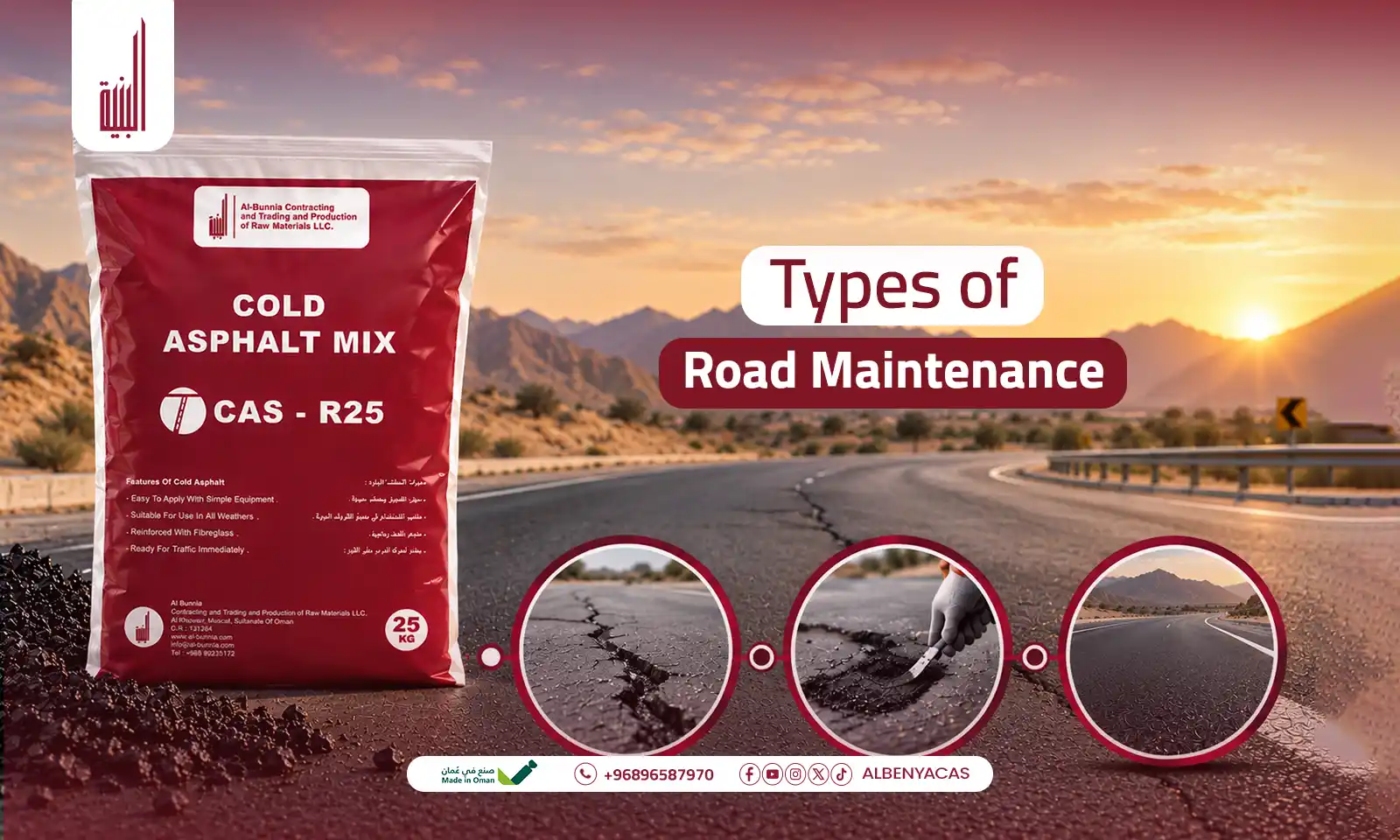
Types of road maintenance play a vital role in sustaining the functionality and usability of streets, parking areas, and other paved surfaces, and it is essential to their daily operation. Road maintenance includes methods used to restore and refurbish roads. Roads come in a variety of shapes and shades and are in need of a variety of treatments. Each is a different approach and has its own use, from normal inspections to preventative treatment to emergency pothole repairs. Selecting the right maintenance approach may be enough to solve small pavement issues before they become larger-scale damages that will take a lot more time, materials, and resources to fix.
What Are the Main Types of Road Maintenance?
There are four principal types of road maintenance: routine maintenance, preventive maintenance, corrective repairs, and emergency road repairs. The different types address various conditions and maintenance needs of pavements.
| Type of Road Maintenance | Main Purpose | Typical Applications |
| Routine Maintenance | Maintain road condition through regular care | Cleaning, inspections, minor repairs |
| Preventive Maintenance | Slow pavement deterioration | Crack sealing, surface treatments |
| Corrective Maintenance | Repair existing pavement problems | Pothole and localized surface repairs |
| Emergency Maintenance | Address sudden or hazardous damage | Urgent pothole and pavement repairs |
The appropriate method for maintenance depends on the extent of damage, traffic volume, exposure to the elements and anticipated service demands of the roadway.
Routine Maintenance Tasks That Help Keep Roads in Good Condition
Normal road maintenance concerns regular inspections and basic tasks that are carried out to detect small issues before they are turned into larger ones. The work these activities help facilitate helps to ensure that roads remain open and prevents potential damage from becoming severe.
- Some regular maintenance activities are:
- Checking for cracks and potholes in pavement.
- Maintaining drainage systems and minimizing water damage.
- Clearing snow from roads.
- Making minor repairs to pavement.
- Keeping an eye on areas that are damaged frequently.
- Getting on top of small issues before they become big problems.
Preventive Maintenance and Its Role in Reducing Road Damage
Preventive Maintenance consists of activities that are conducted to prevent the pavement from deteriorating to an excessive degree. Rather than waiting until the major defects appear, it is possible for maintenance teams to take action, through treatments and minor repairs, to prolong the useful life of the road surface.
Some of the most common types of preventive maintenance are crack sealing, surface treatments, maintenance of drainage, and localized repairs. The way is done will depend on the condition of the pavement and the type of environmental exposure. Preventive maintenance can be valuable on roads that have some early signs of wear, but are not in need of any significant rehabilitation.
Emergency Road Repairs for Sudden Pavement Damage
Road repair is considered an emergency when there is sudden pavement damage that poses a serious safety or operational issue to road users and/or property operations. Some potholes, sections of damaged pavement, and other localized defects might require immediate attention, especially on busy roads, parking areas, and industrial sites.
In some emergencies, cold asphalt may be the logical choice to use, as it is ready to use and doesn’t need to be heated before laying. Maintenance staff can have appropriate materials on hand and use them when localized pavement damage is noted.
When Is Cold Asphalt Suitable for Road Maintenance?
In areas where repairs are needed and where storage is feasible, cold asphalt may be an appropriate choice for the maintenance team. It is widely used in pothole repairs, maintenance work on small pavement defects, parking areas, walkways, and more.
Cold asphalt can be used for various conditions of the pavement when the repair area is not too large, the traffic is light, and the application requirements are not too strict. More extensive repair methods may be required for larger structural pavement failures.
Why Can Early Road Repairs Prevent More Costly Damage?
It is important to repair roads early to avoid the formation of small pavement defects into large maintenance issues. Repeated traffic loads and/or small cracks and potholes can expand the area over time, and water may be able to infiltrate the pavement structure.
Early detection and remediation of developing damage can minimize the risk of building deterioration. This can also help with maintenance planning by tackling areas of issue which may otherwise need larger repair operations.
Road Maintenance Services by Albenya
Albenya offers real solutions in the realm of asphalt for a variety of pavement maintenance needs. The cold asphalt products are developed for localized repair applications where ease of handling, convenient storage and the quick application are important.
The solutions can be applied to roadway, parking, industrial facility and commercial property maintenance and other paved surfaces. The right choice of material and repair method will depend on the condition of the pavement and the repair required for each project.
Contact Albenya
In cases where pavement damage calls for a practical solution for maintenance, Albenya offers cold asphalt products for localized road maintenance. Contact us and talk with us about your road maintenance needs and determining the right asphalt product for your application.
FAQS
What are the main types of road maintenance?
The main types of road maintenance include routine, preventive, corrective, and emergency maintenance. Each approach addresses different pavement conditions, from regular inspections and minor repairs to urgent pothole repairs and other localized pavement damage.
How often should roads be inspected for maintenance?
Road inspections should be performed regularly, with frequency depending on traffic volume, weather exposure, pavement age, and road condition. Regular inspections help maintenance teams identify cracks, potholes, drainage problems, and other defects before they become more extensive.
Is cold asphalt suitable for pothole repairs?
Cold asphalt can be suitable for many localized pothole repairs, particularly when a ready-to-use material is needed without heating equipment. The appropriate repair method depends on pothole size, pavement condition, traffic exposure, and the specific requirements of the site.
Leave A Comment