
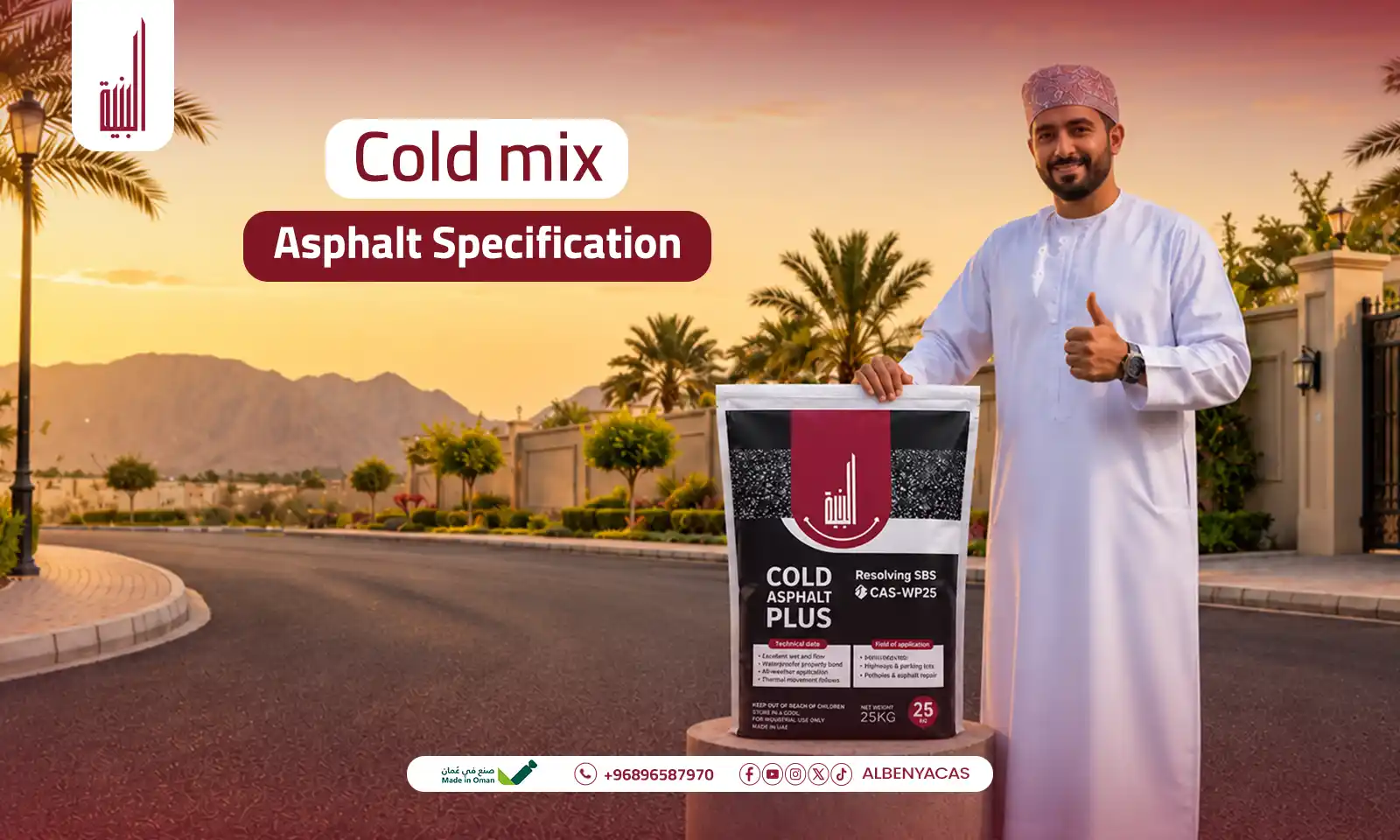
The cold mix asphalt specification outlines the technical and application needs, which guide the production, storage, application, and assessment of cold asphalt. Contractors, road maintenance crews, cities and towns, and facility managers need to be aware of these needs to find viable solutions for potholes and patchy pavement issues. Cold mix asphalt can be used in maintenance and emergency requirements without being heated, and it is easy to operate. Proper material selection, storage, preparation, and application, however, are still vital to ensure consistent repair performance.
What Is a Cold Mix Asphalt Specification?
A cold mix asphalt specification is a technical specification that describes the expected characteristics and performance of a cold asphalt repair material. These may include aggregate, asphalt binder, workability, adhesion, moisture resistance, storage conditions, application procedures, and performance.
Specifications are a great way to inform the buyer and the contractor about what this product is suitable for. Some of the important characteristics may be:
- Aggregate size and grading
- Binder characteristics
- Workability
- The ability of a pavement to stick to the existing pavement.
- Moisture resistance
- Application requirements
- Storage conditions
- Compaction requirements
- Expected performance
Specific needs are dependent on the formulation of the product, conditions of the project, local standards, and purpose of use.
When it comes to road maintenance, adhering to the right cold mix asphalt specification can help to ensure that the material used is suitable for the application.
How Moisture Affects Cold Mix Asphalt Quality
Moisture is a key factor in assessing cold asphalt repair materials. If standing water or too much moisture are present in a damaged pavement, the interaction between the asphalt binder and aggregate can be affected by water.
Moisture control issues can lead to:
- Reduced adhesion
- Material displacement
- Weaker repair performance
- Premature deterioration
- Problems with getting to the correct compaction
Application Conditions for Cold Mix Asphalt Repairs
Use of cold asphalt is largely dependent on the correct application. If the damaged area is not properly prepared and/or the material is not installed correctly, even a high-quality product can be a substandard product.
Generally, crews should:
- Clear loose material and dirt from asphalt.
- Wash the damaged area.
- Drain standing water if necessary, according to directions.
- Inspect area around pavement for soft spots.
- Apply the cold asphalt at the suggested thickness.
- Compact the material to a suitable degree.
- Inspect the completed repair.
Storage and Handling Requirements for Cold Mix Asphalt
To ensure the quality and workability of cold asphalt prior to use, it is important that it is stored properly. The material may be affected by poor storage conditions, which may make application more difficult.
There are several factors to take into consideration when determining storage requirements, but in general, maintenance teams should consider:
- Properly maintaining the original packaging, where applicable.
- Keeping stored materials free of contamination.
- Operating according to the manufacturer’s recommended temperature.
- Avoiding exposure to unnecessary moisture.
- Using suitable handling procedures.
- Inspecting the package before use for damage.
How Specifications Affect the Durability of Asphalt Repairs
Numerous factors affect the quality and durability of a pavement repair, such as the material used, the surface preparation, traffic, drainage, and application method.
A clear cold mix asphalt specification will give you some information to consider when deciding if a product is suitable for a specific repair. For instance, a heavy-traffic material might have characteristics that differ from one that is said to be lighter-traffic.
Important considerations include:
| Factor | Why It Matters |
| Aggregate properties | Affect stability and load resistance |
| Binder performance | Influences adhesion and flexibility |
| Moisture resistance | Helps maintain repair performance |
| Workability | Makes application easier |
| Compaction | Improves material density and contact |
| Storage stability | Helps preserve product quality |
Choosing Reliable Cold Mix Asphalt Solutions from Albenya
There are many more factors to consider when selecting an asphalt product for cold application than just comparing packaging or price. Contractors and road maintenance personnel should take into account the technical properties of the product, its applications, the handling requirements, and the adaptability of the product to local requirements.
Albenya supplies cold asphalt products, pre-mixed and ready to use, for practical road and pavement maintenance. Products can be applied for acceptable local repair on a variety of roads, parking areas, industrial facilities, access roads and other asphalt surfaces.
In assessing a cold mix asphalt specification, Albenya solutions may be taken into account on the following points:
- Ready-to-use application
- There is no need to use heating equipment for this.
- Convenient handling
- Practical storage
- Repair applications for the local area that are suitable.
- Fast maintenance operations
- Reduced equipment requirements
Contact Albenya
For reliable cold asphalt solutions, Albenya provides practical products designed for road maintenance and localized pavement repairs. Contact us to learn more about available cold asphalt solutions, application requirements, and the appropriate product for your maintenance project.
FAQS
What information should a cold mix asphalt specification include?
A cold mix asphalt specification should provide relevant information about material composition, aggregate characteristics, binder performance, workability, moisture conditions, application requirements, storage, handling, and other performance-related properties. The exact information depends on the product and its intended application.
Can cold mix asphalt be applied in wet conditions?
Some cold asphalt formulations can tolerate damp or wet conditions, while others may require specific preparation before application. Always check the manufacturer’s technical documentation for moisture requirements and prepare the damaged area according to the recommended procedure.
Does cold mix asphalt require heating?
No. Ready-to-use cold asphalt is designed to be applied without heating equipment. This makes it particularly practical for localized repairs, emergency maintenance, and projects where transporting or operating heating equipment is inconvenient.
How does storage affect cold asphalt performance?
Incorrect storage can affect workability and material quality. Cold asphalt should be stored according to the manufacturer’s recommendations, with attention to packaging, temperature, moisture, contamination, and handling conditions.
Is cold mix asphalt suitable for heavy-traffic roads?
Cold asphalt can be used for suitable repairs on roads exposed to traffic, but product selection should consider expected loads, pavement condition, repair size, and application requirements. The manufacturer’s technical specifications should be reviewed before selecting a material for heavy-traffic applications.
Why is a cold mix asphalt specification important?
A clear specification helps contractors and maintenance teams understand the material’s properties, limitations, storage requirements, and recommended applications. This makes it easier to select an appropriate product and apply it correctly for the intended pavement repair
Leave A Comment