
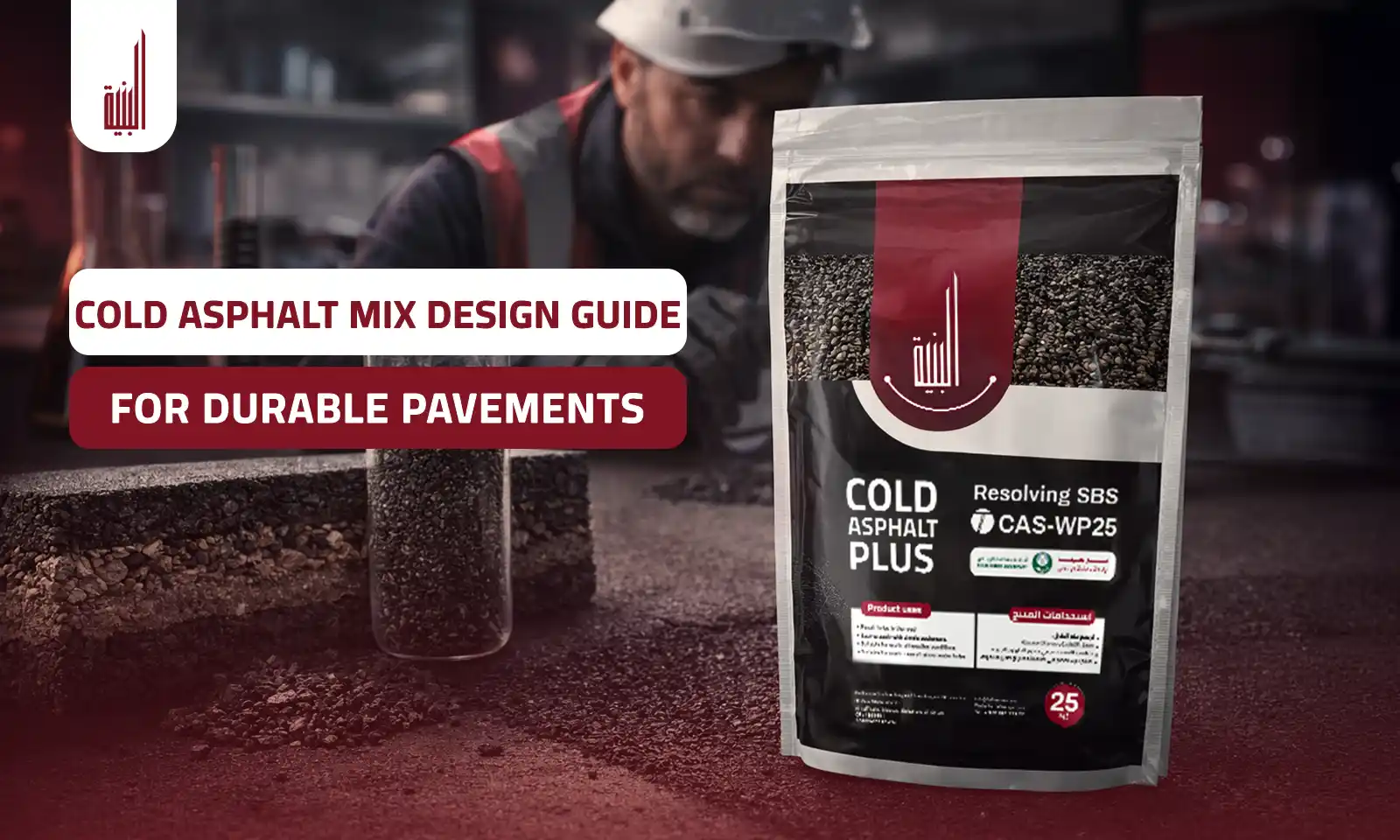
Cold asphalt mix design is now a vital science for engineers and municipalities to achieve economical, long-lasting maintenance of roads and to avoid high-temperature processes. In contrast to hot mix asphalt, cold mixes are made and laid at ambient temperature and hence are suitable for quick repairs, inaccessible locations, and in some cases where the environment is a factor. This guide encompasses all areas of necessity, such as material selection and gradation to curing science and the most recent innovations, so pavement professionals can make evidence-based choices to help contract road service for more than ten years.
What is Cold Asphalt Mix Design?
It involves the systematized process of choosing and assembling aggregates, bituminous binders (bitumen emulsions or foamed bitumen), and optional formulations to result in a mix that is compactable at ambient temperature. The objective is to achieve a compromise between the workability, compressive resistance, waterproofing, and long-term durability without heating materials up to 150°C or higher. CMA is quite good at pothole repair, surface dressing, base course stabilization, and emergency repairs where other methods of road closure are out of the question.
Important building blocks of a good mix.
A carefully designed blend relies on four types:
- Coarse Aggregates: Stone or gravel crushed (425 mm) that forms the skeleton of the building; angularity and hardness regulate the distribution of loads.
- Fine Aggregates, Sand: Fill micro-voids to lessen the entrance of moisture and enhance the skid section.
- Bituminous Binder: Aggregates at low temperature are coated with bitumen emulsion or foamed bitumen; the grade would depend on the climate and the traffic requirement.
- Fillers and Additives: OPC, cement kiln dust (CKD), or limestone powder with a concentration of 4% can significantly enhance stiffness, rut resistance, and moisture susceptibility.
Performance factors that influence Mix.
Even a technically correct mix will not perform well when the conditions in the field are disregarded. The key five variables of any cold asphalt mix design specification are:
- Traffic & Load: Even under-designed mixes rut more rapidly when subjected to high axle loads.
- Climate: Cold mixes can be used over a large temperature range—this can help in areas with cold winters or where precipitation is unpredictable.
- Moisture and Drainage: Stripping occurs in the presence of water at the aggregate-binder interface; with proper drainage, moisture damage is reduced by up to 40%.
- Curing Time: CMA develops slowly; early failure is a major reason because of premature trafficking.
- Compaction: Proper compaction increases durability (up to 40), and roller choice, as well as the number of passes, is vital.
Gradation and Selecting Binders.
The most powerful parameter in the design of cold asphalt mix, perhaps, is the aggregate gradation. Integration gives a strong interlocking structure that cannot be deformed, whereas a gap-graded mix readily ravel and cracks. Selection of binders also depends on durability: soft grades (SS-1, CSS-1) are used in areas with a large open time; hard grades are used to achieve high-traffic patches more quickly. SBS or rubber-based polymer-modified emulsions have a longer operating range on both temperature extremes and are being specified more frequently on high-end repairs.
Influence of Mix Design on Durability.
The connection between the quality of asphalt mix design and the lifespan of pavement is positive and quantifiable. Key performance measures (KPIs) to use in durability assessment include the following:
| KPI | Test Method | Threshold | Impact |
| Marshall Stability | Marshall Test | ≥ 3.5 kN | Prevents rutting |
| Tensile Stiffness (ITSM) | ITSM / UTM-100 | ≥ 1,500 MPa | Fatigue cracking resistance |
| Water Sensitivity (TSR) | AASHTO T 283 | ≥ 80% | Controls moisture damage |
| Air Voids | Bulk Density / Gmm | 3%–8% | Flexibility vs. oxidation |
Common Challenges
- Long Curing Time: CMA takes days or weeks to be fully cured, so it cannot be used in busy lanes unless it is cushioned temporarily.
- Early Moisture Sensitivity: Fresh CMA can be susceptible to rainfall prior to the emulsion breaking and drying off.
- Plateau Strength: Long-term strength is not as strong as hot mix, so CMA can only be used in the base/sub-base courses in some markets.
- Aggregate Compatibility: Light anionic emulsions are not compatible with all mineralogies; a pre-wetting agent or cationic binders might be necessary.
- Field Consistency: Gradation and binder content variability is presented by on-site mixing without a batching plant.
Best practices to achieve the best results.
The discipline in the laboratory to the field is necessary to achieve the best outcome with any cold asphalt mix design:
- Carry out complete material characterization, gradation, viscosity of binder, and specific gravity prior to finalizing proportions.
- Optimize binder content through either Marshall or Hveem techniques with a target of 38% air voids.
- Add 4 percent OPC, CKD, or limestone filler to enhance the stiffness and water resistance without reducing workability.
- Have a minimum curing period between the repairs and the reopening of the part to traffic.
- Roll in 2 or 3 passes using a vibratory roller or plate compactor.
- Coat a layer of a diluted tack emulsion on the existing surface and then apply cold mix to ensure that the bond is as strong as possible.
Innovations in Asphalt Technology
The science of cold asphalt mix design is growing at a quick pace:
- RAP Integration: Cold mix can use up to 100 percent recycled asphalt pavement, reducing material costs by 1/4 to 1/8 of the current requirement of $45/tonne to between 12 and 18/tonne, and millions of tonnes of aggregate waste can be saved each year.
- Self-Healing Pavements: Contained within and releasing at times of crack formation, encapsulated rejuvenators deliver healing agents, which extend service life by some 10% and reduce the cost of the life cycle by 32%.
- Polymer Modified Emulsions: SBS and rubber modifiers have a great deal of positive influence on elasticity and fatigue at both ends of the temperature spectrum.
- AI-Optimized Filler Blend: Intelligent algorithms such as the Ant Lion Optimizer (ALO) decide optimal filler ratios, enhancing compressive strength results without the need to tediously experiment.
Select Albenya as your new project.
Albenya produces cold asphalt bags designed to maintain roads, and they are ready to use. Its flagship products are CAS R25 and CAS WP 25, which provide proven cold asphalt mix design performance in ready-to-use, pre-proportioned packaging, sold in Saudi Arabia, Kuwait, Oman, Iraq, Yemen, and Qatar. None of the batching plants or heating equipment is needed, and repair crews can work on-site with a constant and internationally validated formulation.
FAQs
What is the difference between a cold asphalt mix design and a hot mix asphalt?
Cold asphalt mix design uses bitumen emulsions that allow mixing at ambient temperature, eliminating heating equipment. Hot mix requires 150–180°C. Cold mixes suit maintenance and patching; hot mix is preferred for new high-traffic construction.
How long does cold mix take to reach full strength?
Initial strength develops in 24–72 hours; full structural curing takes 2–4 weeks, depending on temperature, humidity, and binder type. Portland cement fillers accelerate early strength gain.
Leave A Comment