
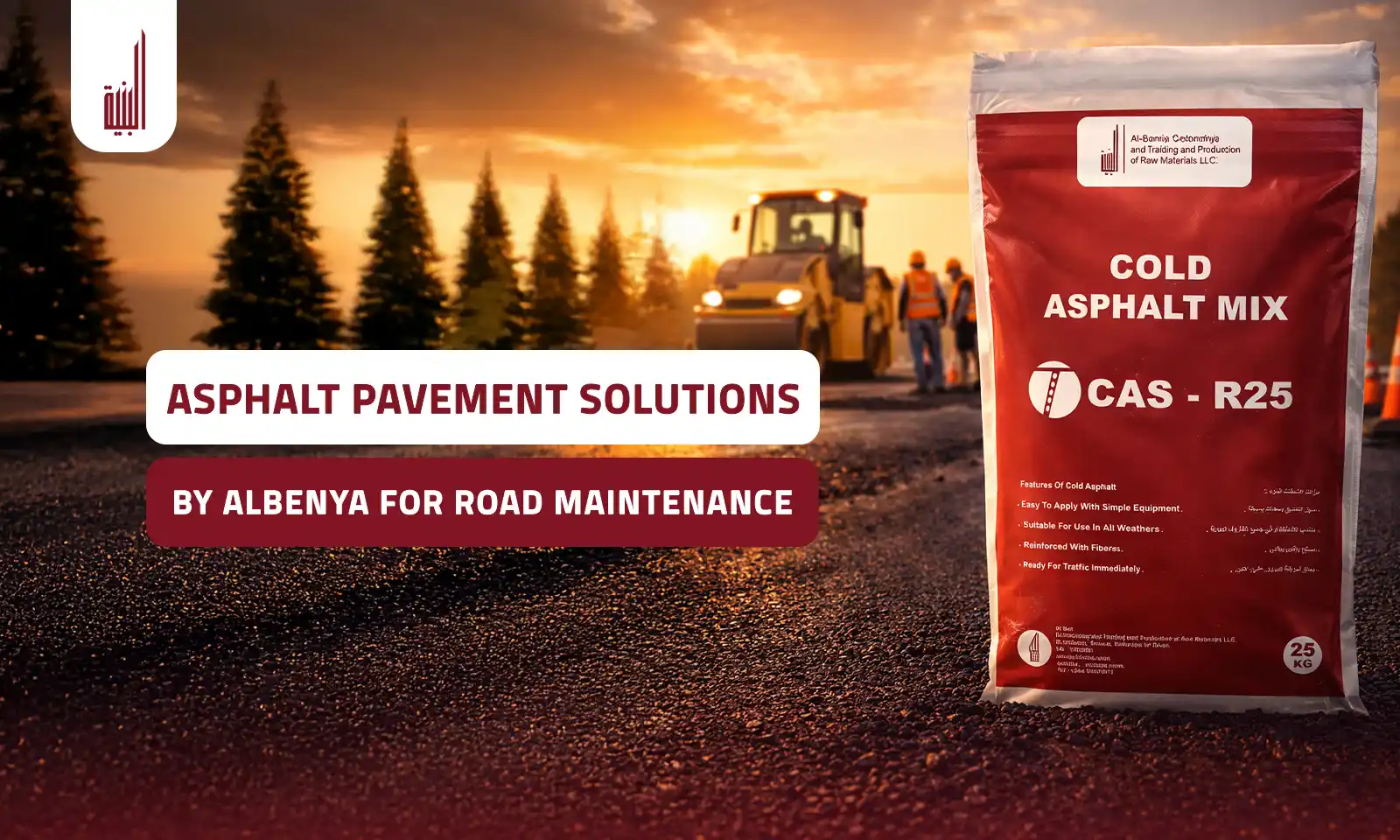
Our company offers integrated asphalt paving solutions along with a comprehensive range of asphalt services designed to protect your investment and maintain its quality and appearance and when paving and maintenance are carried out correctly asphalt can last for many years, thanks to our extensive experience we offer a variety of services including asphalt pavement, road paving, parking lot design and planning asphalt crack repair restoration and maintenance work and concrete restoration.
Understanding Asphalt Pavement in Cold Mix Applications
Cold asphalt pavement is primarily composed of selected aggregates, bitumen emulsion and other additives, and unlike hot asphalt, cold asphalt does not require heating, making it more energy efficient and environmentally friendly, also the bitumen emulsion acts as a binder, ensuring the mix’s cohesion during application, and the use of recycled materials such as reclaimed asphalt further contributes to environmental sustainability.
A key characteristic of cold asphalt technology is its high flexibility and adaptability to various climatic conditions. It can also be applied efficiently even in cold weather, where traditional roads sometimes fail, and the production process also contributes to reducing greenhouse gas emissions, aligning with modern environmental trends.
What Are Asphalt Pavements Made with Cold Asphalt?
Asphalt pavement concrete is produced by combining local aggregates or recycled asphalt with an asphalt emulsion in a mobile mixing plant and this method ensures homogeneous mixing and sustainable practices. The material is then transported and laid using conventional paving equipment, simplifying operations and reducing overall costs.
Cold Asphalt Pavement: Definition and Practical Use
Cold asphalt pavement is a flexible and economical road paving solution that does not require heating before application, and unlike hot asphalt, which requires high temperatures during preparation and application cold asphalt is mixed and applied at room temperature and this makes it suitable for projects requiring speed of execution or facing access or budget constraints.
Cold asphalt is particularly used for pothole repairs in urban and rural areas paving low traffic roads and applications in cold weather where hot mixes are difficult to use also it is also used for emergency repairs that require the rapid reopening of roads, due to its ease of use and long shelf life many municipalities and contractors rely on it for quick repairs.
Difference Between Traditional Asphalt Pavement and Cold Asphalt
| Aspect | Hot Asphalt | Cold Asphalt |
| Raw Materials | Uses petroleum-derived or coal tar-based binders with various aggregates require high heating for bonding Uses liquid asphalt emulsions or binders, mixed at room temperature without heating | Uses liquid asphalt emulsions or binders; mixed at room temperature without heating Asphalt pavement is highly durable and resistant to soil freezing and environmental stresses, resulting in a longer service life. It is also an ideal choice for projects with limited budgets due to lower material and logistics costs, which can be used as a base course or surface course, offering great flexibility for various road types in addition to being an environmentally friendly option. |
| Production Process | Requires heating aggregates and binder to high temperatures and Traditional asphalt produces higher emissions and heat. | Produced without heating simpler and less energy-intensive process, Cold asphalt, on the other hand, has lower emissions and a limited environmental impact |
| Application Methods | Laid quickly in warm weather requires immediate compaction, Traditional asphalt is suitable for main roads with heavy loads. | Can be laid in all seasons using simpler tools, which requires a longer curing time. Cold asphalt is suitable for quick repairs, secondary roads, and parking areas. |
How Cold Mix Asphalt Is Used in Pavement Construction
Why is cold asphalt essential for road repair Because it’s applicable in all weather conditions and can be used in hot cold or rainy weather without affecting its performance, and it is also an ideal solution for emergency repairs especially during winter and can be applied quickly using simple tools, also the road is often reopened immediately after application making it suitable for areas with heavy traffic.
Meaning of Paving with Cold Asphalt Materials
Cold asphalt paving is produced at ambient temperatures using suitable aggregates and an asphalt emulsion and is often mixed on site using mobile mixers, which reduces energy consumption and emissions and allows for the use of recycled asphalt, resulting in economic and environmental savings.
Advantages of Using Cold Asphalt in Pavement Works
Cold asphalt differs from hot asphalt in its production method and application temperature, making it a suitable option for cold regions or during winter. Among the most prominent advantages of using cold asphalt in paving works are:
- Cold asphalt is characterized by its versatility, environmental sustainability, high durability, and wide range of applications.
- Cold asphalt represents a significant development in road engineering, combining efficiency, sustainability, and cost effectiveness, making it a key element in the future of infrastructure.
Cold Asphalt Pavement for Maintenance and Repair Projects
Due to its durability and lower cost compared to concrete, cold asphalt is an ideal choice for roads and parking areas. With constant exposure to the elements, regular maintenance is necessary, and cold asphalt offers a quick and effective solution:
- With cold asphalt, potholes are repaired using pre-prepared asphalt without the need for heating, reducing costs and speeding up the process.
- Using cold asphalt minimizes environmental impact, helps reduce traffic congestion, and allows for faster road reopening.
Performance of Asphalt Pavement Using Cold Mix Technology
Using recycled asphalt in the construction and maintenance of flexible roads with asphalt emulsion is an effective and environmentally sustainable option, and this method contributes to energy savings due to the absence of heat loss during the mixing and laying process compared to conventional hot asphalt. Recycled asphalt RAP also represents a sustainable alternative to natural aggregates in road construction.
When Cold Asphalt Pavement Is the Right Choice
Cold asphalt paving is the ideal choice as it is a sustainable option, saving energy and reducing reliance on virgin aggregates, and studies have shown that high percentages of cold asphalt can be used while maintaining the required mechanical properties.
Cold asphalt is used for pothole repairs, emergency repairs, seasonal maintenance, private driveways, and temporary utility installations, thus providing a quick and economical solution.
Albenya Company Expertise in Asphalt Pavement Solutions
Albenya Company has extensive experience in providing the best asphalt paving solutions, and we strive for geographic expansion and diversification to maintain our leadership in cold asphalt production and road maintenance:
- We provide high-quality products that help address potholes that are difficult to repair using traditional methods.
- We aim to achieve customer satisfaction by adhering to the highest standards of quality and occupational safety.
- We provide a safe working environment and leverage our expertise to serve our customers, partners, and the communities in which we operate.
Contact us
In conclusion, Albenya Company provides high-quality cold asphalt pavement made from a balanced mixture of asphalt aggregates, polymers, and additives, offering a flexible, durable solution for quickly and efficiently repairing potholes and cracks. Contact us now, whether you need concrete barriers or other specialized technical services, as we are a leading company in asphalt paving.
FAQS
How does cold asphalt work?
It consists of a special blend of aggregates, polymers and binders forming a strong bond with the existing pavement to prevent deterioration.
Can it be used to create speed bumps or curbs?
No, it is primarily designed for repairing potholes and utility openings.
What factors affect its lifespan?
These include weather conditions, traffic, and usage patterns. Although it is a temporary solution, it offers many practical advantages

Leave A Comment