
Uncategorized
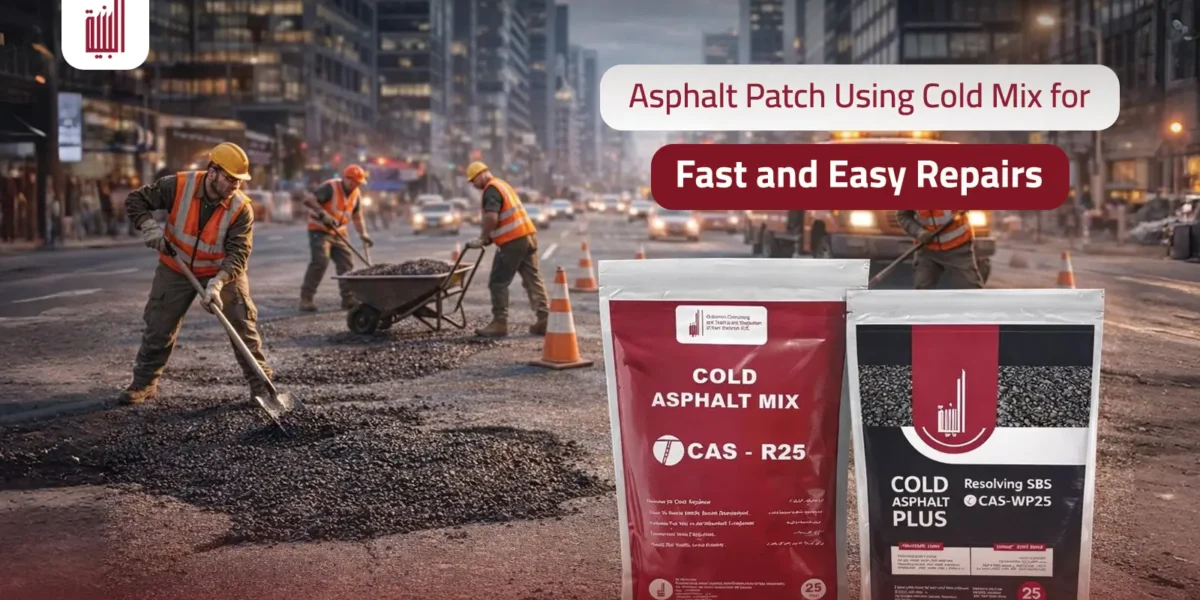
Asphalt Patch Using Cold Mix for Fast and Easy Repairs
Asphalt patching using cold mix is a fast and practical solution for repairing potholes, cracks, and surface defects in pavements. The procedure is very popular where hot mix asphalt does not exist, or whenever urgent repairs need to be made. Cold mix asphalt can be used immediately with minimal equipment and is operational in a considerable number of weather conditions. It has a high level of flexibility and is easy to use, which is the reason it is a favorite compromise between emergency repairs and regular maintenance.
Does an asphalt patch work?
Yes, an asphalt patch can effectively restore surface integrity, improve safety, and extend pavement life temporarily. Its performance is a factor of good preparation, quality of materials, and compaction. Cold mix asphalt patches are ideal for temporary fixes in high-traffic or emergency situations.
What is the best material to patch asphalt?
Patching asphalt needs the best materials, which would consist of pre-mixed cold patch asphalt containing a temperature-stable binder, clean and well-graded aggregates, and adhesion and durability-enhancing additives. Proper cold mix that is made will have a longer-lasting repair and better performance.
Cold Patch Asphalt Benefits
Cold patch asphalt has many advantages, which make it an advantageous option for road repairs and emergency repairs. It is fast and easy to apply, and it does not require any heating; thus, it helps considerably to decrease the road time. It requires minimal equipment and is therefore applicable in remote areas as well as sites with restricted access. It also works under a wide range of temperatures, which enables repair to be done under different weather conditions. Cold patch asphalt can be used as a solution to both temporary and semi-permanent repair of pavements due to its speed, flexibility, and ease of use.
What are the different types of asphalt patching?
Before exploring the specific methods, it’s important to understand that asphalt patching can vary depending on the repair requirements, traffic load, and environmental conditions. The appropriate type is one that is durable and cost-effective.
- Cold patch asphalt: Temporary or semi-permanent repairs.
- Hot mix asphalt: Permanent solutions which repair, need heating and special equipment.
- Throw-and-roll technique: The patch is made of a cold mix and compacted by a vehicle.
- Semi-permanent: Intensive preparation and packed over permanent repairs.
How to make an asphalt patch?
Creating an asphalt patch requires careful preparation and application to ensure it bonds well and lasts as long as possible. The steps to follow are:
1. Clean the area affected by the damage and remove the loosely deposited material and water.
- Pour the cold mix asphalt into the defect.
- Use a hand tamper or the tires of vehicles to compact.
- Use layers of a thin layer when the patch is deep, and press each layer.
- You can let the traffic patch itself out slowly.
How long will an asphalt patch last?
The life of an asphalt patch is influenced by several factors, including traffic volume, quality of installation, and environmental conditions. Cold mix patches that are installed in the low flow areas will last more than one year, with some even lasting longer with the right type of maintenance. The engine life is also normally reduced in busy locations by vehicles wearing and putting stress on the engine. Ensuring proper compaction, cleaning the surface thoroughly before application, and using high-quality materials all contribute to extending the durability and effectiveness of the asphalt patch. Early wear can also be detected by regular inspection and service can be extended.
How to Get Cold Patch Asphalt to Harden?
Cold patch asphalt is developed in such a way that it hardens not by heat, but by mechanical compaction. The pavement surface should be clean and dry, without debris or water that may be intrusive to bonding, to give the best outcomes. It should be packed properly with hand tampers or vehicle tires, and performance can be improved by placing the material in thin layers in deeper patches. With time, the traffic also contributes to the further consolidation of the patch, enhancing its density and general strength. The above procedures will result in a more permanent repair and a patch that is more resistant to loosening, water infiltration, and wear.
Problems caused by the cold patching of asphalt
The cold patching can be somewhat difficult to use in maintenance and application. The performance and life of the patch could be impacted by issues like poor compaction, inefficient surface preparation or environmental conditions. Knowing about such probable issues, contractors and maintenance teams will be able to take some proactive measures to achieve improved adhesion, durability, and effectiveness. The knowledge of these problems enables the careful planning, use of suitable materials, and the proper technique of application, which, when combined with each other, minimize the threats of premature failure and enhance the quality of the work done.
| Problem | Description |
| Premature loosening | The patch may separate from the surrounding asphalt if not compacted correctly |
| Reduced durability | Heavy traffic can quickly wear down poorly applied patches |
| Water infiltration | Low-quality patches may allow water to seep in, causing further damage |
| Shorter service life | Extreme temperatures can accelerate patch deterioration |
| Temporary appearance | Improper application can make the patch visible and aesthetically unpleasing |
Albenya Company Expertise in Asphalt Patch Solutions
Albenya Company would assess every repair site in order to come up with the most appropriate cold mix asphalt solution. They pay attention to the traffic, environmental performance, and repair goals to provide the best performance. Their team provides technical guidance for effective and long-lasting asphalt patch repairs.
For expert guidance and professional asphalt patch solutions, contact Albenya Company today. Our specialists are ready to assist you with site evaluation, material selection, and implementation of the most effective cold mix asphalt repairs to ensure safety, durability, and cost-efficiency.
FAQs
Can an asphalt patch be used in wet conditions?
Yes, but surface water should be removed to ensure proper adhesion and durability.
Does a cold-patch asphalt repair last?
Cold patch repairs tend to be temporary or semi-permanent, particularly in high-traffic locations.
When can traffic use a cold-patch asphalt repair?
Traffic can be progressively used on the repair location when it is properly compacted; it will be fully hardened with traffic consolidation.
Cold Mix Asphalt Design Smart Solutions for Maintenance
Cold mix asphalt design is a crucial element in modern road construction and maintenance, designed to produce high-quality asphalt mixes without the need for heating, and this technology is suitable for application in diverse environmental conditions. Our company assists you in using various types of cold asphalt. Cold asphalt is preferred in many projects as it provides good cohesion and durability suitable for different surfaces.
Key Limitations and Challenges of Cold Mix Asphalt
Cold mix asphalt design has been one of the most widely used materials for paving roads, walkways, and parking areas for decades due to its relative durability, low cost, and ease of application. However, despite its widespread use,e some challenges may arise over time, such as:
- Cracks, potholes, and uneven surfaces can negatively impact road safety and appearance.
- One of the challenges of cold asphalt is the phenomenon of urban heat islands.
- Asphalt absorbs and retains significant amounts of heat for extended periods, contributing to the formation of urban heat islands and leading to higher temperatures in urban areas.
- Poor drainage is another challenge.e Asphalt does not have a high degree of porosity compared to other materials like permeable concrete or gravel, el which can lead to water accumulation on the surface.
- Despite its durability, cold asphalt has a lower load-bearing capacity than some other materials, such as concrete
Cold Mix Asphalt Design: Production and Preparation Methods
Cold asphalt is produced by mixing aggregate with bitumen emulsion or diluted bitumen at room temperature. The mixture is then spread and applied under the same conditions without the need for heating, with the following exceptions:
- When using bitumen emulsion, the aggregate can be moistened before mixing to improve homogeneity, and in contrast,t using diluted bitumen requires the aggregate to be dry at room temperature or lightly heated before mixing to ensure good adhesion.
- In most cold asphalt mixes, only the bitumen is heated when necessary, and then it is mixed with the other components without heating the aggregate, which reduces energy consumption and minimizes emissions.
- MC 3000 and SC 3000 diluted bitumen are among the most commonly used standard types in cold asphalt production due to their suitability for mixing and application at normal temperatures.
Materials and Components Used in Cold Mix Asphalt Design
| Description | Aspect |
| The asphalt used in cold asphalt paving is not fundamentally different from the mixes used in other surface paving techniques | Nature of Cold Asphalt |
| It has a high level of durability, mainly due to the selection of suitable aggregates in terms of size and gradation | Durability |
| Aggregates form the basic structure of the wearing course, enabling it to efficiently withstand various loads | Role of Aggregates |
| Like any asphalt mix, cold asphalt consists of coarse and fine aggregates, fillers, and a binder | Mix Components |
| The binder is either diluted bitumen or a bitumen emulsion | Type of Binder |
| Water is used when a bitumen emulsion is applied, while a solvent is used when diluted bitumen is used | Additional Components |
| The presence of water or solvent is what distinguishes cold asphalt mixes from hot asphalt mixes | Difference from Hot Mix Asphalt |
Durability and Long-Term Performance of Cold Mix Asphalt
Over the past decade road paving technologies have seen significant advancements with the emergence of warm mix techniques and these techniques have reduced mixing temperatures from the traditional high temperatures of 140 160 C for hot asphalt to lower temperatures typically between 100 130 C However the ultimate goal remains producing a high quality asphalt mix at room temperature without ever heating the aggregate Cold asphalt based on bitumen emulsions is one of the most obvious solutions for achieving this objective.
Why Cold Mix Asphalt Is Ideal for Road Repair Projects
With the continuous expansion of high-quality road construction, safety and comfort requirements for driving on road surfaces have increased:
- Asphalt, as a flexible surface, is a commonly used road paving material due to its suitable mechanical strength, good water resistance, high durability, and other distinctive engineering properties.
- Developing an effective cold asphalt mix using emulsion technology requires consideration of several key factors, most notably.
- The mix must have suitable workability, allowing it to be laid and compacted using conventional equipment such as pavers and rollers without the need for specialized machinery.
- After compaction, the asphalt mix must achieve sufficient mechanical strength quickly to allow the road to be opened to traffic immediately.
Common Uses of Cold Mix Asphalt Design in Pavement Maintenance
Cold asphalt mix design is a versatile material in road construction and maintenance, and it can be used efficiently in many practical applications:
- Cold asphalt is a practical and quick solution for Pothole Repair. Cold asphalt is also effectively used to repair wheel rim wear.
- Cold asphalt is used to fill road trenches and re-level pavements, helping contractors complete their work quickly and without the need for heavy equipment or complex heating processes.
- Cold mix asphalt design is an effective solution for quickly covering railway lines, whether on main or secondary roads,s as it allows the road to be reopened to traffic immediately after the covering work is completed.
Best Situations to Apply Cold Mix Asphalt
Cold Mix Asphalt is considered an ideal option for repairing small and medium-sized roads due to its ease of use, low cost,t and versatility:
- When applying cold mix asphalt design begin by removing any debris, crumb, or dirt from the hole or crack,k and use a stiff brush or broom to thoroughly clean the area, as this promotes the adhesion of the cold asphalt.
- Determine the depth and add gravel if needed. If the hole is deeper than two inches, fill the bottom with gravel or crushed stone.
- Compacting the asphalt is a crucial step to ensure the repair’s stability and longevity after compaction.
Quality Control and Testing Methods Followed by Albenya Company
Al Benya aims to become a leading cold asphalt producer, ensuring customer satisfaction and executing development projects in the Sultanate of Oman and around the world while maintaining the highest quality standards in all our work.
We firmly believe that the secret to any company’s success lies in its unwavering commitment to quality and occupational safety standards, providing a safe and healthy work environment for all our employees and leveraging our expertise to serve our customers in the best possible way.
FAQS
Can cold asphalt be used in wet conditions?
Yes, Cold Mix Asphalt is designed to perform effectively in all weather conditions, making it the ideal solution for urgent repairs.
Does cold asphalt last a long time?
When applied and compacted correctly, UltraPatch provides durable, long-lasting repairs.
What tools are required?
A hand trowel or a paddle is recommended to ensure proper asphalt compaction and optimal results.
