
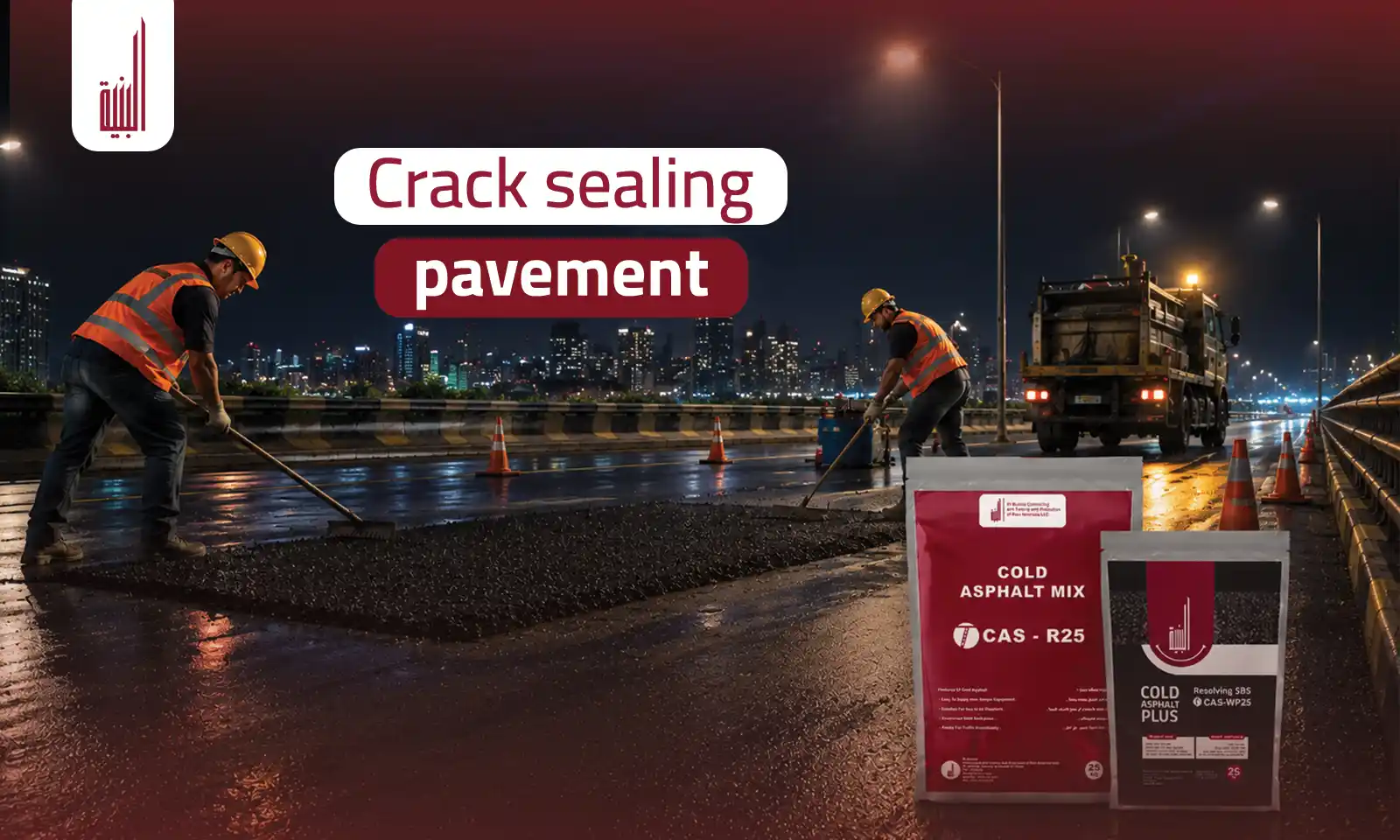
Crack sealing pavement is one of the most critical preventive maintenance tasks to maintain asphalt roads and paved surfaces. Cracks, no matter how small, can allow water, dirt, and debris to seep into the pavement structure, causing pavement deterioration and expensive repair work. Sealing early can help maintain the integrity of the pavement foundation, enhance safety, and greatly prolong the useful life of asphalt surfaces for property owners and road authorities. Albenya offers professional road maintenance services, such as crack sealing, and supplies high-quality asphalt products to help municipalities, contractors, and industrial facilities keep their pavements durable and reliable.
The Importance of Early Pavement Intervention
Early signs of pavement damage are much less expensive to deal with than when serious structural issues arise. The small cracks might appear insignificant, but they soon grow larger due to traffic loads, temperature changes, and water infiltration.
There are several benefits to early intervention:
- Does not allow cracking to occur.
- Minimizes the possibility of potholes forming.
- Protects the pavement foundation.
- Reduces maintenance expenses in the long term.
- Increases safety and ride comfort on a road.
A proactive maintenance program helps maintain pavement condition and postpones the need for costly rehabilitation.
Types of Cracks Found in Asphalt Surfaces
The cause of the pavement cracking is not the same for all pavement cracks, nor is the treatment. The type of crack must be determined in order to choose the right maintenance option.
| Crack Type | Common Cause | Recommended Action |
| Longitudinal Cracks | Pavement aging or poor joint construction | Crack sealing pavement |
| Transverse Cracks | Temperature changes | Crack sealing pavement |
| Block Cracks | Asphalt aging and shrinkage | Preventive sealing |
| Edge Cracks | Weak pavement edges or poor drainage | Repair and sealing |
| Fatigue (Alligator) Cracks | Structural failure from repeated traffic loads | Structural repair |
Early identification of pavement distress will enable maintenance crews to treat the pavement most effectively before damage progresses.
How Moisture Accelerates Pavement Damage
Water is a major factor that contributes to the deterioration of asphalt. Moisture in unsealed cracks deteriorates pavement subgrade and base, causing loss of structural strength. Then the cracks open up further when the traffic loads come again, and more severe pavement failures occur, leading to potholes.
When cracks are sealed properly, they will stop water from entering the pavement and help to keep it sound. This is a simple preventative measure that can help to minimise the need for extensive rehabilitation in the future.
A major goal of pavement preservation programs is to keep water out of the pavement, since moisture is a significant factor in pavement deterioration, according to the Federal Highway Administration (FHWA).
The Difference Between Crack Sealing and Crack Filling
Crack sealing and crack filling are two different maintenance techniques often used interchangeably.
| Crack Sealing | Crack Filling |
| Used for active cracks that expand and contract. | Used for non-moving or low-movement cracks. |
| Uses flexible sealants that accommodate pavement movement. | Uses filler materials primarily to close the crack. |
| Offers longer-lasting preventive protection. | Suitable for short-term maintenance. |
| Commonly included in pavement preservation programs. | Typically used for lower-priority repairs. |
The proper method is a function of the type of cracks, pavement condition, and anticipated surface movements.
Best Timing for Preventive Maintenance Activities
Timing plays an important role in the success of crack sealing pavement. Cracks that are repaired when they are small and before water enters the crack are likely to have the greatest long-term benefit.
Crack sealing pavement is a maintenance practice that is usually recommended:
- In the course of normal pavement tests.
- Prior to the rainy season.
- In advance of severe weather during winter months in cooler climates.
- As soon as new cracks begin to appear.
- Prior to cracks turning into potholes.
A pavement evaluation schedule will help determine when preventive maintenance should be performed and will minimize the need for significant structural repairs.
Benefits of Professional Crack Sealing Pavement Solutions
The use of the right materials, surface preparation, and proven application techniques is the key to the long-term protection that professional crack sealing pavement services offer. Early crack sealing has a lot of operational and financial advantages over delayed repairs.
Key benefits include the following:
- Reduces pavement life problems.
- Prevents water penetration.
- Saves on future maintenance expenses.
- Improves driving safety.
- Smoothes out the road surface.
- Endorses comprehensive pavement preservation programs.
Research in the industry has illustrated that life cycle pavement costs can be significantly lowered by implementing preventive maintenance strategies rather than reactive repair methods.
Protect Your Roads with Albenya Maintenance Expertise
Ongoing pavement maintenance is not just about repairing paving problems; it involves proactive measures that preserve the pavement structure and prevent the problems from spreading. Albenya provides clients with professional solutions to road maintenance, including crack sealing and high-quality asphalt products to help preserve roads, parking areas, industrial facilities, and commercial pavements.
Albenya can be used to provide a long-lasting pavement by using high-quality materials and effective maintenance techniques, which will save on long-term maintenance costs and enhance safety.
Contact Us
Need to find trusted crack-sealing pavement solutions? Contact us to find out more about our road maintenance solutions and quality asphalt products. We are here to help you ensure your pavement will last and perform to its fullest.
FAQS
What is Crack Sealing Pavement?
Crack sealing is a preventive maintenance procedure where cracks in the pavement are filled with a malleable material to prevent water from entering the pavement and to increase its lifespan.
Why is crack sealing important?
It helps to keep moisture out of the pavement structure, minimizing the risks of potholes, structural damage, and expensive repairs.
What is the difference between crack sealing and crack filling?
Crack sealing is applied to active, moving cracks with flexible sealants, and crack filling is usually only used for non-moving cracks and is a temporary solution.
Leave A Comment