
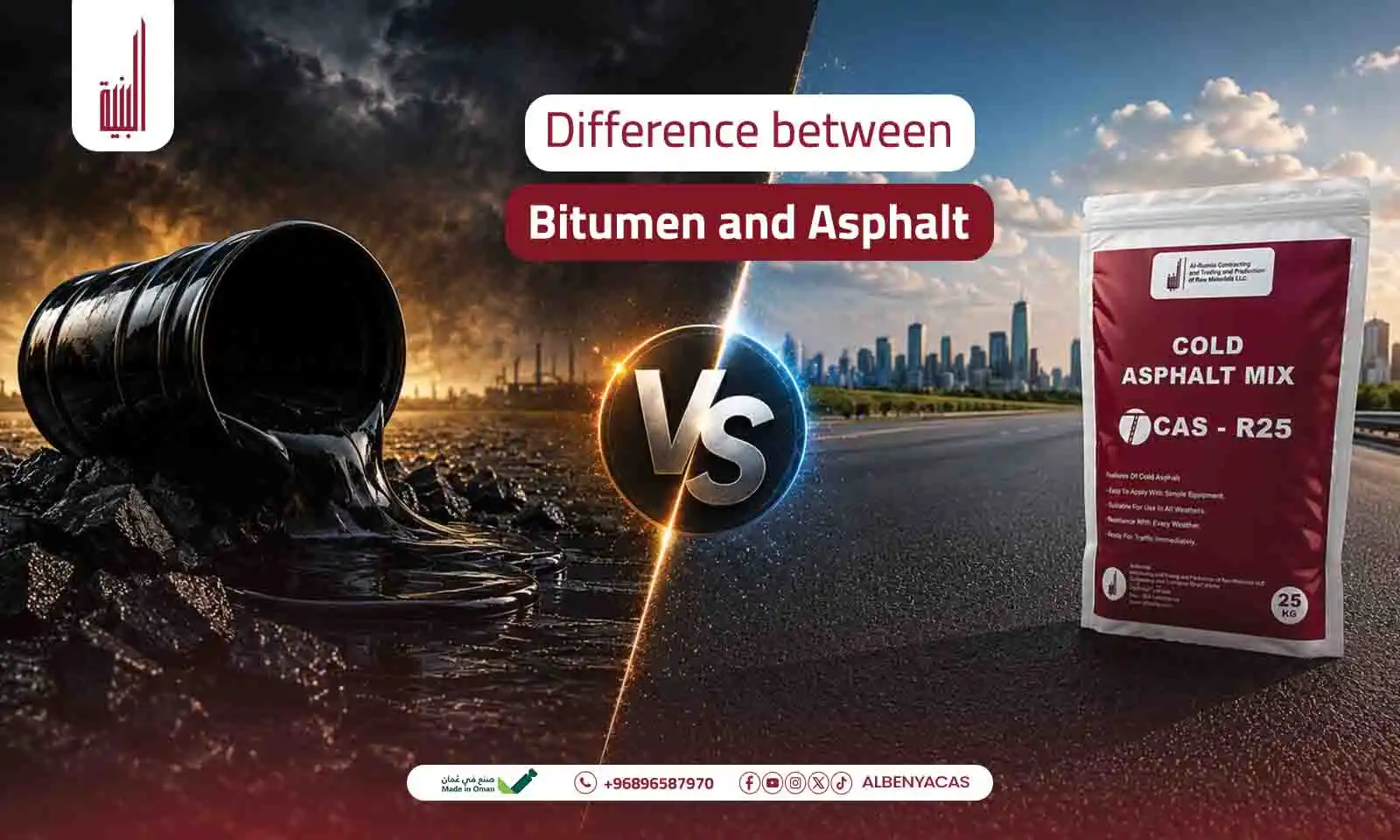
It’s a question that often comes up when contractors, engineers, and property owners are working on a road construction or maintenance project: What is the difference between bitumen and asphalt? Both are used interchangeably, but they are two different materials used for different functions in pavement systems. By understanding the difference between bitumen and asphalt, professionals can make informed decisions on road repairs, pothole maintenance, and the performance of long-term roads
What Is the Difference Between Bitumen and Asphalt?
The first difference between bitumen and asphalt is that they are composed of different materials. Bitumen is a black, highly viscous petroleum-based material used as the glue in asphalt mixtures. Has the purpose of binding aggregates together and adds flexibility and water resistance.
Asphalt is the final product that is made up of bitumen and aggregates like crushed stone, sand, and mineral fillers. This combination creates the long-lasting surface that is utilized for roads, highways, parking lots, airports, and other paved surfaces.
| Feature | Bitumen | Asphalt |
| Material Type | Binder | Finished paving mixture |
| Main Components | Petroleum-based binder | Bitumen, aggregates, and fillers |
| Used Alone | Rarely | Yes |
| Primary Function | Binds aggregates | Forms the pavement surface |
| Common Applications | Asphalt production | Road construction and repairs |
Why Are Bitumen and Asphalt Often Confused?
The difference between bitumen and asphalt is often confused, since they are closely related, in particular during the construction of roads.
In many parts of the world, the term “asphalt” is used to describe the asphalt binder and the resulting asphalt pavement, and some people use the word “asphalt” for the asphalt binder. Confusion is caused by these regional naming differences.
Since bitumen is the ingredient that holds the pavement together, many assume it represents the entire paving material. But bitumen is not capable of providing a durable road surface without aggregates and fillers.
This distinction is important for engineers, contractors, and maintenance personnel to understand so they can make more accurate repair material specifications.
Difference Between Bitumen and Asphalt in Road Repair Applications
This difference between bitumen and asphalt is crucial in road maintenance projects.
The reason why bitumen alone cannot be used to fill potholes or repair damaged pavement is that it is not structurally strong enough to resist traffic loads. Rather, it is used as the binder in asphalt mixes.
Cold asphalt products consist of the carefully graded aggregates combined with bitumen to form an asphalt material that can be used straight from the drum to repair damaged roads in a quick and efficient manner.
Complete asphalt mixtures offer much greater performance than just bitumen when used for pothole repairs, parking lot maintenance, utility trench reinstatements, and surface patching.
How Bitumen Becomes Part of Asphalt Mixtures
It is essential to know the difference between bitumen and asphalt and the process used to make asphalt.
In the factory, the heated bitumen or specially formulated bitumen is mixed with aggregates in specific proportions and mixed thoroughly. This bitumen envelops each aggregate particle, creating a cohesive mixture that resists environmental stresses, moisture penetration, and traffic loads.
Advanced formulations enable cold asphalt products to be workable without heating and to retain shear strength and durability after compaction.
In this manufacturing process, bitumen can be used as a binding material and form a part of a complete solution for pavement repair.
Which Material Is Better for Pothole Repairs?
Asphalt is the obvious choice when it comes to pothole repairs, when compared to bitumen.
Bitumen is not sufficient to ensure the structural integrity of the pavement after damage. The strength of the mineral aggregates, however, is combined with the adhesive property of bitumen, which makes cold asphalt mixtures ideal for the repair of roads, highways, industrial facilities, parking lots, and commercial properties.
Premium cold asphalt products ease the transport process, do not need heating, and enable maintenance teams to finish repairs with less impact of traffic.
The benefits of the products make asphalt the most popular choice for most localized pavement repairs.
Choosing the Right Material for Long-Lasting Repairs
The type of repair material will vary according to project needs, traffic usage, and long-term maintenance objectives.
Knowing the difference between bitumen and asphalt allows the decision-maker to select a range of products that would be durable and cost-efficient.
High-quality cold asphalt may have several advantages for most repair applications:
- Quick installation no heating required.
- Good bond to existing pavement.
- Very resistant to water.
- Reduced traffic disruption.
- Lower equipment requirements.
- Reliable long-term performance.
Quality asphalt products increase pavement life, decrease maintenance frequency and reduce maintenance costs.
Discover Albenya’s Cold Asphalt Solutions
Albenya manufactures high-quality cold asphalt products designed for dependable, effective pavement maintenance on municipal streets, highways, industrial facilities, airports, commercial developments, and residential communities.
Albenya’s cold asphalt products are designed to be applied easily, bond effectively, and stay in place for a long time, allowing contractors and infrastructure maintenance workers to repair roadways quickly and efficiently without the hassle of hot asphalt.
From emergency pothole repair to routine maintenance, Albenya provides reliable products that ensure optimal pavement performance and minimize downtime.
Contact Albenya
Looking for a professional cold asphalt company for your next road maintenance job? Contact us today and learn about our high-performance products for rapid, long-lasting, and cost-effective pavement repair.
FAQS
What is the main difference between bitumen and asphalt?
Bitumen is the petroleum-based binder, and asphalt is the complete paving mixture of bitumen, aggregates, and mineral fillers.
Can bitumen be used alone for pothole repairs?
No. Bitumen is not strong enough for use in pavement repairs and is mainly used as a binder in asphalt mixtures.
Why are bitumen and asphalt often confused?
The different terms are sometimes used synonymously in different areas, although they are based on different materials.
Is cold asphalt suitable for permanent road repairs?
Yes. Properly installed and compacted, high-quality cold asphalt products offer long-lasting repairs.
Leave A Comment