
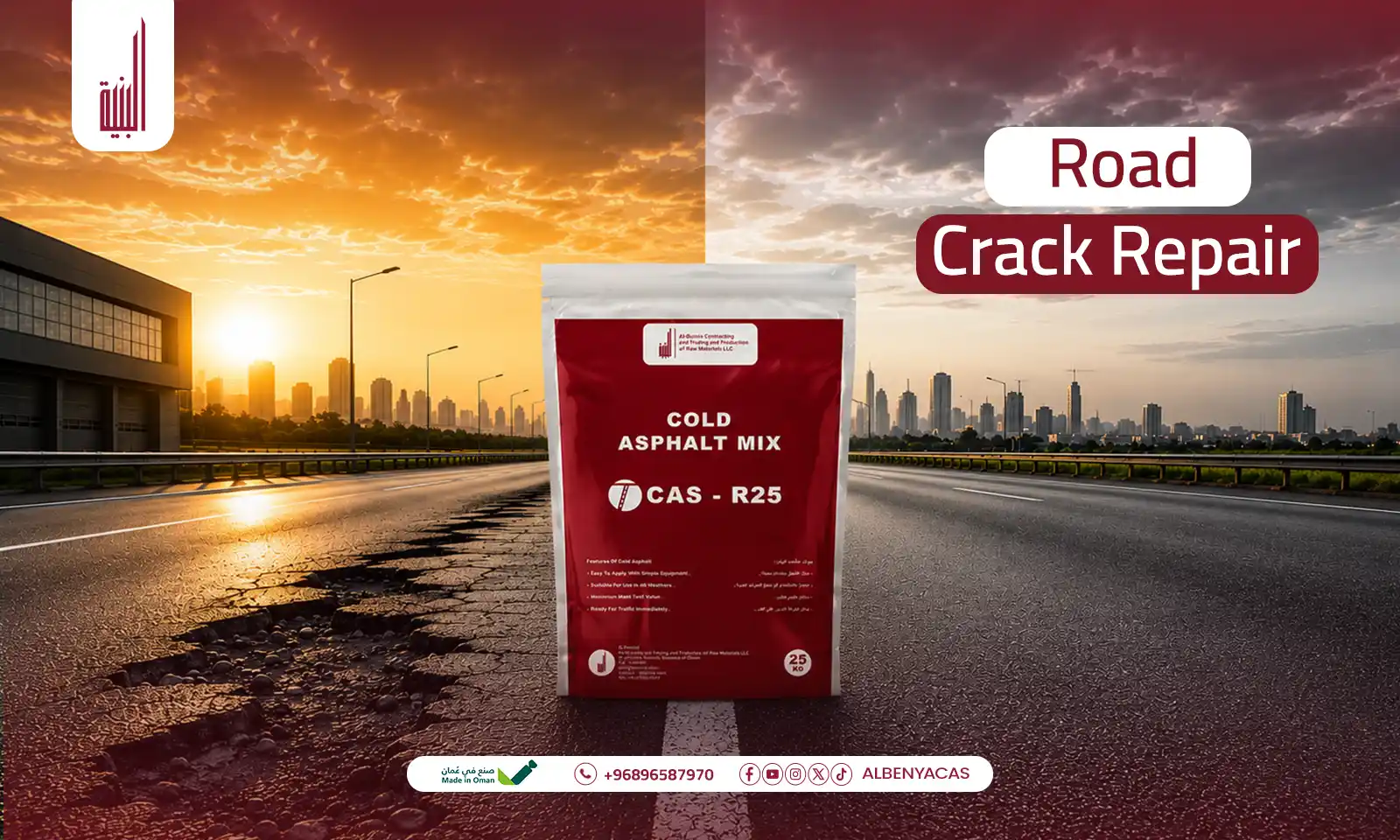
Road crack repair and preventing minor surface damage from turning into a costly structural failure is one of the most important maintenance activities that preserve asphalt roads, and repairing roads as soon as they are cracked is one such maintenance practice. Crack repair, when performed in a timely fashion, serves to prevent water from penetrating the surface of the cracks, preserve the road, parking lot and industrial surface base, and extend the service life of the road. With the use of modern repair materials such as ready-to-use cold asphalt, maintenance teams can repair roads in a timely manner without causing traffic delays and reduce maintenance costs.
Why Do Cracks Appear on Asphalt Roads?
Constant traffic and the environment cause asphalt pavements to naturally deteriorate over time. Although these small surface cracks might seem unimportant at first, if left uncared for, they can lead to bigger pavement problems later on.
Asphalt cracking is caused by several factors such as:
- Heavy vehicle traffic
- Temperature fluctuations
- Moisture penetration
- Aging asphalt binder
- Poor drainage
- Ground movement
- Inadequate pavement thickness
- In colder areas, repeated freezing and thawing.
Water that enters these cracks will erode the pavement structure below the surface. As traffic continues to drive over the damaged area, cracks widen, and potholes and larger pavement failures can form. This is the reason it is crucial to hire professional road crack repair as early as possible.
When Does a Small Crack Require Immediate Repair?
Not all cracks need repair, and while delaying repair may be better, long-term costs can increase as damage grows.
Anyone is injured or is at risk of being injured should be repaired immediately if:
- Cracks begin expanding in width.
- The pavement is filling with water.
- Several cracks are arranged in an interconnected pattern.
- The top surface pieces begin to fall.
- Minor pothole formation occurs.
- High level of traffic.
- Cracks occur at corners (intersections or turning areas).
Early repairs of road cracks will keep moisture out of the road foundation and will minimize the chance for major structural damage that could eventually need to be repaired by resurfacing or rebuilding the road.
This also involves regular inspections of the pavement, which can help to spot any damage early and prevent it from becoming costly to fix.
Road Crack Repair Methods for Different Types of Damage
Different crack types require different repair approaches. Selecting the appropriate repair method improves durability while preventing recurring failures.
| Crack Type | Common Cause | Recommended Repair |
| Hairline Cracks | Asphalt aging | Crack sealing |
| Longitudinal Cracks | Pavement movement | Sealing or localized patching |
| Transverse Cracks | Temperature changes | Flexible crack filling |
| Edge Cracks | Weak pavement edges | Edge stabilization and patching |
| Alligator Cracking | Structural failure | Partial-depth repair or reconstruction |
The first step in the process of professional road crack repair is to determine if the issue is surface damage or structural damage. Surface defects tend to be treated locally; structural failures need more extensive work to be fixed.
An appropriate repair method results in better pavement performance and reduces recurrent maintenance needs.
Can Cold Asphalt Be Used for Road Crack Repair?
Yes. In some instances, especially if the pavement surface has cracks that are open or if it has small areas of broken asphalt, ready-mixed cold asphalt may be the perfect choice for repair.
Cold asphalt is particularly suited for:
- Surface patching
- Small pothole repairs
- Edge deterioration
- Localized pavement failures
- Emergency maintenance
- Short-term traffic rerouting in advance of major rehabilitation.
How to Prepare a Damaged Area Before Repair
The surface preparation is as crucial as the type of repair material used. No asphalt product, even the high-quality ones, can function properly when applied to a contaminated or unstable pavement.
Before starting repairs, maintenance crews should:
- Remove loose asphalt and debris.
- Wipe away dust and dirt from the damaged area.
- Eliminate standing water whenever possible.
- If needed, trim unsound edges of pavement.
- Ensure the repair area is reasonably clean.
- Apply the appropriate repair material.
- Roughly compact the repaired area with appropriate equipment.
Proper preparation enhances the bond between the repair material and the underlying pavement surface and therefore the durability of the repaired pavement.
Regardless of the road crack repair method employed (crack sealants or cold asphalt patching), proper preparation is an essential component to successful road repair.
Road Crack Repair with Practical Cold Asphalt Solutions
Modern road maintenance increasingly relies on ready-to-use cold asphalt because it simplifies repair operations while delivering dependable performance.
Cold asphalt offers practical benefits for everyday maintenance:
- Fast emergency repairs
- Reduced equipment requirements
- Lower labor costs
- Easy storage
- Immediate availability
- Minimal disruption to road users
- Suitable for municipal and industrial maintenance
Maintenance teams can quickly repair localized pavement damage without waiting for asphalt plants or hot-mix production schedules.
As a result, organizations can address pavement deterioration earlier, helping reduce long-term maintenance expenses while extending road service life.
Many contractors now include ready-to-use cold asphalt as part of their regular road crack repair strategy because of its flexibility and ease of application.
Albenya for Reliable Asphalt Repair Solutions
Proper pavement maintenance requires the use of quality repair materials that are reliable and will work in challenging environments. Albenya produces high-quality cold asphalt that is perfectly suited for quick maintenance of roads, parking lots, industrial facilities and infrastructure projects. The product will allow for quick repairs and reduce equipment needs and traffic disruption.
Key benefits include:
- Ready-to-use packaging
- No heating required
- Appropriate for all seasons of the year
- Strong adhesion
- Easy storage
- Fast installation
- A real-world approach to emergency repairs.
A combination of good repair methods and reliable materials can enhance pavement durability and decrease the need for future repairs.
Contact Albenya
Albenya has ready-to-use, cold asphalt to simplify repair and reduce downtime. No matter whether you are working with municipal roads, commercial properties, industrial sites, or parking areas, our team can help you select the best asphalt repair solution for your needs. Contact us today to find out more about our products and get knowledgeable advice for your next road maintenance project.
FAQ
What is the best time to perform road crack repair?
The best time is as soon as cracks are detected. Early repairs prevent water infiltration, reduce pavement deterioration, and help avoid more expensive rehabilitation work later. Delaying repairs often allows minor damage to develop into potholes or structural failures.
Can every crack be repaired with cold asphalt?
Cold asphalt is suitable for widened cracks, localized pavement failures, edge damage, and small potholes. Very narrow surface cracks may require specialized crack sealants, while severe structural damage may require reconstruction instead of localized repairs.
How long does road crack repair usually last?
Repair longevity depends on traffic conditions, pavement condition, preparation quality, and repair materials. Properly prepared repairs using high-quality products generally perform much better and require less frequent maintenance than temporary patching methods.
Why is early road crack repair more cost-effective?
Repairing small cracks early prevents water from weakening the pavement foundation. This reduces the risk of potholes, extensive cracking, and structural failures, helping road owners avoid significantly higher resurfacing and reconstruction costs in the future.
Leave A Comment