
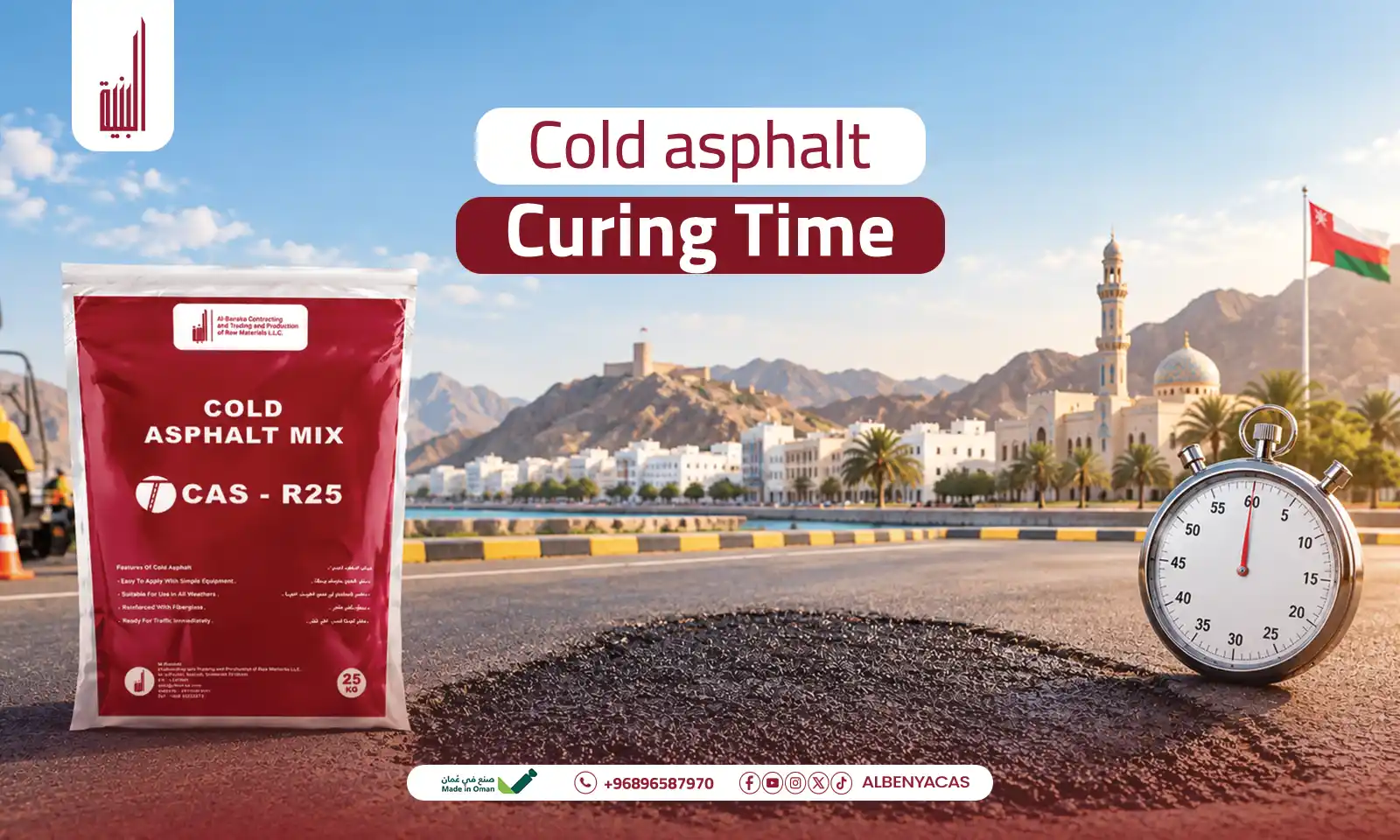
Cold asphalt is a material commonly used for localized pavement maintenance, pothole repair, road patching and other situations where a convenient repair material is required without the use of the heat requirements of hot-mix asphalt. A frequently asked issue after installation is how long after the repair should the area be left untouched to allow for normal traffic. Many factors influence the cold asphalt curing time, such as the formulation of the product, climate conditions, thickness of the layer, compaction, traffic, moisture, and weather conditions. Cold asphalt products can be produced with different curing mechanisms and binders, unlike hot asphalt, which is very dependent on temperature during product placement and cooling. It is important for contractors to understand these factors to help plan the repair and when the repaired surface is ready for use.
What Is Cold Asphalt Curing Time?
cold asphalt curing time is the time of asphalt materials that are laid down as a cold repair and need to gain a certain level of stability and strength.
The process for making cold asphalt products is unique from traditional hot-mix asphalt. Many use asphalt emulsion, cutback binders, or other similar materials that can be placed at ambient temperatures. During the curing process, moisture or volatiles can evaporate from the mixture, leading to increased stability in the binder and aggregate structure.
Curing is not the same as surface drying. A repair can look solid on top but may not be solid on the bottom, as the final stability of the material is still being created in the bottom.
The curing time will be different for various products and applications. The technical instructions provided by the manufacturer shall always be adhered to by the Contractor for placement, compaction, traffic opening, and maintenance.
How Long Is the Typical Cold Asphalt Curing Time?
The cold asphalt curing time is from several hours to several days depending on the product and weather conditions. Some localized repairs can be opened to traffic after proper compaction, relatively soon after compaction, and the material may increase in strength after compaction.
The curing time is dependent upon several factors:
| Factor | Effect on curing |
| Temperature | Warmer conditions can accelerate evaporation and binder development |
| Humidity | High humidity may slow moisture loss |
| Rain | Can interfere with curing and surface stability |
| Repair thickness | Thicker applications may require more time |
| Compaction | Proper compaction improves initial stability |
| Traffic | Controlled traffic can assist seating in some applications |
| Product formulation | Different binders have different curing characteristics. |
This means that the curing time is not the same for all cold asphalt products. The manufacturer shall establish a recommended exposure period and/or additional curing and those recommendations shall take precedence over general estimates.
Reliable Asphalt Maintenance Services From Albenya
Albenya provides asphalt-related products and road maintenance solutions for different pavement applications in Saudi Arabia. It offers a suite of cold asphalt solutions to meet practical repair and maintenance needs while taking into consideration how materials are handled and applied.
The right product is merely one-half of a successful repair. Performance of the repaired area can be affected by the surface preparation, placement, compaction, and post-installation conditions.
Contractors and maintenance crews can use the properties of the product chosen to determine the way the cold asphalt should be stored, installed, compacted, and opened to traffic. In search of a suitable cold asphalt solution? For product and application information, contact us.
How Traffic and Compaction Influence Asphalt Curing
The curing time for the asphalt after repair has a direct correlation with how it is compacted and managed after it is installed. Compaction will help to minimize air voids, increase contact between the aggregates and promote initial stability of the repair. If it is not compacted enough, it can be loose and subject to displacement when a load is applied to the vehicle. There can also be excessive or inappropriate traffic following the installation that can interfere with the repair before it has a chance to become stable.
Traffic must, therefore, be taken into account when planning a project. Controlled traffic can help the material settle, whereas heavy traffic may cause deformation if the repair has not reached the proper condition; this varies depending on the product. There are basically three points to consider in proper compaction:
Setting up a clean and stable repair area.
- Setting out the material in appropriate lifts when necessary.
- Ensuring an even distribution of the material.
- Using available equipment to compact the repair.
- Inspecting the work-finished surface for movement and loss of material.
The particular compaction method should be based on the technical requirements of the product and the conditions of the repair site.
How to Tell When Cold Asphalt Is Fully Cured
The cold asphalt curing time needs to be evaluated based on more than the appearance of the surface. A repair may feel hard or dry as the material is curing. A few practical measures that can be used to assess the stability of the repair are: surface firmness, stability in anticipated traffic, retention of aggregates and absence of excessive deformation. However, it is not possible to ascertain the exact curing state of all products by visual inspection. The best source for determining curing and traffic opening requirements is the manufacturer’s technical specification. On larger projects, the contractors may also employ inspection procedures or testing requirements as directed by the project engineer or as per the applicable technical standards.
What Can Delay the Curing of Cold Asphalt?
There are several site conditions that can cause an excess curing time for the cold asphalt. These conditions can be understood to ensure that the contractor will not put the repair in a situation where it is demanded before it is ready, before it reaches a stage of stability.
Common causes include:
- Low temperatures, which delay binder development or evaporation.
- High relative humidity, which decreases the loss of moisture.
- Water or rain that goes into the newly sealed area.
- Excessive repair thickness.
- Faulty drainage around the repair area.
- Insufficient compaction.
- Unstable or contaminated subsoil.
- Heavy usage prior to proper initial stability.
Product performance may also vary depending on storage conditions. Cold asphalt should be stored as directed by the manufacturer so as to avoid changes in the material properties prior to application. If the repair is beginning to look like it’s taking longer than normal to cure, make sure to evaluate the repair instead of thinking that simply using more traffic will cure it.
FAQS
How long does cold asphalt take to cure?
The cold asphalt curing time varies according to the product, weather, application thickness, compaction, moisture, and traffic conditions. Some repairs can handle controlled traffic relatively quickly, while full curing may continue for several days.
Can cold asphalt be used in wet conditions?
Suitability for wet conditions depends on the specific product formulation and manufacturer’s instructions. Water can affect adhesion, compaction, and curing, so the repair area should generally be prepared according to the product’s stated application requirements.
Does traffic help cold asphalt cure?
Controlled traffic may help some cold asphalt repairs settle after proper compaction, depending on the product. However, heavy or uncontrolled traffic can damage a repair before it develops sufficient stability, so traffic-opening instructions should be followed.
Why is my cold asphalt repair still soft?
A soft repair may result from insufficient compaction, excessive moisture, low temperatures, an unsuitable application thickness, or product-specific curing characteristics. The repair should be assessed against the manufacturer’s installation and curing requirements.
Leave A Comment