
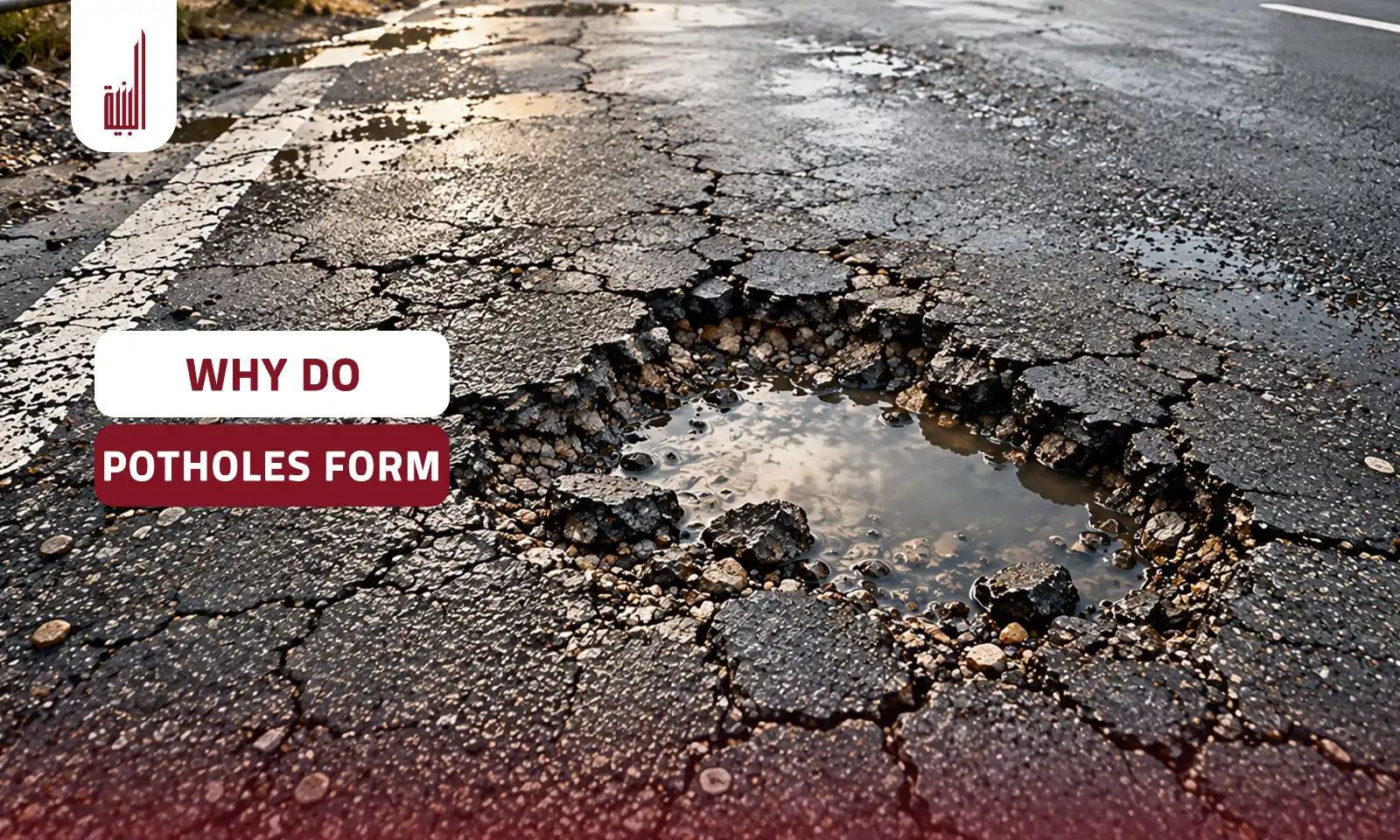
One of the most prevalent issues with asphalt roads and paved access areas, such as parking lots, is potholes. Can grow slowly or suddenly following rain, temperature fluctuations, and multiple vehicle loads. When left untreated, they can grow to be bigger, harm vehicles, and cost more to maintain roads. Knowing why do potholes form helps property owners, contractors, and road maintenance personnel determine the cause of pavement damage and determine which repair methods are suitable. While water is a significant factor, other factors, such as traffic, poor pavement layers, drainage, and maintenance, are also critical in causing deterioration
Why Do Potholes Form in Roads and Pavements?
Asphalt roads are built in layers to spread vehicle loads and create a tough road. As the surface cracks, water can infiltrate the pavement layers and undermine the pavement structure. The next time traffic passes over, the damaged area is stressed once more, resulting in more asphalt particles becoming loose and eventually leaving a hole.
Several factors often play a part in pothole formation:
- Water infiltration: Rainwater gets into cracks and destabilizes the pavement structure.
- Repeated pressure from cars, buses, and heavy trucks stresses weak asphalt.
- Temperature change: Cracks and surface damage can be caused by expansion and contraction.
- Standing water: Water can cause damage.
- Inadequate construction: Poor compaction or use of incorrect materials can decrease pavement life.
- Time spent on maintenance: If not corrected, small cracks and surface defects will progress to become large failures.
These factors tend to impact one another rather than independently. A small crack can never lead to a pothole, but when it is exposed to moisture and traffic, the traffic can cause the pavement to weaken and eventually break open the crack to create a pothole.
How Water Contributes to Pothole Formation
Water is one of the primary causes of deterioration of asphalt. Existing cracks, or rainwater getting in through damaged pavement edges, can lead to water reaching the layers below the pavement surface. It decreases support and can lower the bond between the components of the asphalt.
- If folks ask themselves why do potholes occur after rain, they are frequently told that the rain has simply brought out a problem that had been there all along.
- Water stored within pavement cracks can freeze and expand, causing damage to the pavement during colder weather. This pressure can cause cracks to open and affect the pavement structure. During warm weather and ice melt, holes can be left behind, where more water can get in.
- In time this cycle can result in:
- Thinning edges and wider cracks in the pavement.
- Severe loss of asphalt from the surface.
- Decrease of support under the damaged area.
- Pavement erosion caused by the passage of vehicles.
Not all roads are impacted by rainfall in the same way. The degree of deterioration depends on the pavement age, the condition of the asphalt, crack condition, drainage, and local weather.
If you’ve noticed holes appearing after it rains, you should get in touch with your insurance agent. Talk to Albenya about cold asphalt solutions for area repairs.
The Impact of Traffic on Pothole Development
Traffic causes deterioration by repeatedly loading the pavement over and over again. If well designed, these loads are distributed among the various layers of asphalt under normal conditions. But damaged pavements due to moisture, cracking, and structural failure can lead to faster damage upon repeated loading.
Heavy trucks, buses and construction equipment exert more pressure on the pavement than lighter vehicles. Further attention and maintenance plans may be necessary for roads with frequent heavy use.
The relationship between traffic and why potholes form becomes clearer when considering how damaged asphalt responds to repeated pressure. Vehicles pass over weakened areas, loosen already fractured material, and increase stress around the edges of existing defects.
| Traffic-related factor | Effect on pavement | Possible maintenance response |
| Heavy vehicle loads | Increased stress on weakened pavement layers | Assess load capacity and repair requirements |
| Frequent traffic | Repeated pressure on cracks and damaged surfaces | Inspect high-use areas regularly |
| Turning and braking | Concentrated forces in parking lots and intersections | Monitor areas exposed to repeated vehicle movement |
| Construction traffic | Localized loading from heavy equipment | Inspect access routes and loading zones |
How Poor Drainage Leads to Potholes
An effective drainage system is a way to help protect the asphalt pavement from the effects of rain. Drainage helps to protect asphalt pavement by channeling rain away from the road’s surface and underlying layers. Failure of the drainage systems can cause water to pool in low areas, run down the roadside, or get stuck under cracked or broken asphalt.
Understanding why potholes form in areas with standing water requires examining both the pavement surface and its surrounding drainage conditions.
Typical drainage issues include poor road slopes, blocked drains, poor maintenance of drainage gutters, and watering up in low areas. These conditions prolong the amount of time that water is in contact with the pavement and provide more time for infiltration.
To minimize deterioration to the drainage system, maintenance teams can:
- Flushing of clogged drains and waterways.
- Determining if the flow of water is diverted from paved areas.
- Checking low areas that often flood.
- Fixing appropriate cracks before water is able to seep into deeper layers.
- If there are multiple potholes, they are investigated for potential drainage issues.
Sealing a pothole without addressing the underlying water issue can lead to the occurrence of the pothole again. A better maintenance plan deals with the damaged surface and looks at the circumstances leading to the failure.
Albenya Solutions for Preventing and Repairing Potholes
For teams examining why potholes form and how to manage the resulting damage, choosing an appropriate repair material is an important part of pavement maintenance.
Albenya specializes in cold asphalt products packaged in 25 kg bags for road maintenance applications. Cold asphalt can be applied without heating the mixture at the repair location, making it a practical option for certain localized repairs.
Albenya’s product range includes options such as CAS-R25 and CAS-WP25 Plus. Their suitability depends on the application, pavement condition, expected traffic loads, and relevant product specifications.
Cold asphalt can support maintenance work in locations such as:
- Residential roads and access routes.
- Parking lots and paved service areas.
- Selected road sections requiring localized patching.
- Other maintenance areas where the product meets project requirements.
The repair process generally involves removing loose material, preparing the damaged area, applying the appropriate mixture, and compacting it according to the manufacturer’s instructions. Proper preparation is important because placing new material over loose debris or unstable pavement can affect repair performance.
Cold asphalt is not a universal solution for every pavement failure. Extensive structural deterioration, persistent drainage problems, or widespread surface damage may require additional engineering assessment and more comprehensive rehabilitation.
Looking for cold asphalt materials for your next maintenance project? Contact Albenya for product information and guidance on selecting an option for your application.
How Regular Road Maintenance Helps Prevent Potholes
Regular inspections help identify pavement defects before they develop into more extensive damage. A structured maintenance program allows property managers, contractors, and road authorities to prioritize repairs based on the severity of deterioration, traffic conditions, and available resources.
Once teams understand why potholes form, they can focus on preventing the conditions that contribute to pavement failure rather than responding only after a pothole appears.
A practical maintenance program should include:
- Routine inspections: Check road surfaces, pavement edges, cracks, and drainage areas.
- Early crack treatment: Address suitable cracks before water penetrates the pavement.
- Drainage maintenance: Remove obstructions and investigate recurring water accumulation.
- Timely patching: Repair localized defects before they expand.
- Repair documentation: Record recurring problem areas and monitor their condition.
- Periodic assessments: Investigate repeated failures that may indicate deeper structural problems.
Maintenance frequency should reflect road usage, weather exposure, pavement age, and observed deterioration. Busy roads and areas exposed to heavy vehicles may need more frequent inspections than lightly used access routes.
A proactive approach can help maintenance teams plan material requirements, reduce avoidable disruption, and identify when a localized repair is no longer sufficient.
Contact us to discuss cold asphalt solutions for planned maintenance and localized pothole repairs.
FAQS
Why do potholes form after heavy rain?
Heavy rain can lead to potholes, as the water will work its way into cracks, soften pavement layers, and lessen the support underneath. The weak asphalt is then fractured by repeated loading and unloading of vehicles. If there are existing pavement defects and poor drainage, there is a greater risk of damage.
Can potholes form without heavy rainfall?
Yes. Potholes can form due to frequent traffic, aging, changing temperatures, poor construction, and inadequate maintenance. Though water is a significant factor, there are several conditions that work in concert that can deteriorate asphalt even in the absence of heavy rainfall.
How can road maintenance teams prevent potholes?
The following practices can help teams curb the formation of potholes: frequent inspections, timely crack repair, proper drainage, appropriate repair materials and tracking of recurring problems. If damage continually recurs in the same spot, an examination of the underlying pavement structure may provide clues to the cause of the problem.
Is cold asphalt suitable for every pothole?
When the product is compatible with the pavement and project needs, cold asphalt is especially suitable for various localized repairs. If structural damage is extensive, supporting layers are unstable, or the drainage problem remains, further investigation and/or a different repair method may be necessary.
Leave A Comment