
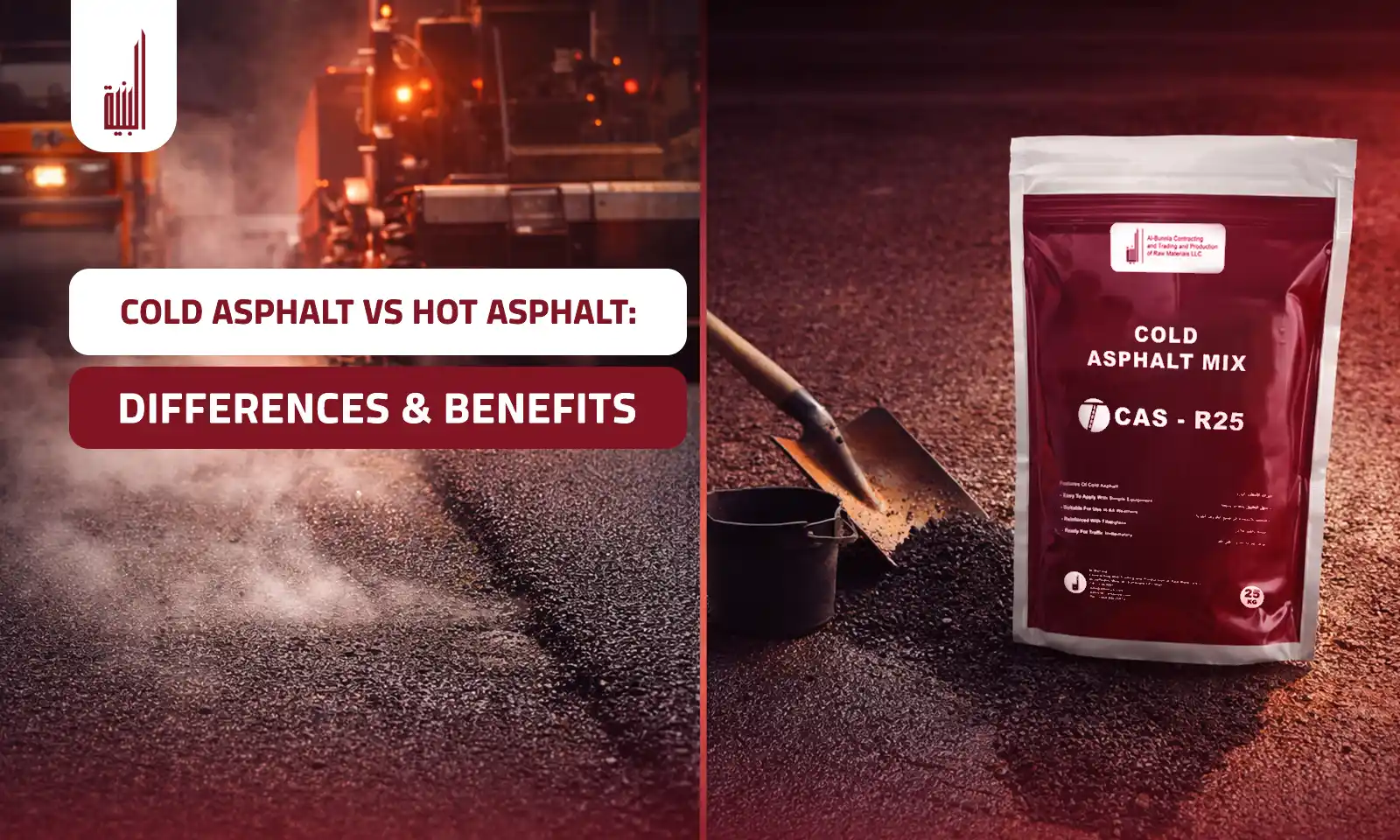
When dealing with road construction, road maintenance, or driveway development, comparing cold asphalt vs hot asphalt is mandatory. All types have their distinctive benefits based on the use, weather, and financial resources. Nesting the distinctions between cold and hot asphalt assists the contractors and owners of the properties to make informed choices that will be durable and cost-effective.
What Is the Difference Between Cold Asphalt and Hot Asphalt?
The primary distinction between cold and hot asphalt is in the way of production and application of the materials. Cold asphalt is a mixture of asphalt that is applied at ambient temperature using emulsified binders, whereas hot asphalt is heated at a high temperature and then applied.
Flexibility and curing time are also different for cold and hot asphalt. Cold asphalt is simpler to work with, and its application is in rapid repair works, whereas hot asphalt offers a solid and sustainable system that can be applied in busy highways.
Application and Usage Comparison
In the context of cold asphalt vs. hot asphalt differentiation, each of them is used for particular purposes. The maintenance work is often done with cold asphalt, like patching and repairing potholes, and large-scale paving work is done with hot asphalt. It offers a solid
When it comes to cold asphalt and hot asphalt, the decision here is taken based on the size of the project, what its life needs to be, and the equipment you have at hand. Cold asphalt is better suited to quick repairs, whereas hot asphalt is better in long-term infrastructure projects.
Performance in Different Weather Conditions
The weather conditions also have an important influence on the effectiveness of cold asphalt and hot asphalt. Cold asphalt works at moderate temperatures and can be used even in unfavourable weather conditions.
Hot asphalt, however, should have controlled temperatures on application to make sure that compaction has been achieved and bonding has occurred. This renders cold asphalt vs. hot asphalt a significant factor in areas with different climates.
Cost Comparison Between Cold Asphalt and Hot Asphalt
Cost is a major factor when evaluating cold asphalt vs hot asphalt. The initial costs of cold asphalt are usually less as the asphalt does not need heating or special equipment. This renders it an economical maintenance and small project option.
Hot asphalt is more expensive to construct initially because of the requirements of manufacturing and transportation, but it can be very advantageous in long-lasting projects. Thus, cold asphalt or hot asphalt needs to be selected based on the long-term and short-term objectives and budget. Cold AsphaltHot Asphalt
Cost Comparison Table
| Factor | Cold Asphalt | Hot Asphalt |
| Initial Cost | Lower | Higher |
| Equipment Needed | Minimal | Specialized |
| Maintenance Cost | Moderate | Lower over time |
| Project Scale | Small to medium | Medium to large |
Which Option Offers Better Durability?
One of the important considerations in the cold asphalt vs hot asphalt is the issue of durability. Hot asphalt is typically of high durability as it has a dense structure and great bonding character. It is best suited to busy roads in the long term.
Cold asphalt is less durable but provides sure performance in maintenance and low traffic applications. Development of materials has enhanced the longevity of cold asphalt compared to hot asphalt, such that cold mixes now seem to be competitive.
When to Use Cold Asphalt Instead of Hot Asphalt
Cold asphalt is obviously at an advantage over hot asphalt in certain scenarios. These are emergency repairs, remote locations and projects that are to be done without using very heavy equipment.
Asphalt cold is also the recommended choice in situations involving storage flexibility and convenience. Contrary, hot asphalt is suited better to those projects that demand the maximum strength and durability.
Advantages and Disadvantages of Each Type
Comparing the advantages and disadvantages of cold asphalt vs. hot asphalt helps in making the right decision based on project requirements, budget, and execution conditions. The following table highlights the key differences between the two types in a simplified way:
| Category | Cold Asphalt | Hot Asphalt |
| Ease of Application | Easy to apply | Requires specialized equipment |
| Cost | Lower cost | Higher cost |
| Heating Requirement | No heating required | Requires heating |
| Durability | Less durable | Highly durable |
| Setting Time | Slower to set | Faster to set |
| Ideal Use | Quick repairs and small projects | Main roads and large projects |
How to Choose the Right Asphalt for Your Project
Cold asphalt or hot asphalt selection is based on a number of parameters such as the size of the project, costs, climatic conditions, and the traffic volume that is supposed to be carried. Cold asphalt can usually be the most suitable when making small and quick fixes. Hot asphalt would normally be more applicable when large-scale construction and high-traffic areas are involved.
A keen consideration of these aspects will help maintain the high performance and value of the chosen material.
Discover the Best Cold Asphalt with Al Benaa Experts
Just as it is essential to select the right material, so too is selecting the right supplier. Albenya offers highly developed solutions that are capable of addressing the current needs of paving. Their asphalt items are cold, meaning that they are meant to provide efficiency, durability, and convenience in a number of applications.
Find cold asphalt solutions of superior quality with Albenya specialists. Get in touch with the team so that you are able to discover the optimal choice of your undertaking and get long-term outcomes.
FAQS
What is the main difference between cold asphalt vs. hot asphalt?
The primary distinction is temperature. Cold asphalt is used at ambient temperatures, whereas hot asphalt will have to be heated.
Which is less expensive?
Cold asphalt is low-cost in the short run, whereas hot asphalt can be, potentially, less expensive in the long term.
Does cold asphalt work in any weather conditions?
It is equally compliant compared to hot asphalt and performs optimally under moderate conditions.
Which is more resistant?
Hot asphalt is more resilient, particularly in high-traffic areas.
Leave A Comment