
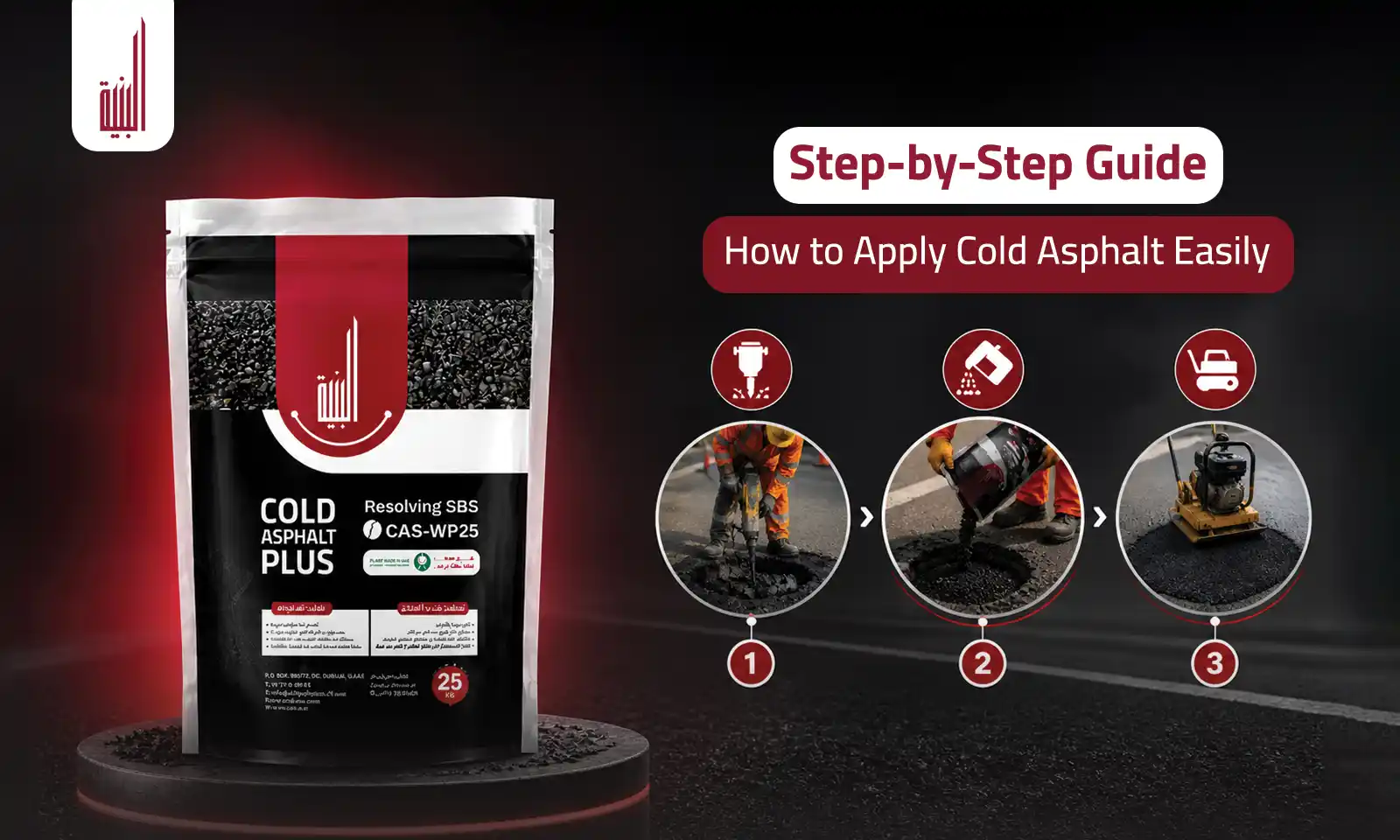
The knowledge of applying cold asphalt is critical to all road repair and maintenance workers, driveway workers, and those who are engaged in small paving work. Cold asphalt is very popular due to the ease of handling, lacks heat requirements, and it can be placed on-site. This renders it the best option when it comes to fast repair and longevity when properly applied. Be it repairing potholes and cracks or old surfaces, understanding how to apply cold asphalt correctly can save time, cut down expenses, and enhance the stability of pavement. Even basic applications can perform the task of professionals with proper preparations and techniques.
How to apply cold asphalt
When learning how to use cold asphalt, a systematic approach should be used. Cold asphalt is easy to apply, although it requires a proper technique to be applied to achieve durability and performance. Plugging damaged locations and rebuilding the surface integrity is usually done with the material.
Cold asphalt application entails preparation of the damaged area, application of the material and compacting the area. When these procedures are adhered to properly, the repair is powerful enough to withstand traffic and environmental factors.
Tools Required for Applying Cold Asphalt
It is important to have the correct equipment before commencing the process of applying cold asphalt. The tools provide adequate positioning, compaction, and finishing of the material.
Examples of common tools are shovels to lay the asphalt, tampers or compactors to press the asphalt into place, and brooms or blowers to clean the surface. In bigger projects, the mechanical compactors or rollers can be employed to get a better density.
Appropriate tools enhance efficiency and help the cold asphalt to bond well with the existing surface.
Preparing the Surface Before Application
One of the most important steps in the preparation to apply cold asphalt is surface preparation. This could result in the failure of the material because, without the correct preparation, the material would not bond properly.
The space has to be hygienically cleaned to eliminate dirt, loose debris, and water. Weak or damaged asphalt must be removed to form a stable surface. Cold asphalt will be placed on a clean and dry surface to ensure that it sticks in place and works over time.
When the repair is properly prepared, it will last longer, and the repairs will not require much maintenance.
Step-by-Step Guide to Applying Cold Asphalt
When learning how to apply cold asphalt, it is necessary to follow a definite order. Every action helps in the end quality of the repair.
- Cleanse the area of damage.
- Eliminate loose contents and provide a firm foundation.
- Pour the cold asphalt in the repair area.
- Sprinkle the material with a shovel.
- Tamper or roll out the asphalt with a tamper or roller.
- Insert or remove material as necessary.
- Tilt the surface to an equal plane with the pavements.
These measures make sure that the cold asphalt is used properly and will be able to carry the traffic load and to withstand the environmental conditions.
How to Properly Compact Cold Asphalt
One of the most important steps in the application of cold asphalt is compaction, since it influences directly the strength and durability of the repair. Compression eliminates air spaces and enhances the material density, rendering it less vulnerable to wear and tear.
Small repairs can be done with the help of manual tampers, whereas the large areas should be done with mechanical compactors. The idea is to make sure that the asphalt is placed in place and well spread out to cover the area of repair.
Compaction may result in premature failure, and one should take regular pressure when performing this action.
Tips to Ensure Long-Lasting Results
To acquire long-term outcomes on how to use cold asphalt, detailing and correct technique are important. The final outcome is dependent on environmental circumstances, the quality of materials, and the methods of their application.
The stability can be enhanced by coating the material in layers during deeper repairs. It is advisable not to apply during heavy rain or very wet weather to ensure good bonding. High-quality cold asphalt is also used to promote performance and durability.
Regular repairs and regular maintenance also increase the life of the repair.
Drying Time and When the Road Can Be Used
The primary benefit of cold asphalt is its usability in a short time. Once knowing how to use cold asphalt, one should know the process of curing.
The repaired area can in most instances, be opened to traffic shortly after compaction. It may, however, take time to fully cure with weather conditions and the type of material used. The asphalt is still hardening and strengthening during this time.
Giving ample time to cure will enhance the longevity of the repair and provide superior performance in the long-term.
Maintenance After Applying Cold Asphalt
After the process of applying cold asphalt is done, proper maintenance is necessary. Regular inspections can be used to detect any wear or damage in its initial stages so that early repairs can be made.
Maintaining the surface and repairing small cracks promptly helps to stop further decay. Regular repairs prolong the warranty of repair and guarantee the stability of performance in the long-term.
Cold asphalt repair can last for years when a repair is carefully applied with continual maintenance.
FAQs
How can cold asphalt be applied with the least amount of effort?
After the correct preparation of the surface, spread the material and press it.
Is there any special equipment required to use cold asphalt?
Less complicated tools, such as tampers and shovels, can be used to do minor repairs.
What is the time required for cold asphalt to dry?
Full curing is time-consuming and can be applied right after compaction.
Is cold asphalt applicable in all weather conditions?
It is applicable in dry conditions and can be applied in other environments.
How many days does a cold asphalt repair take?
It relies on the quality of application and maintenance, but may take several years
Leave A Comment