
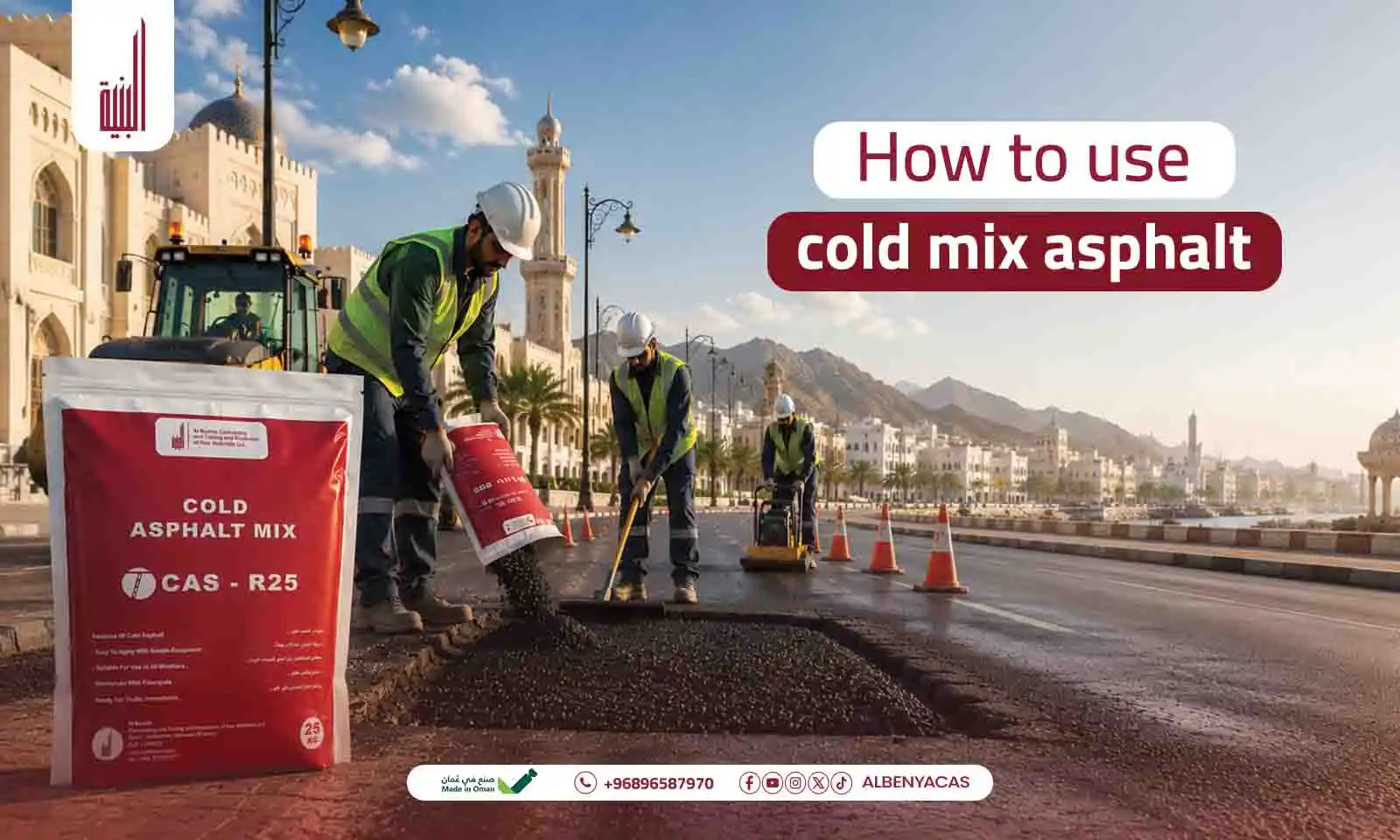
One of the most frequently asked questions by contractors, municipalities, facility managers, and property owners in search of a quick and effective solution to repair damaged pavement is “how to use cold mix asphalt?”. Cold mix asphalt is non-heated, unlike hot mix asphalt, and can be used in nearly any weather condition to repair potholes, cracks, and surface deterioration. It is a great solution for restoring road safety, extending pavement life, and reducing traffic disruption when used properly. This step-by-step guide will explain how to use cold mix asphalt, detail the required tools for cold mix, and explain best practices, as well as why Albenya’s cold asphalt products are the trusted choice for professional road maintenance projects.
How to Use Cold Mix Asphalt: A Complete Step-by-Step Guide
How to use cold mix asphalt properly will result in better repairs and a longer service life. It is simple to do but needs to be prepared and compacted properly.
Take these key actions:
- Examine the damaged area and calculate the size of the repair.
- Clear away loose asphalt, dirt, standing water, and debris.
- Spread the cold-mix asphalt into the damaged area.
- Spread the material evenly using a rake or shovel.
- Just overfill the repair area to allow compaction.
- Compact material with a hand tamper, plate compactor, or vehicle tires.
- Open surface to traffic once adequate compaction is reached.
One thing that is always mentioned when people ask “how to use cold mix asphalt” is that the top-quality product is best used when the surface is prepared.
| Repair Step | Purpose | Recommended Practice |
| Clean the area | Improve adhesion | Remove dust, loose asphalt, and debris |
| Fill the damaged section | Restore pavement | Slightly overfill before compaction |
| Level the material | Create an even surface | Use a rake or shovel |
| Compact thoroughly | Increase durability | Use a tamper, roller, or vehicle tires |
| Inspect the repair | Ensure long-term performance | Add more material if settlement occurs |
When Should You Use Cold Mix Asphalt for Road Repairs?
Knowing how to use cold mix asphalt is the correct repair solution and is also a part of understanding how to use it. Cold mix asphalt is suitable for emergency maintenance and planned repair projects where equipment to heat the asphalt is not available or practical.
Suitable for filling potholes in roads, parking lots, residential streets, industrial facilities, sidewalks, and access roads. It can also be used for temporary repairs prior to large resurfacing projects as well as permanent repairs when high-quality materials are used under normal traffic conditions.
Cold asphalt mix is particularly useful during the winter months when hot mix plants are not available. The material can be transported by maintenance teams to various job sites, and maintenance can be done on the spot without the need for specialized equipment.
Preparing the Surface Before Application
The key to a successful repair is proper preparation. Anyone looking into the use of cold mix asphalt should be aware that the absence of preparation greatly shortens the life of the repair.
First, remove broken pavement, vegetation, mud, and loose particles from the damaged area. Eliminate standing water wherever possible, but many high-quality cold asphalt products can handle some moisture.
If the edges of the pothole are weak, cut them to form a strong boundary for the repair. For deep holes, it may be necessary to fill in the hole layer by layer. A multi-layered application will lead to better compaction and less settlement in the future.
After the surface is cleaned and stabilized, the repair area is prepared for the cold-mix asphalt to be placed.
Tools Required for a Professional Repair
Although the use of cold-mix asphalt is much simpler than hot asphalt, proper equipment is required for professional results.
Basic tools include:
- Shovel
- Asphalt rake
- Hand tamper
- Plate compactor
- Push broom
- Safety gloves
- Reflective safety vest
- Traffic cones or warning signs
For larger municipal or commercial projects, vibratory rollers provide even greater compaction, increasing the repair’s durability under heavy traffic.
The right equipment allows for improved density, smoother surface finishes, and improved pavement life.
Best Practices for Permanent Road Repairs
Even with knowledge of how to use cold mix asphalt, there is a noticeable difference in the quality of repairs when industry best practices are followed.
Do not use low-quality cold mix asphalt for temporary repairs; only use high-quality cold mix asphalt for long-term pavement performance. Make sure it is compacted well; under-compaction is a major failure cause.
Do not underfill potholes, as the material will compress during compaction. Check repaired areas for any minor settlement after heavy traffic or extreme weather and re-stabilize with more material if necessary.
Regular inspections can prevent minor issues from escalating into costly structural repairs, which saves money in the long run.
How to Use Cold Mix Asphalt for Potholes and Surface Damage
The process for the application of cold mix asphalt to potholes is similar to that described above but has to be given special consideration if the pavement failure is deeper.
Small holes can be patched up in a single layer; larger or deeper holes may require several compacted layers. The same technique can be used to repair surface depressions, edge failures, utility cuts, and localized pavement damage.
In heavily trafficked roads, maximum compaction is a must. The more effectively the material is compacted, the more resistant it will be to rutting, water infiltration, and traffic loads.
When applied correctly, cold mix asphalt provides a smooth surface for driving, enhances safety, and postpones the need for complete pavement reconstruction.
Why Albenya Is the Trusted Choice for Cold Asphalt Solutions
Albenya has become the preferred provider for cold asphalt solutions for several reasons. There are several reasons why Albenya is the trusted choice for cold asphalt solutions.
It is as critical to select the proper material as it is to use cold-mix asphalt properly. Albenya produces high-quality cold asphalt formulations designed for superior road maintenance in a variety of climatic and traffic situations.
Albany products are formulated to be easy-to-apply, workable, adhesive, and durable. The company’s cold asphalt products deliver consistent performance, whether it’s for municipal roads, industrial facilities, highways, airports, or parking areas, and save on maintenance downtime.
Need reliable cold asphalt for your next road repair project? Contact Albenya today to get expert guidance and high-performance cold-mix asphalt solutions tailored to your maintenance needs.
FAQs
Can cold mix asphalt be used in rainy weather?
Yes. Many cold mix asphalt products can be applied in damp conditions, although removing standing water improves repair performance.
How long does cold mix asphalt last?
When installed correctly using proper compaction techniques, high-quality cold mix asphalt can provide durable, long-lasting repairs.
Is cold mix asphalt suitable for heavy traffic?
Yes. Premium cold asphalt products perform well under regular traffic when properly compacted and installed according to manufacturer recommendations.
Does cold mix asphalt require special equipment?
No. Most repairs can be completed using basic hand tools and compacting equipment, making it an efficient solution for routine road maintenance.
Leave A Comment