
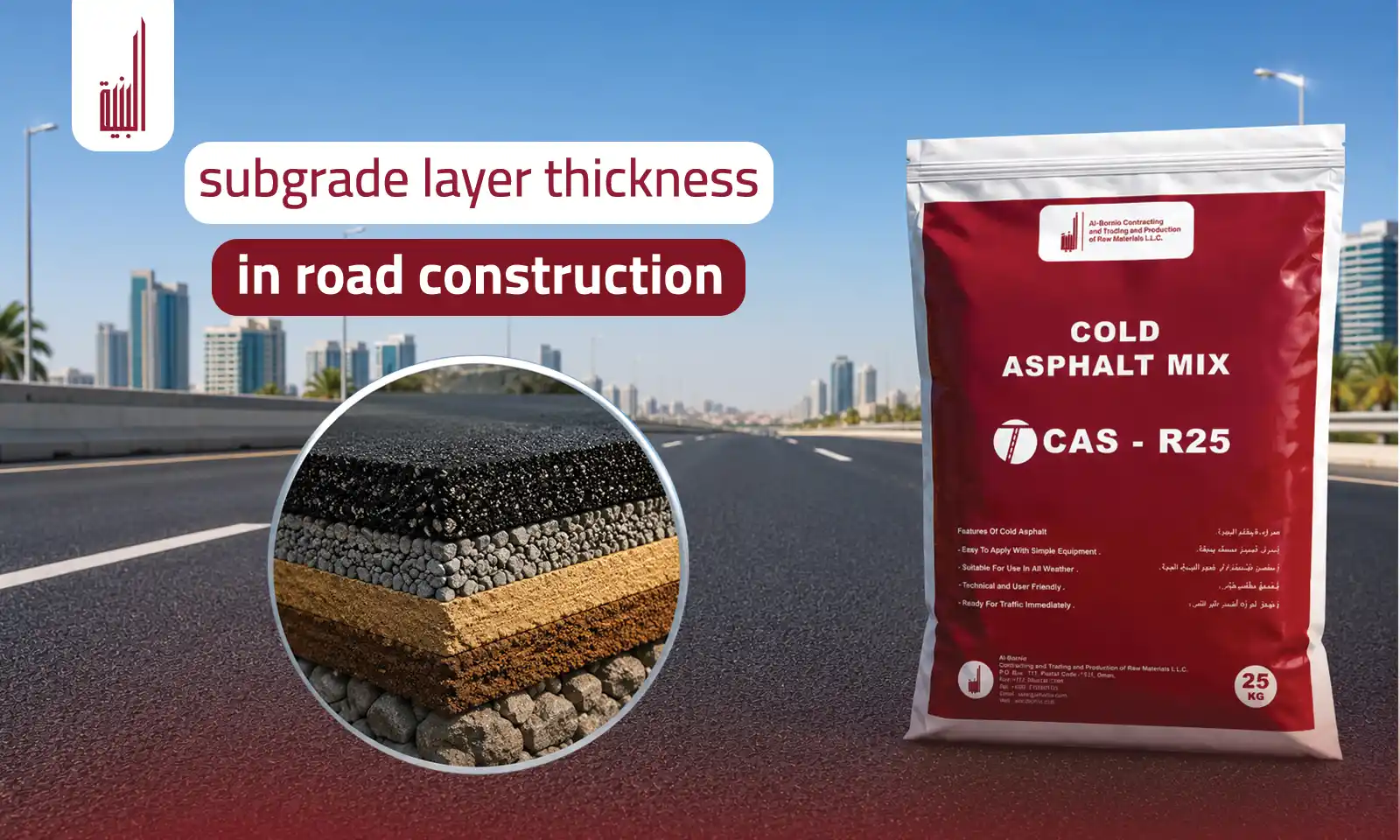
In road construction, the subgrade layer thickness in road construction is a key factor in ensuring the strength and durability of the pavement structure while also influencing its overall performance over time. The surface asphalt layer is the most apparent component of a road, but the subgrade is the structural component that supports the road to resist traffic and environmental forces. Even a good asphalt surface can begin to crack, rut, or settle prematurely when the subgrade is poorly designed and/or poorly prepared. The first steps to successful road construction are site evaluation, soil preparation, drainage planning, and pavement design. Albenya offers road construction, road maintenance, and quality asphalt services to ensure reliable pavement performance to support road infrastructure projects.
Why the Foundation Determines Road Performance
All pavement structures depend upon a stable foundation to safely transmit vehicle loads to the underlying soil. Since the subgrade is the foundation supporting the entire overlying pavement structure, its quality has a significant impact on the life of the pavement.
Good preparation of subgrade will aid the following:
- Spread out the traffic.
- Reduce pavement deformation.
- Minimise settlement over time.
- Improve structural stability.
- Produce long life for the pavement system.
Poorly compacted subgrades are prone to cracking on the surface, potholes, and early rehabilitation expenses.
Traffic Loads and Their Effect on Pavement Structure
The number of vehicles and their weight are directly related to pavement design such as subgrade layer thickness in road construction . Roads with heavy trucks or industrial traffic need a higher structural rating than roads with lighter vehicles and lower traffic volumes.
Before deciding on the thickness of the pavement, engineers must consider various factors, such as:
- Average daily traffic (ADT).
- Percentage of heavy commercial vehicles.
- Design life of the pavement.
- Soil bearing capacity.
- Environmental conditions.
A pavement structure designed for expected traffic conditions helps to minimize pavement maintenance needs and enhance the longevity of the pavement.
Engineering Considerations for Highway Projects
The thickness of the highway pavement should not be used as a standard value but should be engineered based on an analysis. Each project will have specific site conditions that will affect subgrade preparation and pavement performance.
Significant engineering factors are:
| Design Factor | Why It Matters |
| Soil Classification | Determines load-bearing capacity. |
| Compaction Quality | Improves structural stability. |
| Moisture Content | Affects soil strength and settlement. |
| Traffic Loading | Determines required pavement thickness. |
| Environmental Conditions | Influences long-term pavement performance. |
Geotechnical investigations and laboratory testing are used to gather information to design a safe and economical pavement.
How Drainage Influences Subgrade Stability
Water is a significant threat to pavements’ foundations. A properly designed pavement structure can deteriorate very quickly without proper drainage to remove excess moisture from the subgrade.
Poor drainage may result in:
- Reduced soil strength.
- Increased pavement settlement.
- In cold climates, frost damage.
- Accelerated cracking.
- Premature pavement failure.
Side ditches, subsurface drainage, and cross slopes are all part of proper drainage design that helps maintain subgrade stability and prolongs pavement life.
Calculating the Required Subgrade Layer Thickness in Road Construction
The thickness of the subgrade will vary depending on the engineering calculations used for the project and there is no universal value for it in road construction. The thickness is calculated by engineers based on the soil conditions, the amount of traffic, the environment, and the design of the pavement.
Typical design inputs are
- The 1st method is called California Bearing Ratio (CBR).
- Resilient modulus of soil.
- Heavy vehicle loading.
- Pavement design life.
- Drainage conditions.
- Climate and groundwater levels.
These parameters are not dimensions but are used by engineers to design a pavement structure to ensure strength and cost effectiveness over the whole pavement life.
International Standards Used in Pavement Design
Modern roads are built to internationally accepted engineering specifications for safety, uniformity, and durability of the roads.
Some well-known standards and design methodologies are:
- AASHTO pavement design guidelines.
- ASTM standards for soil and material testing.
- Guidance from the Federal Highway Administration (FHWA) for pavement engineering.
- Specifications set by the local transportation authority.
These standards are used to assess soil conditions, to determine the thickness of the pavement, and to determine the type of construction materials to be used on a project depending on the need.
Building Roads That Last Starts Below the Surface
Long-lasting roads are built on strong foundations. Asphalt surfacing is used to create the driving surface, but the quality of the subgrade is a key factor in determining the pavement’s ability to resist the effects of years of traffic and environmental exposure. The cost of maintaining the roads over their lifespan can be significantly lower if they are built with the proper site investigation, engineering design, drainage planning, and construction.
Albenya provides infrastructure support, professional road construction, asphalt maintenance solutions, and quality asphalt products for extended service life, high-performance roads. Now, when constructing new roads or repairing existing ones, the success of such projects depends on a solid base.
Contact Us
Need dependable road construction and pavement solutions? Contact Us today to find out more about our road construction, maintenance services, and quality asphalt products that will help you create long-lasting infrastructure projects.
FAQS
What is the subgrade?
Subgrade: Prepared soil below the pavement structure that provides support for all pavement layers and carries traffic loads into the ground.
What is the subgrade layer thickness in road construction?
When considering the subgrade, engineers do not rely on a set subgrade layer thickness in road construction but instead rely on the soil strength, traffic loadings, drainage conditions, climate, and pavement design standards.
Why is it essential to provide drainage under the subgrade?
Good drainage helps to keep water out of the soil, which will help it to hold together, minimizing settlement, cracking, and premature failure.
What are some of the standard methods used for designing pavements?
AASHTO, ASTM, and FHWA guidelines are used in many highway projects to establish pavement design requirements and assess construction materials.
Why opt for Albenya when it comes to road construction?
Albenya offers road construction, road maintenance, and quality asphalt materials services to its clients for creating and sustaining long-lasting and dependable road infrastructure
Leave A Comment